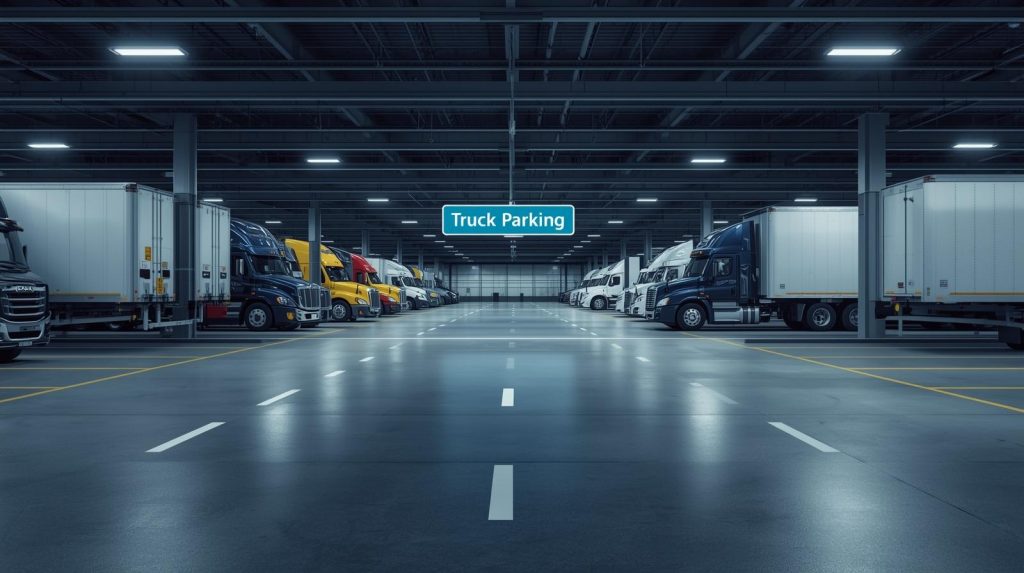
The transportation industry is evolving faster than ever before. If you have successfully monetized your land by providing truck parking, you are already ahead of the curve. You are solving a critical infrastructure problem while generating revenue. However, resting on your laurels is a risky strategy in a sector driven by rapid technological advancement.
To secure your investment for the next decade and beyond, you must look ahead. The parking lot of tomorrow looks very different from the gravel lot of today. From self-driving trucks to sophisticated data analytics, the future offers incredible opportunities for landowners who are willing to adapt. This guide explores the long-term trends shaping the industry and provides actionable strategies to future-proof your truck parking business.
The Autonomous Revolution: Preparing for Self-Driving Trucks
The concept of autonomous vehicles (AVs) often conjures images of trucks that never stop, potentially eliminating the need for parking. This is a misconception. While AVs will change how trucks operate, they will not remove the need for physical infrastructure. In fact, they may create a demand for a new, more specialized type of real estate.
The Rise of Transfer Hubs
Current regulations and technology suggest a hybrid model for the near future. Autonomous trucks will likely handle the “middle mile”—the long, boring stretches of interstate highway. Human drivers will still handle complex urban driving and the “last mile” to the delivery dock.
This creates a massive opportunity for landowners near highway exits. Your land could become a transfer hub. This is where an autonomous long-haul truck pulls in, and a local human driver takes over the cabin (or the trailer is swapped to a human-driven cab) for the final delivery. These transfer hubs will require secure, technology-enabled parking spaces where these hand-offs can occur efficiently.
Infrastructure for AV Maintenance
Autonomous trucks are essentially rolling computers. They require frequent sensor calibration, software updates, and specialized maintenance. By upgrading your facility to offer high-speed data connections (5G or fiber) and partnering with AV maintenance technicians, you can charge a premium for “technical layovers.” Your parking lot becomes a pit stop for robots, ensuring they are road-ready.
From Parking Lot to Logistics Hub
As e-commerce continues to dominate retail, the pressure to deliver goods faster increases. Supply chains are shortening, and inventory needs to be closer to the consumer. Your truck parking facility is perfectly positioned to evolve into a micro-logistics hub.
Facilitating Last-Mile Delivery
Consider dedicating a portion of your land to cross-docking. This is a practice where large semi-trucks unload their cargo directly onto smaller delivery vans, bypassing the need for long-term warehousing.
You don’t need to build a massive warehouse to facilitate this. A simple covered platform or a designated transfer zone can suffice. By allowing logistics companies to use your secure perimeter for these transfers, you become a critical node in the local supply chain. You can charge per transfer or lease specific zones to courier companies.
Secure Staging for High-Value Cargo
As supply chains become more fragmented, high-value cargo often sits in limbo between transport stages. Security becomes paramount. If you upgrade your security infrastructure to meet TAPA (Transported Asset Protection Association) standards, you can market your land as a “secure staging area.” Logistics companies will pay significantly higher rates to park loaded trailers in a fortress-like environment rather than an open, unguarded lot.
The Power of Data: Optimizing Operations
In the past, running a parking lot was a pen-and-paper operation. Today, data is your most valuable asset. Leveraging analytics allows you to squeeze every ounce of profit from your square footage and improve customer satisfaction.
Dynamic Pricing Models
Airlines and hotels change their prices based on demand. Why shouldn’t you? By using parking management app that tracks utilization rates, you can implement dynamic pricing.
- Peak Demand: During holidays or when local distribution centers are backed up, you can increase your nightly rates.
- Off-Peak Incentives: During slower periods, you can offer automated discounts to attract drivers who might otherwise keep driving.
Predictive Maintenance and Operations
Data doesn’t just help with pricing; it helps with costs. Sensors can track traffic patterns on your lot to identify which areas of pavement are degrading fastest, allowing for targeted repairs before they become expensive potholes. Smart utility meters can show you exactly when electricity or water usage spikes, helping you identify leaks or waste immediately.
Furthermore, analyzing customer data helps you understand who your best customers are. Do refrigerated trucks visit more often on Tuesdays? Do independent owner-operators stay longer than fleet drivers? Knowing this allows you to tailor your marketing and amenities specifically to the people who pay you the most.
Strategic Partnerships with E-Commerce Giants
The biggest players in the game—Amazon, Walmart, FedEx—have an insatiable appetite for space. They operate thousands of trailers that need to be stored when not in use. Relying on transient, night-by-night parking is inefficient for them. They prefer certainty.
The Dedicated Fleet Model
Instead of chasing individual drivers every night, consider pivoting a portion of your land to dedicated fleet parking. You can approach large e-commerce logistics managers and offer them a block of 20, 50, or 100 spaces on a long-term lease.
This model offers incredible stability. You get a guaranteed monthly check regardless of whether the spots are occupied every single night. For the e-commerce giant, they get a guaranteed overflow lot for their peak seasons. It is a mutually beneficial relationship that stabilizes your cash flow and increases the valuation of your business.
Funding the Future: Government Grants and Incentives
Upgrading your facility to meet these future trends requires capital. Installing EV chargers, paving for heavy loads, or upgrading security technology costs money. Fortunately, you don’t always have to foot the entire bill yourself. Governments at the federal, state, and local levels are recognizing that truck parking is a crisis that affects national supply chain resilience.
Infrastructure Investment and Jobs Act
In the United States, recent legislation has unlocked billions of dollars for infrastructure projects. While much of this goes to roads and bridges, there are specific provisions for freight infrastructure. Grants like the INFRA (Infrastructure for Rebuilding America) or RAISE (Rebuilding American Infrastructure with Sustainability and Equity) grants can sometimes apply to private-public partnerships or projects that clearly demonstrate a public benefit, such as reducing highway congestion or improving safety.
Green Energy Incentives
The push for electrification is backed by substantial financial incentives. If you plan to install electric vehicle (EV) charging stations for trucks, you can often offset a significant percentage of the cost through:
- Tax Credits: Federal tax credits can cover up to 30% of the cost of installing alternative fueling property.
- Utility Rebates: Local power companies often offer rebates for installing commercial charging hardware to encourage electricity usage.
- State Grants: Many states have specific funds dedicated to reducing diesel emissions. By presenting your electrification project as a way to reduce idling and pollution, you become a strong candidate for these funds.
How to Access These Funds:
Applying for grants can be complex. It is often worth hiring a grant writer who specializes in transportation infrastructure. They can help you frame your expansion plans in a way that aligns with government goals—focusing on safety, sustainability, and economic growth.
Conclusion: Building for the Long Haul
The truck parking business is no longer just about owning land; it is about owning a strategic asset in the global supply chain. The days of passive income from a gravel lot are numbered. The future belongs to operators who treat their facility as a dynamic business.
By preparing for autonomous vehicles, integrating into the logistics network, making data-driven decisions, partnering with major carriers, and leveraging government funding, you do more than just survive the changing tides. You position yourself to thrive.
Look at your land today. Do you see a parking lot, or do you see a future transfer hub for the autonomous fleet? Do you see empty spaces, or do you see a potential staging ground for the world’s largest retailers? The shift is coming. By taking steps now to modernize and strategize, you ensure that your land remains a goldmine for decades to come. The road ahead is paved with opportunity for those ready to drive toward it.