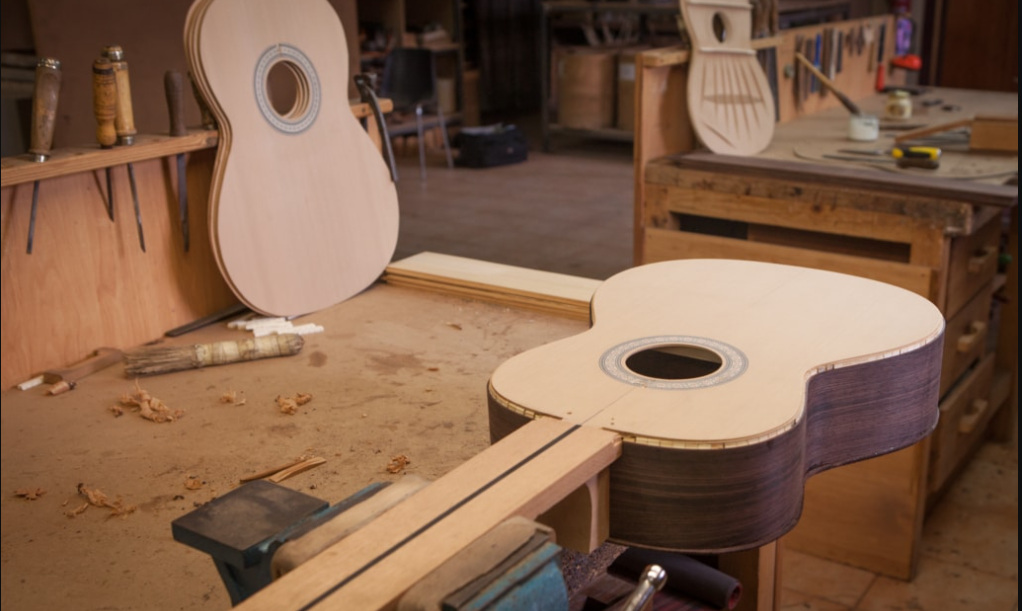
Handcrafted guitars stand as timeless marvels, where every curve and contour whispers a story of human ingenuity intertwined with musical soul. Unlike mass-produced instruments churned out in factories, these bespoke creations emerge from the hands of master luthiers—artisans who treat wood as a living partner in crafting sound. In their workshops, the air hums with sawdust and possibility, as each guitar becomes a vessel for emotion, resonance, and the player’s intent. This art form isn’t just about building; it’s about sculpting vibrations that dance through strings and into hearts, turning simple notes into symphonies.
The Luthier’s Timeless Lineage
Deep in the misty hills of Spain or the quiet ateliers of Montana, luthiers trace their roots back centuries to figures like Antonio de Torres, whose 19th-century innovations birthed the modern classical guitar. Today’s masters apprentice for years, absorbing not just techniques but philosophies passed down like family heirlooms. They blend old-world reverence for tradition with subtle nods to innovation, ensuring handcrafted guitars evolve while honoring the ghosts of luthiers past. This lineage keeps the craft alive, a bridge between eras where every chisel mark carries echoes of those who came before.
Sourcing Woods That Sing
The quest for the perfect tonewood begins in ancient forests, where luthiers seek out spruce for tops that quiver with clarity, mahogany for warm mids, and rosewood for deep, blooming bass. Each tree’s grain tells a tale of climate and soil, influencing how sound waves ripple through the instrument. Master builders like those in California’s redwood groves or Indonesia’s exotic suppliers test samples by tapping and listening, selecting only those that “sing” with inherent musicality. Sustainability drives this hunt too, with ethical harvesting ensuring future generations inherit these sonic treasures.
The Dance of Design and Geometry
Crafting a guitar’s blueprint feels like composing a silent melody, where body shape—dreadnought for power, parlor for intimacy—dictates projection and warmth. Luthiers sketch braces beneath the top like invisible ribs, fine-tuning their placement to balance tension and release. A slight tweak in waist curve or bridge angle can shift harmonics from bright sparkle to velvety sustain, making geometry the quiet architect of emotion. This intuitive design process transforms raw specs into instruments that feel alive under fingers.
Awakening Wood in the Workshop
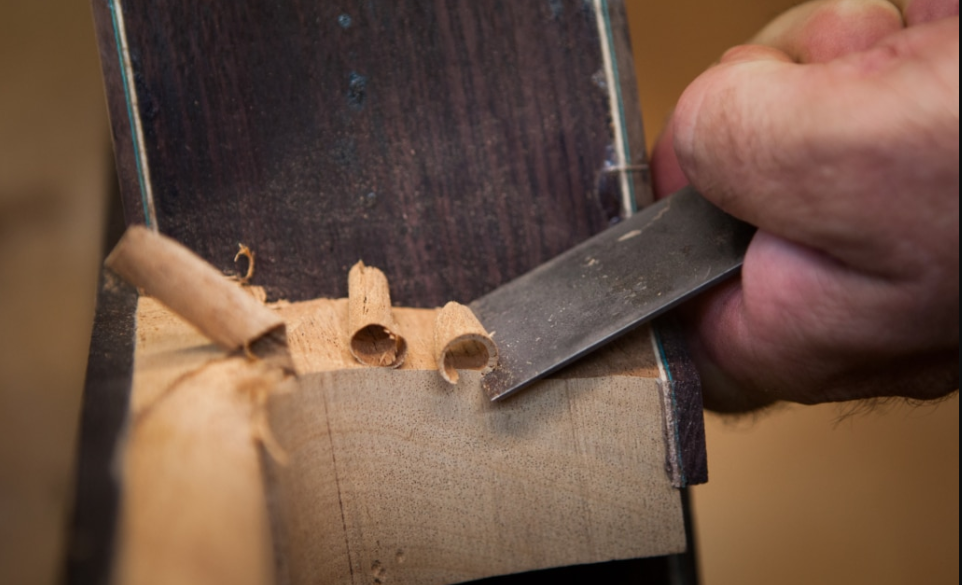
With tools as extensions of their hands—chisels honed to razor edges, scrapers whispering across surfaces—the real magic unfolds. Luthiers bend sides over heat, steam rising like morning fog, then glue joints so precise they vanish under varnish. The neck, carved from quartersawn maple for stability, meets the body in a marriage of ebony fretboard and precise frets. Hours blur into days as they plane, sand, and test-tap, coaxing the wood’s voice from slumber. It’s tactile poetry, where sweat and focus birth resonance.
Voicing: Sculpting the Soul of Sound
Voicing is the luthier’s secret alchemy, a delicate carving of the top’s braces to unleash the guitar’s true timbre. By thinning braces here and thickening there, they calibrate how air moves inside, fostering bloom in the lows or shimmer in the highs. Play-testing on a loose top reveals flaws—a dull thud fixed by a gentle shave—until the instrument breathes freely. This phase demands ears attuned to nuance, turning a wooden shell into a responsive partner that amplifies the player’s spirit.
Finishing Touches That Seal the Magic
A handcrafted guitar’s skin comes alive under French polish or nitrocellulose lacquer, applied in whisper-thin layers with a cotton pad and elbow grease. This finish doesn’t just protect; it vibrates, letting tone escape unhindered. Bindings of celluloid or abalone gleam along edges, while inlays of pearl map cosmic patterns on the fretboard. Final setups—nut slots filed, action dialed in—ensure playability, polishing the guitar into a jewel ready for the stage or studio.
Echoes in Music’s Grand Tapestry
From flamenco masters in Andalusia to bluegrass pickers in Nashville, handcrafted guitars infuse genres with unparalleled depth, their unique voices cutting through amplifiers and crowds. Icons like Bob Taylor or Collings luthiers supply players who swear by the organic response no factory rig can match. These instruments age gracefully, opening up over decades like fine wine, their patina of play weaving into recordings that define eras. They remind us music thrives on the handmade.
The Enduring Allure of Crafted Harmony
In a world of instant production, the handcrafted guitar endures as a rebellion against uniformity, inviting players into a dialogue with its maker’s touch. Owning one means holding history, feeling the wood’s memory in every chord. As luthiers pass torches to new apprentices, this art promises to shape soundscapes for generations, proving that true harmony blooms from patient hands and listening hearts.