High‑quality clinical imaging is an indispensable part of modern dentistry. Clear, accurate dental photographs not only support diagnosis and treatment planning but also enhance patient communication, documentation, and case acceptance. At the heart of great dental imagery lies one essential tool: the dental photography light. Whether you’re capturing smile transformations, documenting lesions, or recording shade matches, the right light can make the difference between usable and unusable images.
In this article, we will explore how dental photography lights improve clinical imaging, the types of lighting used in dental photography, practical tips for integrating lights into your workflow, and why these tools are now a staple in modern dental practices.
Why Lighting Matters in Dental Photography
Successful dental imaging requires three fundamentals: sharp focus, correct exposure, and accurate color representation. While modern cameras have advanced sensors and processing power, lighting still remains the number one factor that influences these outcomes.
Most dental procedures take place in artificial lighting environments — overhead fluorescent lights, halogen operatory lamps, and ambient room illumination — none of which are designed to deliver consistent, clinical‑grade results for photography. These standard lights often produce shadows, color casts, low contrast, and uneven illumination, which compromise image quality and diagnostic usefulness.
A dental photography light is engineered to overcome these limitations by providing:
- Consistent, shadow‑free lighting
- Accurate color rendering
- Gentle illumination without glare
- Uniform distribution of light across the dental field
This leads to predictable, high‑quality clinical images that are clear, detailed, and true to life.
Types of Dental Photography Lights
When professionals talk about enhancing clinical images, they refer to a range of dedicated lighting tools. Understanding these helps you select one that matches your workflow:
1. Ring Lights
Ring lights are circular LED lights that mount around the lens. In dental light photography, they minimize shadows and provide uniform light across the tooth or soft tissue area.
Benefits:
- Even lighting
- Reduces shadowing in close‑up shots
- Ideal for macro dental photography
These are especially helpful when capturing small details such as cracks, restorations, and surface texture.
2. Dual‑Point Flash Systems
Dual‑point lights use two light sources positioned on either side of the lens. This creates dimensional lighting that highlights contours in a way ring lights cannot.
Benefits:
- Better depth and texture
- More natural illumination
- Accurate representation of shape and form
Clinicians who prefer a more sculpted look for intraoral photography often choose dual‑point systems.
3. LED Panels / Continuous Lights
These are flat panels of LEDs that provide consistent, steady illumination. Often used in both studio and clinical settings, they are ideal for general facial and smile photography.
Benefits:
- Constant light source
- Easy to position and adjust
- Great for both intraoral and extraoral imaging
When used with reflectors or softboxes, LED panels can provide beautifully soft, flattering light.
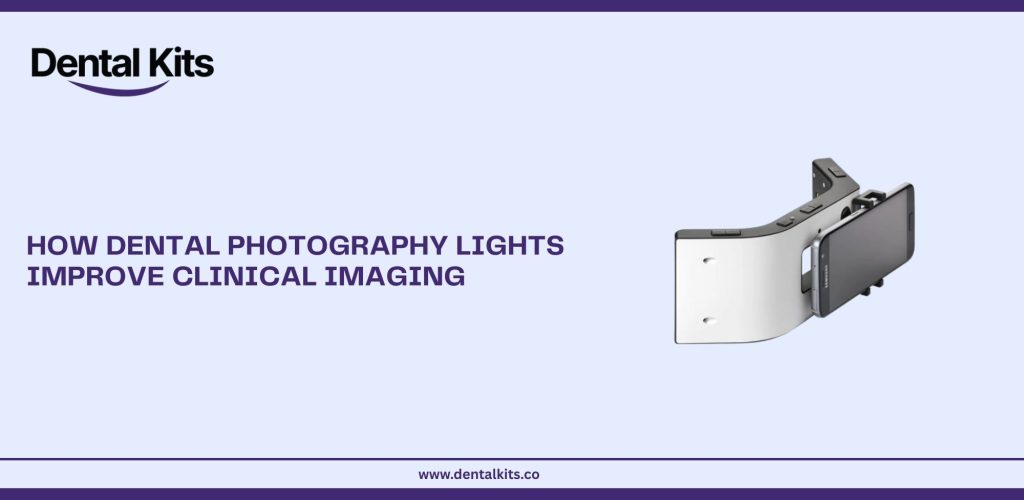
4. Mobile Dental Photography Light
Recent advancements have given rise to mobile dental photography lights, portable LED systems that attach directly to smartphones or DSLR cameras. These are especially beneficial for practitioners who want a simple yet powerful solution.
Benefits:
- Portability and convenience
- Affordable entry point for clinical imaging
- Works with existing mobile devices
For many clinics, mobile lights serve as a bridge between basic phone camera shots and full clinical photography systems.
How Dental Photography Lights Improve Clinical Imaging
Now let’s break down the ways in which investing in the right lighting directly benefits your clinical imaging quality.
1. Enhances Image Clarity and Detail
One of the biggest challenges in clinical photography is capturing minute details — such as microfractures, gingival margins, or texture variations on restorations. Without controlled light, these subtleties are lost in shadows or blown‑out highlights.
A dental photography light provides:
- Bright, even illumination
- Minimal noise due to proper exposure
- Greater depth of field in macro shots
As a result, images become sharper and more clinically useful for diagnosis and documentation.
2. Improves Color Accuracy
Color accuracy is vital in dentistry — whether you’re matching a tooth shade for a crown or tracking healing progress of soft tissues. Ambient lighting often distorts color temperature, leaving images that appear too warm, cool, or yellow.
Dental lights with high Color Rendering Index (CRI) ensure:
- True‑to‑life tooth and tissue color
- Better communication with laboratories
- Reliable before‑and‑after comparisons
By displaying accurate hues, clinicians and technicians can make better treatment decisions.
3. Reduces Post‑Processing Time
Without professional lighting, clinicians often rely heavily on software editing to correct shadows, adjust brightness, or fix color balance. This not only takes time but may introduce inaccuracies.
With controlled lighting:
- Fewer edits are needed
- Images are ready to use straight out of the camera
- Clinical documentation becomes more efficient
Efficient workflows lead to time savings and better patient throughput.
4. Boosts Patient Communication and Case Acceptance
High‑quality images are more convincing to patients. When they can clearly see their condition before and after treatment, it builds trust and enhances understanding.
Examples where lighting makes a difference:
- Identifying white spot lesions
- Showing plaque accumulation areas
- Presenting cosmetic improvements
These visuals support clinicians during consultation and treatment planning.
5. Standardizes Clinical Records
Consistency is essential when tracking changes over time. When images are captured under different lighting conditions, comparisons become unreliable. A dedicated dental photography light enables:
- Uniform imaging conditions for all visits
- Easier tracking of changes over months or years
- Better medicolegal documentation
Standardization increases the professional value of your photographic records.
Practical Tips for Better Dental Light Photography
Making the most of your dental photography light isn’t just about owning one — it’s about using it intelligently. Here are practical workflow tips:
Position the Light Correctly
- For intraoral shots, place the light close to the subject without blocking the lens.
- For facial photos, position lights to eliminate shadows under the chin and eyes.
Good positioning ensures even illumination.
Use Diffusers When Needed
Harsh light can cause glare or hot spots. Diffusers soften the light and produce flattering results, especially in extraoral portraits.
Balance Ambient and Artificial Light
Clinics often have strong overhead lights. Combine ambient and dedicated dental lighting to control contrast and avoid unwanted shadows.
Practice Consistency
Always use the same lighting setup for a particular type of shot. This creates a predictable library of images that are easy to compare.
Mobile Dental Photography Light: A Game Changer for Practices
Smartphones have transformed the way clinicians capture images, and mobile dental photography light attachments have taken this even further. These compact, adjustable LED lights clip onto phones, delivering bright, consistent illumination where standard clinic lights fail.
Benefits of mobile solutions:
- Immediate integration with devices clinicians already use
- Less reliance on expensive cameras
- Portability between operatories
For new practices, community clinics, or remote dentistry, these lights offer professional results without significant investment.
Final Thoughts
Dental imaging is no longer an optional add‑on — it is a clinical necessity. Whether you’re documenting pathology, planning restorative work, or capturing cosmetic outcomes, a dental photography light dramatically improves your imaging quality.
From dental light photography systems designed for advanced practitioners to mobile dental photography light options that empower anyone with a smartphone, the range of lighting tools available today ensures that every dental professional can achieve consistent, high‑quality images.
Investing in dental lighting not only enhances your clinical documentation but also strengthens patient communication, boosts case acceptance, and fosters a more professional standard in your practice.