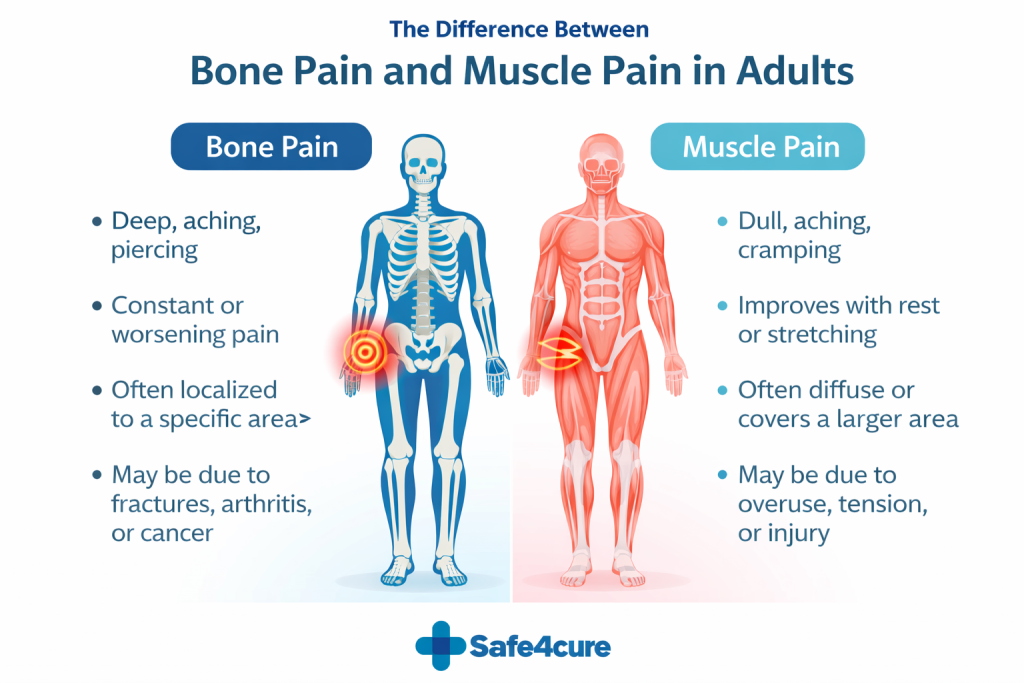
Musculoskeletal discomfort is one of the most common health complaints in the United States. Adults frequently report pain after exercise, minor injuries, repetitive work strain, or underlying medical conditions. However, many people struggle to identify the exact source of their discomfort. Determining whether the issue involves bone tissue or muscle fibers is essential for proper diagnosis and treatment. In cases of moderate to severe acute pain that does not respond to conservative care, physicians may prescribe Aspadol tablet to treat moderate to severe acute pain in adults under careful medical supervision. Still, identifying the root cause of pain always comes first.
What Is Bone Pain?
Bone pain, medically referred to as osseous pain, originates within the bone structure itself. It develops when the periosteum (outer bone membrane), bone marrow, or internal bone tissue becomes inflamed, injured, or diseased.
Unlike soft-tissue discomfort, bone pain usually signals structural compromise. Fractures, infections, metabolic disorders, and malignancies commonly trigger this type of pain.
What Does Bone Pain Feel Like?
Bone pain typically feels:
- Deep and internal
- Dull, throbbing, or aching
- Localized to a specific spot
- Persistent, even at rest
- Worse at night
Changing position rarely relieves bone pain. Heating pads and massage usually provide little benefit because the discomfort originates from deeper structures.
Common Bone Pain Symptoms
Bone pain symptoms vary depending on the underlying cause. However, several patterns frequently appear:
- Localized tenderness directly over the bone
- Swelling around the affected area
- Pain with weight-bearing
- Visible deformity after trauma
- Night pain that interrupts sleep
In systemic conditions such as Multiple myeloma or metastatic cancer, individuals may experience bone pain all over body. Nutritional deficiencies, including low vitamin D, may also cause widespread skeletal discomfort.
Causes of Bone Pain
Several conditions can produce bone-related discomfort:
- Fractures or stress fractures
- Osteomyelitis (bone infection)
- Osteoporosis-related microfractures
- Paget’s disease of bone
- Primary bone cancer or bone metastases
- Calcium or vitamin D deficiency
Prompt medical evaluation prevents complications, especially when pain follows trauma or persists without improvement.

What Is Muscle Pain (Myalgia)?
The medical term for muscle pain is myalgia. It refers to soreness, cramping, or aching that arises directly from muscle fibers.
Nearly everyone experiences myalgia at some point. Exercise, heavy lifting, prolonged sitting, or viral illness commonly trigger it.
Muscle Pain Causes
Common muscle pain causes include:
- Overuse or strain
- Repetitive motion injuries
- Delayed onset muscle soreness (DOMS)
- Viral infections such as Influenza
- Autoimmune conditions like Fibromyalgia or Lupus
Most cases resolve within days. Chronic or unexplained muscle pain requires further medical assessment.
Characteristics of Muscle Pain
Muscle pain usually feels:
- Sore, tight, or cramp-like
- Worse with movement
- Relieved by rest or gentle stretching
- Reproducible when pressing on the muscle
Heat therapy often improves muscle stiffness. Ice works better during the first 48–72 hours after an acute strain.
Is It Muscle Pain or Bone Pain? Key Differences
ocation, sensation, and triggers help distinguish the two conditions. The table below summarizes the major differences.
| Feature | Bone Pain | Muscle Pain (Myalgia) |
|---|---|---|
| Depth | Deep, internal | Closer to surface |
| Sensation | Dull, constant ache | Sore, tight, cramping |
| Response to Movement | Often unchanged | Worsens with activity |
| Tenderness | Directly over bone | Within muscle belly |
| Night Pain | Common | Less common |
| Relief with Stretching | Minimal | Often improves |
| Common Causes | Fracture, infection, malignancy | Overuse, strain, viral illness |
If pain persists beyond two weeks or worsens, medical evaluation becomes necessary.
Bone Pain Symptoms vs. Muscle Pain Symptoms
Bone-related symptoms may include swelling over a bone, deformity after injury, and persistent night pain. Fever can occur if infection is present.
Muscle pain symptoms often include stiffness, spasms, and reduced flexibility. Systemic infections may cause generalized aches and fatigue.
Red flags requiring urgent care include:
- Unexplained weight loss
- Severe swelling or visible deformity
- Inability to bear weight
- Sudden unexplained bone pain all over the body
- Fever with localized bone tenderness
Diagnosis and Medical Evaluation
Physicians begin with a detailed physical exam. They assess tenderness, range of motion, and neurologic status. Palpation helps determine whether pain originates in bone or muscle.
Diagnostic tools may include:
- X-rays to detect fractures or lesions
- MRI for soft tissue and marrow evaluation
- Blood tests for infection or inflammation markers
Accurate diagnosis ensures appropriate treatment and prevents complications.
Bone Pain Treatment Options
Physicians begin with a detailed physical exam. They assess tenderness, range of motion, and neurologic staBone pain treatment depends on the cause.
- Fractures require immobilization.
- Infections need antibiotics.
- Osteoporosis may require bisphosphonates.
- Cancer-related pain may involve oncology-directed therapies.
Physicians may prescribe stronger bone pain medicine when over-the-counter options fail.
Muscle Pain Treatment Strategies
Most myalgia improves with conservative care:
- Rest and hydration
- Stretching and strengthening exercises
- NSAIDs for inflammation
- Heat therapy for tightness
- Ice for acute injuries
Muscle relaxants may help severe spasms.
Role of Prescription Pain Relief Medications
When pain becomes moderate to severe and disrupts daily life, doctors may consider prescription therapy.
Aspadol contains tapentadol, a centrally acting analgesic. Tapentadol works through two mechanisms:
- Mu-opioid receptor agonism
- Norepinephrine reuptake inhibition
This dual action helps manage both nociceptive and certain neuropathic pain components. Because it is classified as a Schedule II prescription opioid analgesic, physicians must closely monitor its use. Patients should never self-medicate or share opioid medications.
When to See a Doctor
Seek medical attention if you experience:
- Persistent bone pain all over body
- Pain after significant trauma
- Progressive worsening pain
- Numbness or tingling
- Muscle weakness
- Symptoms lasting more than two weeks
Early evaluation improves outcomes and prevents complications.
Conclusion
The difference between bone pain and muscle pain in adults extends beyond simple discomfort. Bone pain tends to feel deep, persistent, and localized. Muscle pain feels more superficial and responds to movement and stretching. Each condition has distinct causes, diagnostic pathways, and treatment strategies.
Understanding your symptoms allows you to seek appropriate care quickly. If conservative treatments fail and pain becomes severe, consult a licensed healthcare provider. Prescription medications, including Schedule II opioid analgesics, require professional supervision to ensure safe and effective use. Your body communicates through pain. Listen carefully and act promptly.