There is a particular kind of beauty that emerges from restraint, from the careful editing of line and form until only the essential remains. Modern design has long celebrated this principle, finding elegance in simplicity and power in clean, unadorned surfaces. Yet even within this minimalist framework, there is room for architectural detail, for the subtle definition that keeps spaces from feeling flat or unfinished. The wainscoting trim set designed for modern interiors answers this need perfectly, offering wall detailing that enhances without overwhelming, that defines without decorating. These systems strip away the ornate flourishes of traditional wainscoting while retaining its fundamental architectural logic: the division of wall space into rhythmic, proportional panels. The result is a look that feels simultaneously fresh and timeless, perfectly suited to contemporary homes while carrying echoes of design history. For anyone seeking to add sophistication to modern interiors without compromising their clean aesthetic, these trim sets offer an ideal solution.
The Philosophy of Modern Wainscoting
Understanding what makes modern wainscoting distinct requires stepping back to consider the philosophical differences between traditional and contemporary approaches to interior detail. Traditional wainscoting evolved during eras that celebrated ornamentation, with elaborate profiles, curved details, and decorative corner blocks that drew attention to the craftsmanship itself. The goal was often to impress, to demonstrate skill and wealth through complexity. Modern wainscoting operates from a different set of priorities. Here, the goal is to define space and create rhythm without drawing attention to the means of production. Profiles are clean and geometric, typically featuring flat surfaces with crisp edges rather than curves and flourishes. Corners are simple butt joints or minimal returns rather than ornate blocks. The relationship between positive and negative space becomes the focus, with the wall itself playing as important a role as the trim applied to it. This approach creates definition that feels inherent to the architecture rather than applied to it, as though the wall was always meant to be divided this way.
Profiles That Speak the Modern Language
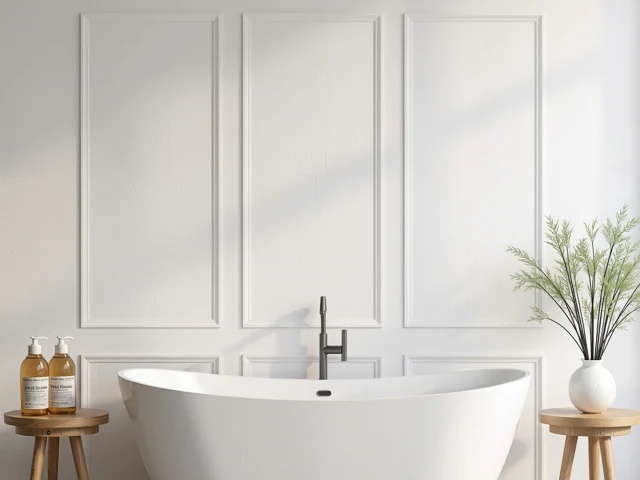
The trim profiles available in modern wainscoting sets reflect this design philosophy through their clean lines and geometric precision. Flat stock molding, essentially rectangular trim with no decorative profiling, has become a signature element of contemporary wainscoting. Used to create simple rectangular panels, flat stock allows the shadows cast by the trim to provide all the visual interest, with no need for additional ornamentation. Square profiles offer slightly more definition while maintaining clean lines, with crisp 90-degree edges that catch light in satisfying ways. For those seeking a touch more refinement, eased edge profiles feature slightly softened corners that remain essentially square while feeling gentler to the eye and hand. Some modern sets include minimalist cap molding for the top edge, a simple stepped profile that provides termination without the ornate detailing of traditional chair rail. Throughout, the guiding principle is subtraction rather than addition, removing anything that does not serve the essential purpose of defining wall panels.
Components of a Modern Trim Set
Opening a modern wainscoting trim set reveals a thoughtfully curated collection of components designed to work together seamlessly. The primary elements are the lengths of trim that will form the horizontal rails and vertical stiles of your panel design. These come in the clean profiles described above, typically manufactured from primed MDF or smooth polyurethane that accepts paint beautifully. Alongside these straight pieces, you will find coordinating components for corners and terminations. Unlike traditional sets that might include ornate corner blocks, modern sets often provide simple inside and outside corner pieces that maintain the clean lines of the design. Some sets include cap pieces for the top edge and base pieces for the bottom, creating a complete system from floor to chair rail height. The best modern sets also include detailed instructions for panel layout, helping you achieve the proportional rhythm that makes modern wainscoting so effective. With all components coordinated and included, you can focus on installation rather than hunting for matching pieces.
Designing Proportional Panels
The success of modern wainscoting depends almost entirely on the proportions of the panels you create. Unlike traditional wainscoting where ornamentation can distract from imperfect spacing, modern design exposes every proportional decision to plain view. Begin by determining the height of your wainscoting. In modern interiors, this can range from traditional chair rail height of 32 to 36 inches up to full-height installations that run from floor to ceiling. Higher installations create more drama and work well in rooms with tall ceilings. Once height is established, consider the horizontal division of your wall space. The goal is to create panels that feel balanced and intentional, typically with consistent spacing between vertical elements. Avoid panels that are too wide, which can feel squat and heavy, or too narrow, which can feel busy and restless. A good rule of thumb is to aim for panels that are roughly twice as tall as they are wide, adjusting based on your specific wall dimensions. Take time to sketch your layout and consider how panels will align with windows, doors, and furniture. This planning phase is where your design succeeds or fails.
Installation with Modern Precision
Installing modern wainscoting requires the same attention to precision that guided your design. Begin by marking your intended wainscoting height with a level line around the room, ensuring accuracy before any trim is applied. Next, mark the locations of your vertical elements based on your panel layout, using a level to ensure plumb lines. With your guidelines in place, begin installation with the horizontal rails. Apply construction adhesive to the back of each piece and press firmly against the wall along your marked lines, using a level to verify alignment as you work. For long runs, painter’s tape can provide temporary support while adhesive cures. Once rails are installed, move to the vertical stiles. Cut each piece to precise length, ensuring it fits snugly between top and bottom rails. Apply adhesive and press into position, using your level lines to verify alignment. The clean lines of modern profiles mean that any deviation from level or plumb will be immediately visible, so take your time with each piece. For corners, use your corner pieces or create clean butt joints, ensuring tight fits that will disappear under paint.
The Finishing Process
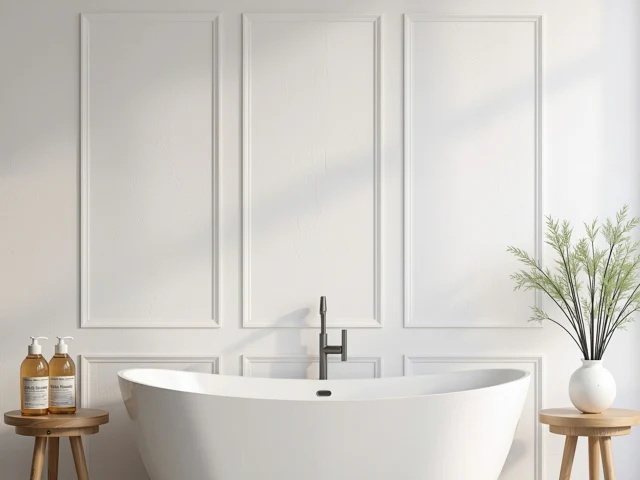
After all trim is installed and adhesive has fully cured, the finishing phase begins. Inspect every joint where pieces meet, both at corners and where verticals meet horizontals. Apply a thin bead of high-quality paintable caulk to any gaps, smoothing with a damp finger to create seamless transitions. This step is particularly important in modern installations, where clean lines are essential and visible gaps would compromise the entire aesthetic. Allow caulk to dry completely, then lightly sand any rough edges or imperfections. If you used mechanical fasteners, countersink any visible nails and fill holes with wood filler, sanding smooth once dry. Now the transformative moment: painting. Because your trim arrived pre-primed, you can move directly to your chosen color. For true modern effect, paint the trim the same color as the wall, allowing the shadows cast by the trim to provide all the definition. This creates that coveted look of integrated architecture, as though the panels were always part of the wall. For a slightly more graphic effect, paint the trim white against a colored wall, or experiment with subtle tone-on-tone variations. Apply paint with a small roller for the broad surfaces and an angled brush for edges, building coverage until the finish is smooth and uniform.
Modern Wainscoting Throughout the Home
The versatility of modern wainscoting makes it suitable for virtually every room in the house. In living rooms, it adds architectural interest that complements contemporary furniture without competing for attention. Clean-lined panels provide the perfect backdrop for modern art, framing pieces without overwhelming them. In dining rooms, modern wainscoting creates an atmosphere of sophisticated restraint, defining the space for gathering without the formality of traditional detailing. Home offices benefit from the sense of order and intentionality that clean panels provide, creating professional backdrops for video calls and focused work. Bedrooms become serene retreats when modern wainscoting adds subtle texture without visual noise. Even bathrooms and kitchens, where moisture might challenge traditional materials, can embrace modern wainscoting using polyurethane trim sets designed for high-humidity environments. Throughout the home, this approach to wall detailing proves that modern design need not be cold or stark, that clean lines can warm a space as effectively as ornamentation, and that sometimes the most powerful statement is made through what you leave out rather than what you put in.