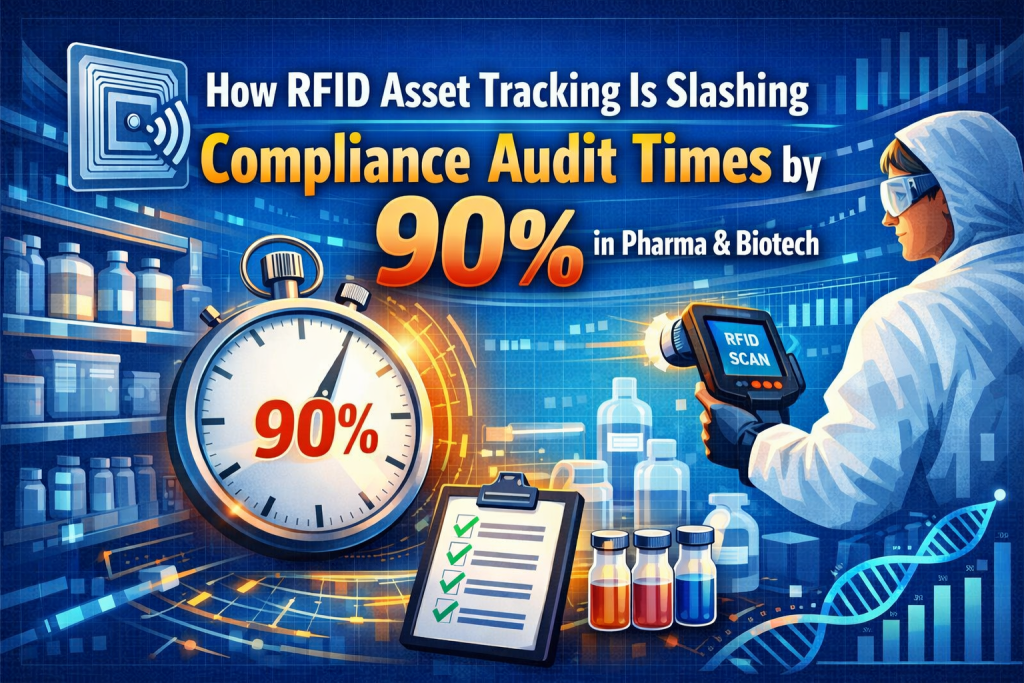
Compliance audits in pharmaceutical and biotech environments are not simple check-the-box exercises. They involve cross-referencing equipment calibration records, verifying chain-of-custody logs for regulated samples, confirming maintenance histories, and producing documentation for inspectors from agencies like the FDA or Department of Energy. In most facilities, a significant share of that preparation time is spent not reviewing data but hunting for it.
That’s the part nobody talks about. The preparation burden before an audit often runs for days or weeks. Quality managers pull together binders from multiple systems. Lab supervisors chase technicians for paper sign-off sheets. Someone discovers a discrepancy between the physical equipment list and what’s recorded in the LIMS. Then the reconciliation work begins.
RFID-based asset tracking changes this dynamic in a concrete way. When every piece of regulated equipment carries an RFID tag, and fixed readers or handheld scanners capture movement and access events in real time, the audit trail builds itself. There’s no retroactive data entry. No paper to reconcile. The system records what happened, when it happened, and which asset was involved.
Why Manual Tracking Breaks Down in Regulated Labs
The core problem with manual tracking isn’t that people are careless. It’s that manual processes don’t scale with the pace of a modern lab. Equipment moves between rooms, between buildings, sometimes between campuses. Calibration stickers get damaged. Paper logs go missing. A technician uses a pipette on a Saturday, fails to log it, and that gap creates a compliance question two months later during an inspection.
In cleanroom environments, the challenge compounds. Personnel gowning requirements make it inconvenient to carry clipboards or scan barcodes. Gloved hands and controlled-environment protocols create friction with any system that demands physical interaction for every data capture. The result is that compliance documentation often lags behind actual activity.
Auditors from regulatory bodies are trained to notice these gaps. A missing calibration log entry, an unexplained equipment relocation, or an inconsistency in usage records can trigger a Form 483 observation. In serious cases, it can escalate to a warning letter. Even when the actual process was compliant, poor documentation tells a different story.
How RFID Addresses Each Layer of the Problem
RFID readers mounted at room entries, storage zones, and key transit points log asset movement passively. Equipment doesn’t need to be scanned manually. When a centrifuge rolls from Lab 4 to Lab 7, the system records that event without anyone doing anything. The asset location history updates automatically.
Calibration and maintenance schedules tie directly to this location and usage data. If a piece of equipment is due for calibration and hasn’t been serviced, the system flags it. Auditors don’t need to page through binders to verify calibration status. They can query the system and see a complete, time-stamped history for any asset.
For sample tracking in pharma research, RFID provides chain-of-custody documentation that manual logs simply can’t match for accuracy. Each sample container or storage unit carries a tag. Every time it moves through a reader zone, that event is logged. The result is an unbroken audit trail from receipt through processing to storage or disposal.
In environments subject to 21 CFR Part 11 requirements, which govern electronic records in FDA-regulated activities, RFID data logs can be structured to satisfy the requirements around auditability, access control, and record integrity. That matters because FDA inspectors specifically look for evidence that electronic records are tamper-evident and traceable.
What the Audit Process Looks Like with RFID in Place
Consider what changes for a quality manager preparing for an FDA equipment qualification audit. Without RFID, they spend days cross-referencing spreadsheets, paper logs, and a LIMS database. With RFID, they run a report. The system finds every asset in scope, its current location, its last calibration date, its maintenance history, and every movement event on record.
That shift doesn’t just save time during audit preparation. It also reduces the anxiety that comes with manual record systems. Quality managers who trust their documentation can engage with inspectors confidently. They don’t spend the first hour of an audit apologizing for gaps in the paper trail.
The operational benefits extend beyond scheduled audits. When an out-of-spec result triggers an investigation, RFID data lets teams reconstruct exactly which equipment was used, when, and by whom. That kind of rapid root cause analysis is difficult to do reliably with manual systems and nearly impossible under time pressure.
Deployment Considerations for Regulated Environments
Not all RFID systems are equal when it comes to regulated industries. Passive UHF RFID works well for general lab tracking and equipment management. For environments where read range and battery life matter, active RFID tags provide continuous location updates without requiring a reader in proximity.
Cleanrooms require tags that can withstand autoclaving, chemical wipe-downs, and high-pressure cleaning without compromising read performance. The tag selection and antenna placement require careful planning specific to each facility layout. Retrofitting an existing lab is straightforward in most cases, but the implementation sequence matters for minimizing disruption to ongoing operations.
Integration with existing LIMS, ERP, or quality management systems is a practical requirement in most pharma and biotech environments. RFID platforms that offer open APIs or pre-built connectors to major QMS platforms allow organizations to centralize compliance data rather than managing a separate system. That centralization is what makes audit reporting fast and defensible.
The Compliance Case Is Also a Cost Case
Audit preparation time is a direct labor cost. When quality managers, lab supervisors, and administrative staff spend weeks per year assembling documentation, that time has a dollar value. Reducing audit preparation from two weeks to two days across a mid-size facility translates into meaningful staff hours redirected toward work that actually moves the science forward.
Beyond labor, there’s the cost of compliance failures. A Form 483 observation triggers a corrective action plan. A warning letter brings regulatory scrutiny that can delay product timelines. These outcomes are hard to quantify in advance but very expensive once it has happened. A tracking system that makes compliance documentation automatic and accurate is, at that point, straightforward to justify.
Pharmaceutical and biotech companies have invested heavily in process quality for decades. RFID asset tracking extends that quality discipline to the infrastructure that supports the process. The audit trail doesn’t require extra effort because it’s built into how equipment moves through the facility. That’s the kind of structural compliance improvement that holds up under the most demanding inspections.