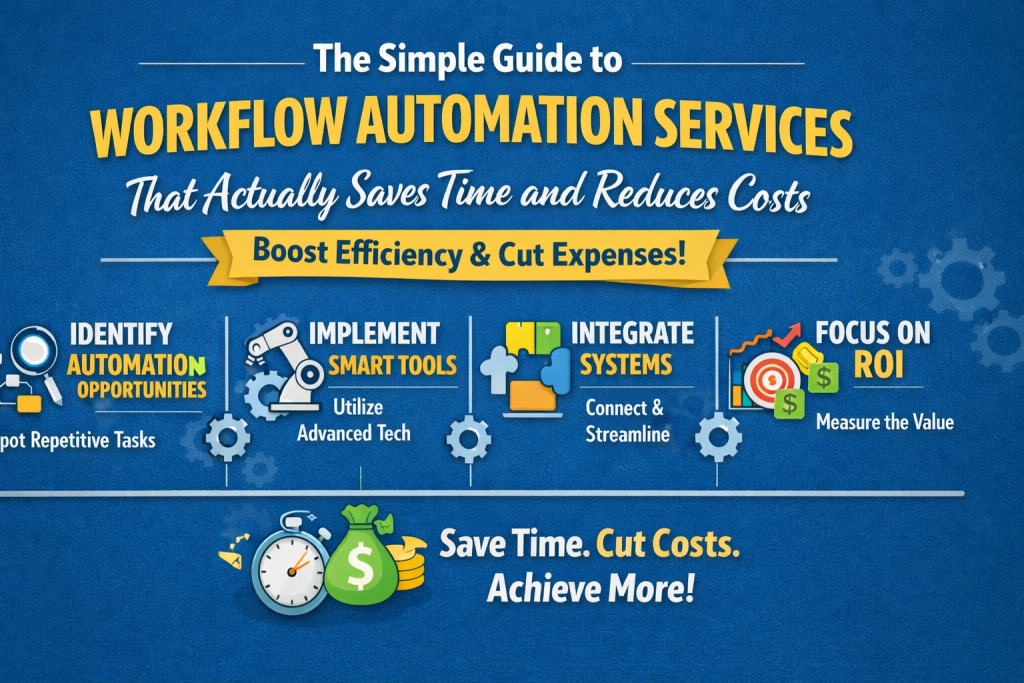
Businesses today are moving fast — and manual processes simply can’t keep up. If your team is still spending hours on repetitive tasks, chasing approvals, or fixing avoidable errors, the problem isn’t your people. It’s your workflow. Workflow automation services are no longer a luxury for big enterprises. It’s a practical, everyday solution that teams of all sizes are using to work smarter, cut costs, and grow faster.
What Is Workflow Automation?
Let’s start with the basics. Workflow automation is the process of using software or technology to perform tasks automatically — with minimal or no human involvement. Instead of manually collecting data, sending follow-up emails, or updating spreadsheets, automation handles it in the background while your team focuses on work that actually matters.
A simple real-world example — think about how companies have shifted from collecting physical forms to digital submissions. That’s automation at its most basic level. Scale that up to market research, competitor tracking, real-time data analysis, and performance reporting — and you start to see just how powerful it becomes.
How Workflow Automation Helps in Day-to-Day Tasks
Automation isn’t just for large-scale operations. It quietly improves how everyday work gets done:
- Handles lead management and follow-ups automatically — no task falls through the cracks
- Frees up your team from repetitive work so they can focus on strategy
- Reduces human error and improves overall accuracy
- Speeds up task completion and keeps workflows consistent
- Eliminates unnecessary workload with structured, predefined processes
- Enables continuous performance tracking without manual reporting
These aren’t small wins. Over time, they add up to hours saved every week and a team that’s actually able to do its best work.
The Real Benefits of Workflow Automation
Beyond the daily improvements, automation creates a bigger impact at the business level:
- Better decision-making — real-time data means no more guesswork
- Lower operational costs — less dependency on manual labor
- Advanced data analysis — track trends, patterns, and performance accurately
- Easier scaling — grow your operations without proportionally growing your team
- Full process visibility — know exactly where every task stands at any moment
The Role of Business Intelligence Consultants in Automation
Knowing that automation is powerful is one thing, implementing it correctly is another. That’s where a business intelligence consulting company makes a real difference.
With the right expertise, they help you choose tools that actually fit your business needs not just the most popular ones in the market. Tools like Azure Data Factory, Apache Airflow, Informatica, dbt, Fivetran, and Airbyte all serve different purposes, and picking the wrong one can cost more than it saves.
A good BI consulting partner brings hands-on experience, a clear implementation strategy, and the ability to combine automation with data intelligence so you get faster decisions, fewer errors, and outcomes that are actually aligned with your goals.
Conclusion
Workflow automation services aren’t about replacing your team, it’s about giving them the tools to do more without burning out. The businesses that are growing consistently aren’t necessarily working harder. They’re working with better systems.
If you’re ready to move past manual processes and build a workflow that scales with your business, NotionMind is your all-in-one solution. From strategy to implementation, we help you automate smarter and grow faster. For more information contact our expert.