If there is one component on a slurry pump that causes more headaches than any other, it is the seal. I have walked through plants where mechanics spend half their shifts adjusting packing, changing mechanical seals, or cleaning up leaks. The seal sits at the most vulnerable point on the pump, right where the rotating shaft passes through the stationary casing. It has to keep abrasive, often corrosive slurry inside the pump while allowing the shaft to spin at high speeds. It is a nearly impossible job, and most seal designs fail at it eventually. CNSME PUMP took a different approach to this problem. Rather than accepting seal failure as inevitable, they developed multiple seal technologies specifically for slurry service. Each design has strengths and weaknesses, and understanding those differences is the key to keeping your pump running without constant seal maintenance.
The Challenges That Destroy Standard Seals
Before diving into CNSME’s solutions, it helps to understand why standard seals fail so quickly in slurry service. The first challenge is abrasion. Abrasive particles get between seal faces and act like lapping compound, wearing grooves into the faces until they no longer seal. The second challenge is dry running. Slurries sometimes lose prime, or the pump is started before the casing is full. Even a few seconds of dry running can overheat and crack a mechanical seal. The third challenge is thermal shock. Slurries vary in temperature, and sudden changes can distort seal faces. The fourth challenge is chemical attack. Many slurries contain acids, bases, or salts that degrade elastomers and corrode metal components. Standard seals designed for clean water or oil have no defense against these forces. CNSME engineered their seal technologies from the ground up to withstand exactly these conditions.
Expeller Dynamic Seals for Most Abrasive Slurries
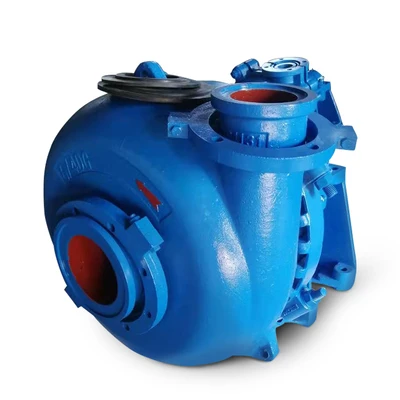
The most innovative seal technology CNSME offers is the expeller dynamic seal. This design has no wearing contact during normal operation. Instead, it uses centrifugal force to keep slurry away from the seal faces. The expeller is a set of vanes on the back of the impeller that spin with the shaft. As they spin, they fling any slurry that tries to leak toward the seal back into the main flow path. This creates a vacuum at the seal area, pulling air in rather than pushing slurry out. The result is a seal that never touches the shaft during normal operation. No contact means no wear, and no wear means no leakage. The expeller seal requires a small amount of clean water injection to cool the seal faces when the pump stops, but during running, it is essentially maintenance free. Mines using expeller seals on abrasive slurries report seal life measured in years rather than months. The expeller is not suitable for very high suction pressures, but for most slurry applications, it is the best choice.
Heavy Duty Cartridge Mechanical Seals
For applications that require zero leakage and cannot accept any water injection, CNSME offers heavy duty cartridge mechanical seals. Unlike standard mechanical seals, which are assembled piece by piece on the shaft, cartridge seals come as a complete pre assembled unit. The seal faces, springs, and elastomers are all contained in a housing that slides onto the shaft as a single piece. This design eliminates installation errors, which are a leading cause of premature seal failure. The seal faces are made from silicon carbide or tungsten carbide, both of which resist abrasion far better than the carbon vs ceramic faces used in standard seals. The springs are isolated from the slurry by rubber bellows or Teflon covers, preventing them from clogging with solids. Heavy duty cartridge seals are more expensive than expeller seals, but they are the right choice for hazardous or valuable slurries where any leakage is unacceptable.
Gland Packing for Simple, Low Cost Service
Sometimes the simplest solution is the best one. Gland packing uses braided rope like material wrapped around the shaft and compressed by a gland follower. A small amount of leakage, typically one drop per second per inch of shaft diameter, lubricates and cools the packing. Gland packing is inexpensive, easy to install, and very forgiving of minor shaft misalignment or surface imperfections. It also tolerates dry running much better than mechanical seals. The downside is that it requires regular adjustment and does leak by design. For low pressure, non hazardous slurries where a few drops of leakage are acceptable, gland packing is a perfectly good choice. CNSME offers packing made from aramid fibers, PTFE, and graphite, each suited to different slurry chemistries and temperatures. Many mines keep packing as a backup option even when using other seal types, because packing can be installed quickly when a mechanical seal fails unexpectedly.
Flush Plans That Keep Seals Clean
No seal works well if abrasive particles accumulate around it. That is why CNSME pays as much attention to flush plans, the piping systems that supply clean fluid to the seal area, as to the seals themselves. A proper flush plan introduces clean water or a compatible liquid at the seal faces, flushing away any particles that try to enter and providing cooling. CNSME offers several standard flush plans. Plan 01 uses an external clean water source, simple and effective but consumes water. Plan 02 uses the slurry itself, filtered through a cyclone or strainer, which eliminates water consumption but requires more maintenance. Plan 32 uses a separate clean liquid from an external tank, suitable for toxic or valuable slurries where you want to recover the flush fluid. Your CNSME representative can help you select the flush plan that balances water consumption, maintenance effort, and seal life for your specific application.
Diagnosing Seal Failures by Appearance
When a seal does fail, the way it fails tells you what went wrong. CNSME encourages maintenance teams to examine failed seals carefully rather than just throwing them in the scrap bin. Abrasive wear creates smooth, matte finish grooves on the seal faces. Thermal cracking appears as a network of fine lines, like cracked mud. Chemical attack shows as pitting, discoloration, or swelling of elastomers. Installation damage appears as chipped corners or uneven wear patterns. Each failure mode points to a different root cause. Abrasive wear means the flush plan is inadequate. Thermal cracking means the pump ran dry or experienced sudden temperature changes. Chemical attack means the seal materials were incompatible with the slurry. Installation damage means your mechanics need more training or better tools. Keeping a log of failure modes helps you identify patterns and make systematic improvements to your seal selection, flush plan, or operating procedures.
The Cost Benefit of Better Seals
Investing in better seal technology pays for itself faster than almost any other heavy duty slurry pump upgrade. Consider the total cost of seal failures. The direct cost includes the replacement seal, the labor to install it, and the downtime while the pump is offline. The indirect costs include lost production, contaminated sumps, and environmental cleanup. A plant with ten pumps that changes mechanical seals every two months might spend fifty thousand dollars annually on seal related costs. Switching to expeller seals, which last for years, reduces that cost by ninety percent or more. Even the higher upfront cost of heavy duty cartridge seals is recouped within months when compared to frequent, inexpensive seal replacements. The seal is a small part of the pump, but it has an outsized impact on reliability and operating cost. Choosing the right seal technology from CNSME is one of the highest return investments you can make in your slurry pumping system.