The impeller is the heart of any centrifugal pump. It is the only part that actually adds energy to the slurry, spinning it outward to create flow and pressure. In a slurry pump, the impeller also takes the brunt of the abuse. Abrasive particles slam into its vanes. Corrosive chemicals attack its surfaces. Large chunks wedge between its passages. CNSME PUMP has invested heavily in impeller design and manufacturing, producing components that last longer, pump more efficiently, and handle tougher materials than standard offerings. These advances are not minor tweaks. They represent a fundamental rethinking of how an impeller should be shaped, cast, and protected. Let me walk you through the key innovations that set CNSME impellers apart from the competition.
Optimized Vane Geometry for Reduced Turbulence
Most slurry pump impellers are designed with simple, straight vanes because they are easy to cast. The problem is that straight vanes create turbulence as slurry leaves the impeller and enters the volute. That turbulence wastes energy and accelerates wear. CNSME engineers used computational fluid dynamics to model slurry flow through the impeller and volute. They discovered that gently curved vanes, with a specific angle at the inlet and outlet, produce a much smoother flow pattern. The curve is not arbitrary. It matches the natural trajectory of a particle moving from the eye of the impeller to the periphery. The result is an impeller that delivers the same flow and head as a straight-vane design but with less internal recirculation. Less recirculation means less abrasive wear on the vane tips. It also means higher hydraulic efficiency, which translates to lower energy bills. Field tests have shown that the curved vane design extends impeller life by fifteen to twenty percent compared to straight vanes made of the same material. That is a significant gain from a shape change alone.
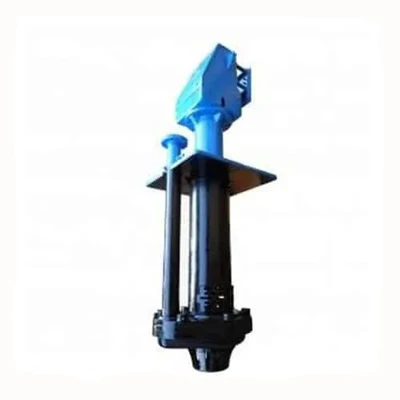
Thickened Leading Edges for Impact Resistance
The leading edge of each vane—the part that first contacts incoming slurry—takes the most severe punishment. Particles strike this edge at high velocity, chipping and eroding the material. On many impellers, the leading edge is thin, like the edge of a knife. Once it wears, the entire vane loses its hydraulic shape and performance drops. CNSME impellers feature thickened, rounded leading edges. The extra material acts as a sacrificial layer. As particles strike, they wear away the thickened edge gradually rather than cutting through a thin edge quickly. The rounded profile also deflects particles rather than letting them dig in. This design is especially valuable in applications with large, heavy particles such as crushed ore or gravel. The thickened edge does not affect hydraulic performance because the rounded shape actually reduces inlet turbulence. CNSME has found that this simple geometric change can double impeller life in coarse slurry services. For plants tired of replacing impellers every few weeks, the thickened leading edge is a revelation.
Back Vanes That Act as a Centrifugal Seal
The rear face of the impeller, facing the bearing housing, is often overlooked. But this area is critical for seal life. Slurry that leaks around the impeller hub and travels up the shaft will quickly destroy any mechanical seal. CNSME impellers include back vanes cast into the rear shroud. As the impeller rotates, these back vanes act like a small pump, flinging any slurry that reaches the rear face outward toward the pump casing. This creates a low-pressure zone near the shaft, which actually pulls clean air or flush fluid into the seal area. The result is that the seal sees far less abrasive material. For cantilever pumps, the back vanes keep the shaft area clean, preventing the buildup of dried slurry that can cause binding. For bearing pumps, the back vanes extend seal life by a factor of three to five. This is a passive feature that requires no adjustment, no external power, and no maintenance. It simply works every time the pump runs.
Precision Investment Casting for Smooth Surfaces
The surface finish of an impeller matters enormously for both wear and efficiency. A rough, gritty casting creates turbulence. Turbulence accelerates erosion because abrasive particles bounce and tumble rather than flowing smoothly. Many pump manufacturers use sand casting, which leaves a relatively rough surface. CNSME uses investment casting for their impellers. The process begins with a wax pattern, which is coated in ceramic. The wax is melted out, leaving a precise ceramic mold. Molten high-chrome alloy is poured into this mold, producing an impeller with a surface finish much smoother than sand casting. The smooth surface reduces friction and turbulence, improving efficiency by two to three percent. More importantly, the smooth surface gives abrasive particles less to grab onto. They slide across the impeller rather than digging in. In side-by-side tests, investment-cast impellers showed thirty percent less wear than sand-cast impellers of the same alloy after identical run times. The investment casting process costs more, but the extended wear life and energy savings quickly pay the difference.
Hardfacing Applications for Extreme Wear Zones
Even the best high-chrome alloy wears eventually. But not all areas of the impeller wear evenly. The vane tips and the leading edges see the most abrasion. The hub and the back shroud see much less. CNSME offers a hardfacing option for impellers in the most demanding services. Hardfacing involves welding a layer of an even harder alloy—often tungsten carbide or a specialized chromium carbide blend—onto the high-wear zones. The hardfaced layer can be up to 1/8 inch thick and achieves a hardness of 800 Brinell or more, compared to 600 Brinell for standard high-chrome. The result is an impeller that wears slowly in the critical areas while the rest of the component remains ductile and impact-resistant. Hardfacing is not cheap, and it adds time to the manufacturing process. But for pumps handling extremely abrasive slurries such as taconite tailings or frac sand, a hardfaced impeller can last two to three times longer than a standard high-chrome impeller. The cost per ton of material pumped drops dramatically.
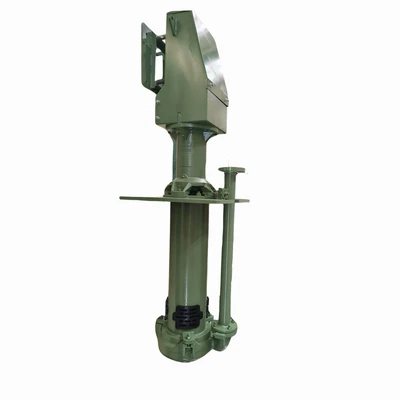
Semi-Open vs. Fully Enclosed Design Choices
CNSME offers both semi-open and fully enclosed impeller designs, and the choice depends on your slurry. The semi-open impeller has no front shroud. The vanes are exposed directly to the suction inlet. This design passes large particles easily and resists clogging from rags or stringy material. It is the standard choice for wastewater, aggregate, and mining sump applications. The efficiency is slightly lower than a fully enclosed design because of increased recirculation. The fully enclosed impeller has a front shroud that covers the vanes. This design is more efficient and produces higher pressure for a given diameter. It is the better choice for clear liquids or fine slurries where clogging is not a concern. However, enclosed impellers are more prone to jamming from oversize particles. CNSME helps customers choose the right design based on particle size analysis and required head. For most vertical slurry pump applications, the semi-open design is the right answer because reliability matters more than peak efficiency.
Corrosion-Resistant Alloys for Chemical Slurries
Standard high-chrome impellers resist abrasion but can corrode in acidic or alkaline services. CNSME offers impellers cast from a range of corrosion-resistant alloys for chemical slurry applications. CD4MCu duplex stainless steel provides excellent resistance to chloride attack and dilute acids. Hastelloy C-22 handles oxidizing acids and wet chlorine gas. Titanium is virtually inert to most chemicals but is expensive and difficult to cast. For mildly corrosive slurries, a high-chrome impeller with a corrosion inhibitor added to the alloy can be a cost-effective solution. The key is matching the alloy to your specific chemistry. CNSME maintains a database of material performance in thousands of slurries. Providing a simple slurry sample allows them to recommend the optimal impeller alloy for your unique conditions. This customization prevents the common mistake of choosing a material that resists abrasion but dissolves in your process chemistry.