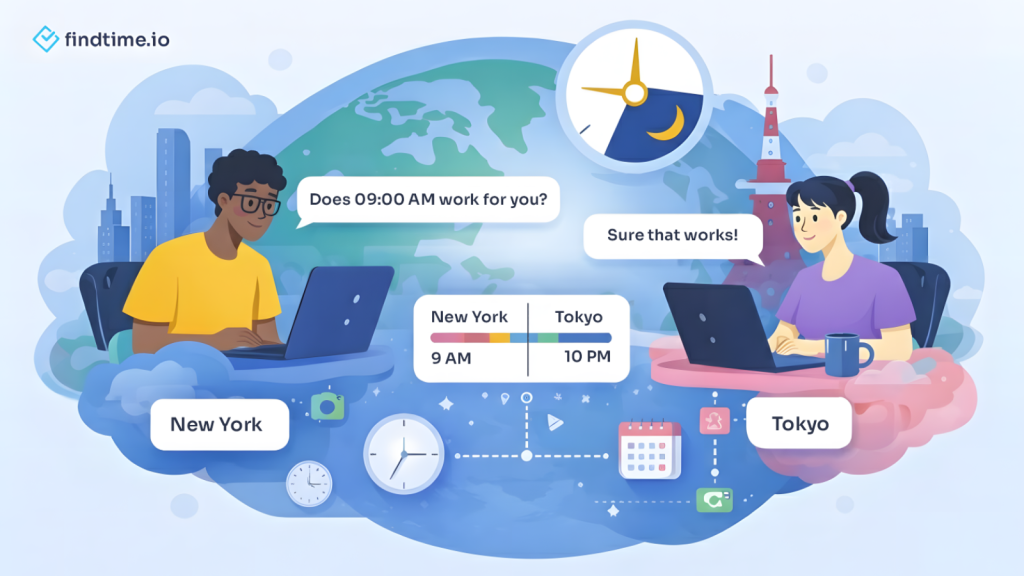
Time has always been one of humanity’s most important measurements. For centuries, people relied on sundials, clocks, calendars, and astronomical observations to understand their place in the world. Today, however, our relationship with time is evolving beyond simple clock readings.
In a connected world where people communicate across continents, work remotely, travel internationally, and collaborate across dozens of time zones, understanding time has become about much more than knowing the current hour. It is increasingly about understanding where the world is awake, where the sun is rising, which cities are beginning their day, and how people across the globe experience the same moment differently.
Modern digital platforms are beginning to reflect this broader perspective by combining world time, astronomy, geography, and real-world context into a single experience.
Time Is More Than a Clock
Most people think of time as a number displayed on a watch or smartphone.
Yet time is deeply connected to the Earth’s movement, the position of the sun, changing seasons, and the daily rhythms of human life. Sunrise in one city may coincide with midnight in another. While one country is preparing for work, another is finishing dinner, and somewhere else people are looking up at a sky filled with stars.
Understanding these relationships creates a richer awareness of the world around us.
Rather than viewing time as isolated local information, modern global citizens increasingly benefit from seeing time as part of a larger interconnected system.
The Rise of Global Living
The modern workforce is more international than ever.
A single project team may include members in North America, Europe, Asia, and Australia. Friends and families often live across different countries. Businesses regularly serve customers around the world.
As a result, people are becoming more aware of global time patterns.
Questions such as these have become increasingly common:
- Is it daytime or nighttime there?
- Are businesses open right now?
- Has sunrise happened yet?
- What part of the day are they experiencing?
- Are people likely to be working, relaxing, or sleeping?
These questions go beyond traditional timezone conversion and move toward a more human understanding of global time.
Following the Sun Around the World
One of the most fascinating ways to understand our planet is to follow the progression of daylight across different regions.
At any given moment, sunrise is occurring somewhere, sunset is taking place elsewhere, and countless cities are experiencing completely different parts of the day.
Watching these transitions creates a powerful visualization of how connected our world truly is.
A person in Mexico City might be beginning their morning while someone in Tokyo is ending their day. Meanwhile, another person in Melbourne may already be asleep while London is enjoying the afternoon.
This constant movement of light across the planet provides a unique perspective on global life.
Why Astronomy Still Matters
Despite advances in technology, astronomy remains closely tied to our understanding of time.
The Earth’s rotation creates day and night. Its orbit around the Sun creates seasons. The Moon influences calendars, eclipses, and cultural traditions. Stars and constellations have guided navigation and timekeeping for thousands of years.
Even today, astronomical events continue to capture public attention because they connect people to something larger than daily routines.
Understanding the night sky helps place our everyday schedules within the broader context of the universe.
This is one reason why modern time platforms increasingly incorporate astronomical information alongside traditional clock data.
Context Makes Time More Meaningful
A simple time display tells you what hour it is.
Context tells you what that hour means.
For example:
A city showing 7:00 AM becomes more useful when you know the sun has just risen.
A city displaying 10:00 PM becomes more meaningful when you understand that restaurants, cafés, and nightlife venues may still be active.
A location showing midnight gains additional significance when you can see the stars, constellations, and celestial objects currently visible overhead.
By combining time with real-world context, digital experiences become more informative and engaging.
A New Generation of Time Platforms
Modern platforms are moving beyond traditional clock displays.
Instead of presenting only numbers, they increasingly combine:
- World time information
- Sunrise and sunset data
- Astronomy and celestial objects
- City-specific context
- Timezone intelligence
- Global awareness tools
- Interactive visual experiences
This approach creates a richer understanding of both place and time.
Platforms such as findtime.io are exploring this broader vision by connecting time intelligence with astronomy, global cities, local context, and world awareness. Rather than treating time as isolated data, the platform helps users see how different parts of the world experience the same moment.
Why Human Connection Matters
Perhaps the most interesting aspect of modern time experiences is their ability to create a sense of connection.
When people understand what is happening in another city right now whether it is sunrise, lunchtime, sunset, or midnight they gain a more human perspective on global communication.
Time stops being an abstract number and becomes part of someone’s daily life.
This awareness can improve collaboration, strengthen international relationships, and encourage empathy across cultures and regions.
In many ways, understanding time better also means understanding people better.
Frequently Asked Questions
Why is global time awareness important?
Global awareness helps people communicate, collaborate, travel, and work more effectively across different countries and time zones.
How is astronomy connected to time?
The Earth’s rotation and orbit determine day, night, seasons, and many time-related measurements used around the world.
What makes modern time platforms different?
Modern platforms combine clocks, timezones, astronomy, local context, and interactive experiences rather than focusing only on basic time displays.
Why do sunrise and sunset times matter?
They provide context about a location’s daily rhythm and help people understand how others are experiencing the current moment.
How does findtime.io approach global time?
findtime.io combines world clocks, astronomy, city information, scheduling tools, and real-time context to create a broader understanding of time across the world.
Final Thoughts
Time is no longer just about reading a clock. In today’s interconnected world, understanding time means understanding people, places, daylight, seasons, and the movement of our planet itself. As technology continues to evolve, modern platforms are transforming time from a simple utility into a richer, more meaningful experience. By connecting world clocks, astronomy, local context, and global awareness, platforms like findtime.io help users see not only what time it is, but what that moment means across the world.