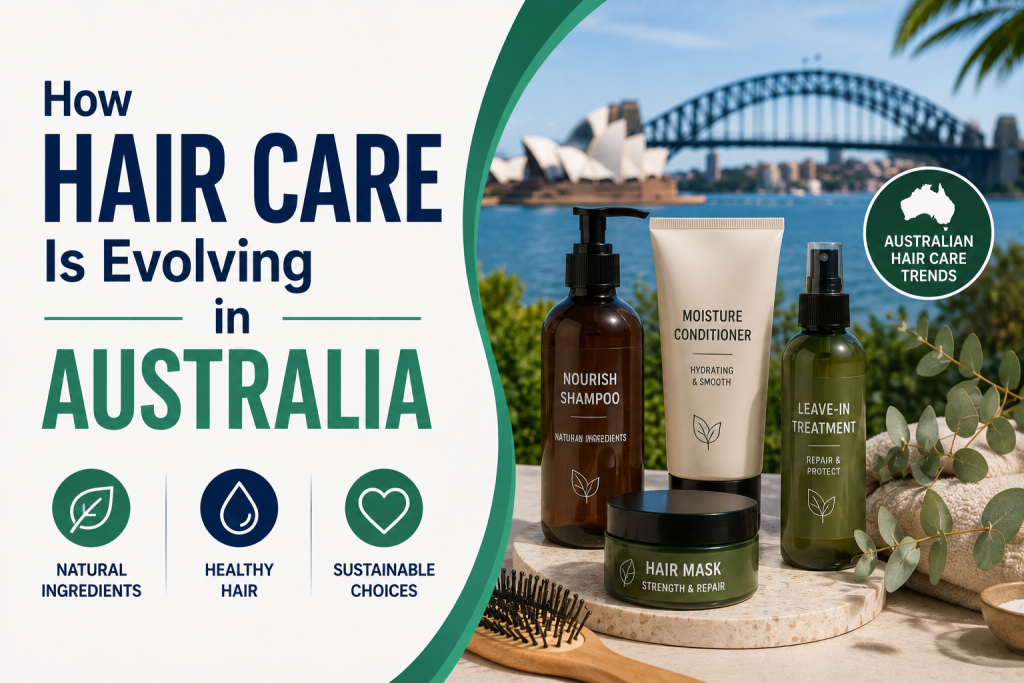
Hair care is becoming a more personalized part of daily grooming in Australia as consumers pay closer attention to scalp health, hair texture, climate exposure, ingredients, and product performance. Shampoos, conditioners, treatments, styling products, oils, masks, and color-care solutions are increasingly selected based on individual needs rather than general cleansing alone. This shift is influencing product formats, retail strategies, and brand positioning.
According to MarkNtel Advisors, the Australia hair care industry outlook states that the Australia hair care sector was valued at USD 1.21 billion in 2025 and is projected to grow from USD 1.67 billion in 2026 to USD 2.65 billion by 2032. The study estimates a CAGR of around 8% during 2026–2032, supported by shampoo demand, women consumers, premiumization, and changing grooming habits.
Shampoos Remain the Leading Category
Shampoo accounted for around 28% share in 2026, according to the shared study. This leadership reflects its role as a regular-use product across households, salons, gyms, travel routines, and personal care purchases. Shampoos are used not only for cleansing but also for concerns such as dandruff, oil control, hydration, color protection, volume, and scalp comfort.
Product variety has expanded as consumers look for formulas that suit curly, dry, oily, colored, damaged, fine, or textured hair. Brands are also developing sulfate-free, silicone-free, natural-positioned, and sensitive-scalp options. However, product suitability depends on hair type, scalp condition, washing frequency, and ingredient tolerance rather than label claims alone.
Women Consumers Hold Strong Share
Women accounted for around 63% share in 2026, making them the leading consumer group in the report. This reflects higher spending on shampoos, conditioners, treatments, coloring products, styling aids, and salon-supported routines. Women consumers often use multiple products across cleansing, conditioning, repair, heat protection, and finishing.
Hair care decisions may be shaped by lifestyle, professional grooming, social media, salon recommendations, age, hair coloring, and exposure to heat styling tools. At the same time, male grooming and gender-neutral products are becoming more visible, especially in scalp care, anti-dandruff products, styling gels, and hair-loss-related routines.
Climate and Lifestyle Influence Product Needs
Australia’s climate can affect hair care routines. Sun exposure, humidity, dry weather, coastal saltwater, chlorine from swimming pools, and frequent outdoor activity can influence dryness, frizz, scalp comfort, and color fading. Consumers may therefore seek moisturizing products, UV-protection claims, anti-frizz solutions, and repair treatments.
The Australian Government’s SunSmart guidance highlights the importance of sun protection in daily life, which is relevant to broader personal care habits in Australia. While hair products cannot replace skin protection measures, outdoor lifestyles can increase interest in products that help manage dryness, scalp exposure, and environmental stress.
Ingredient Transparency Is Becoming Important
Consumers are paying closer attention to what goes into personal care products. Ingredients such as surfactants, preservatives, fragrances, silicones, oils, proteins, botanical extracts, and active scalp-care agents can influence buying decisions. Some shoppers prefer simpler labels, while others look for performance-focused formulas backed by visible results.
Australia’s industrial chemicals regulator, AICIS, provides information on chemicals in cosmetics and personal care products, which is relevant as brands develop and introduce cosmetic formulations. Clear labeling and responsible ingredient communication help consumers make better choices without relying on vague natural or clean-beauty claims.
Premium and Salon Products Gain Attention
Premiumization is influencing Australian hair care as consumers spend more on targeted treatments, salon-grade formulas, bond-repair products, scalp serums, leave-in conditioners, hair masks, and heat-protection sprays. These products are often positioned around repair, hydration, shine, volume, color care, or professional performance.
Salon recommendations continue to influence product adoption, especially for consumers who color, straighten, curl, or chemically treat their hair. Professional guidance can help users choose suitable products and avoid overuse. However, price remains a practical factor, and many consumers balance premium treatments with affordable everyday shampoos and conditioners.
Online Retail Supports Product Discovery
E-commerce platforms, brand websites, beauty retailers, and social media are changing how consumers discover hair care products. Online channels allow shoppers to compare ingredients, read reviews, access tutorials, and explore niche brands that may not have strong physical retail presence. Subscription models and personalized recommendations are also becoming more common.
Digital discovery can improve product access, but it may also expose consumers to exaggerated claims. Reviews, influencer content, and before-after visuals should be evaluated carefully. For technical concerns such as scalp irritation, hair loss, or persistent dandruff, professional advice may be more reliable than product trends alone.
Competition Reflects Strong Brand Presence
The report notes that the top five companies account for nearly 60% share, indicating a relatively concentrated competitive environment. Large brands benefit from distribution networks, advertising scale, retail relationships, product portfolios, and consumer trust. At the same time, smaller brands can compete through natural positioning, specialist formulas, local identity, or salon partnerships.
Competition is shaped by pricing, product performance, scent, packaging, sustainability claims, ingredient transparency, and availability across supermarkets, pharmacies, salons, and online stores. Brands that combine practical results with clear communication are likely to maintain stronger consumer relevance.
Outlook for Hair Care in Australia
Australia’s hair care development is being shaped by shampoo demand, women consumers, climate-related grooming needs, ingredient awareness, premium treatments, and online discovery. The report figures indicate steady growth through 2032 as consumers continue seeking products that support daily cleansing, scalp comfort, styling, repair, and personalized routines.
The long-term direction will depend on affordability, product efficacy, transparent labeling, retail accessibility, and responsible claims. As personal care routines become more specialized, hair care products will remain important for hygiene, appearance, confidence, and everyday grooming across Australian households.