In the world of construction and infrastructure, success is often determined by how well unseen challenges are managed. One of the most overlooked yet critical aspects of any project is drainage. While structures may appear strong and well-built on the surface, poor water management beneath can gradually weaken even the most carefully designed systems.
Water accumulation within soil layers or behind structures can create pressure, reduce soil strength, and eventually lead to failure. That’s why modern engineering focuses on efficient drainage solutions that not only remove water but also maintain long-term structural stability.
Among these solutions, drainage geocomposites have gained significant attention for their ability to provide reliable performance in a compact and efficient form.
The Real Impact of Poor Drainage
Before understanding the value of drainage geocomposites, it’s important to recognize the problems caused by inadequate drainage.
Water trapped within soil or structural systems can:
- Increase hydrostatic pressure behind retaining walls
- Weaken soil strength and bearing capacity
- Cause deformation in roads and pavements
- Lead to water seepage in basements and tunnels
These issues may not appear immediately, but over time, they can result in costly repairs and safety concerns.
Traditional drainage methods, such as thick gravel layers or pipe systems, have been used for decades. However, they often require more space, higher material usage, and regular maintenance.
This is where drainage geocomposites offer a smarter alternative.
What Makes Drainage Geocomposites Different?
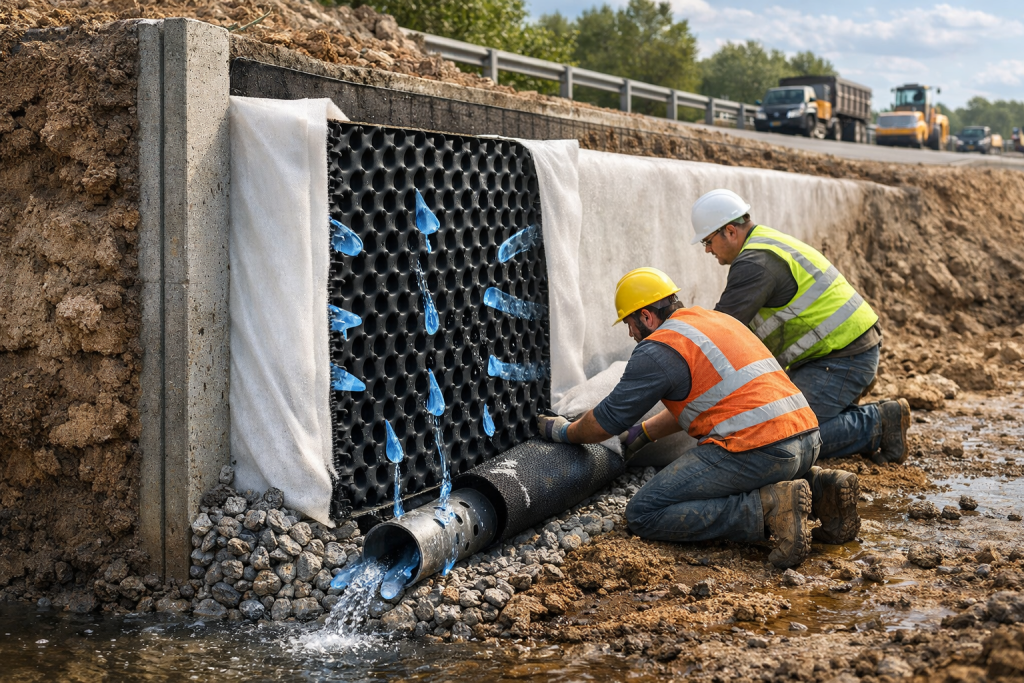
Drainage geocomposites are engineered systems designed to manage water efficiently within soil and structural environments. They combine multiple components into a single product, typically including:
- A drainage core that allows water to flow
- Geotextile layers that filter out soil particles
This integrated design ensures that water is not only collected but also transported away without clogging the system.
Unlike traditional materials, drainage geocomposites are lightweight, compact, and easy to install, making them ideal for modern construction projects.
How These Systems Work
The working mechanism of drainage geocomposites is both simple and highly effective.
When water enters the system:
- The geotextile layer filters out fine soil particles
- Clean water flows into the drainage core
- The core channels water away from the structure
This continuous flow prevents water buildup and reduces pressure, helping maintain the stability of the structure.
Because the system is designed to resist clogging, it maintains consistent performance over time.
Where Drainage Geocomposites Are Used
These systems are widely used across various types of infrastructure projects, each benefiting from improved drainage.
Retaining Wall Systems
Water pressure behind retaining walls is a common issue. Drainage geocomposites help relieve this pressure, reducing the risk of cracks or failure.
Landfills and Environmental Projects
In landfill systems, managing leachate is essential. Drainage geocomposites help collect and direct liquids safely, supporting environmental protection.
Road and Highway Construction
Water can weaken road foundations and lead to damage. Proper drainage ensures longer-lasting pavements and reduced maintenance.
Underground Structures
Basements, tunnels, and underground facilities often face water infiltration. These systems help keep such areas dry and stable.
Landscaping and Urban Development
Drainage geocomposites are also used in green roofs, gardens, and urban landscaping to manage water effectively.
Benefits That Make a Real Difference
The growing use of drainage geocomposites is driven by the practical advantages they offer.
Efficient Water Flow
They provide a reliable path for water movement, preventing accumulation and pressure buildup.
Space-Saving Solution
Their thin profile allows them to be used in areas where traditional drainage systems may not fit.
Faster Installation
Lightweight materials make installation quicker and more efficient.
Long-Term Reliability
Designed for durability, these systems maintain performance over time without significant degradation.
Reduced Maintenance Needs
By preventing clogging and ensuring consistent flow, they minimize the need for ongoing maintenance.
Supporting Modern Construction Needs
Today’s infrastructure projects require solutions that are not only effective but also efficient and sustainable. Drainage geocomposites align perfectly with these requirements.
They help reduce the use of natural resources, improve construction efficiency, and enhance overall project performance. This makes them a preferred choice for engineers and developers looking to build smarter and more sustainable systems.
Choosing the Right Materials and Expertise
The success of any drainage system depends on proper design, quality materials, and correct installation. Each project has unique requirements, and selecting the right solution is essential.
Factors such as soil conditions, water flow, and load requirements must be carefully considered.
Working with experienced providers ensures that the system performs as expected. Companies like A&T Engineering Pvt. Ltd. offer drainage geocomposite solutions designed to meet modern infrastructure demands, ensuring reliability and long-term performance.
The Future of Drainage Technology
As infrastructure continues to evolve, the need for advanced drainage solutions will only increase. Drainage geocomposites are expected to play a major role in this transformation.
With ongoing advancements in material technology, these systems will become even more efficient and adaptable. Engineers are also exploring new applications, expanding their use across different sectors.
The focus is shifting toward smarter solutions that deliver better performance with fewer resources—and drainage geocomposites are leading the way.
Conclusion
Effective drainage is one of the most important aspects of any construction project, even though it often goes unnoticed. Without proper water management, structures can face serious challenges over time.
Drainage geocomposite systems offer a modern, efficient, and reliable solution to this problem. Their ability to manage water, reduce pressure, and improve stability makes them an essential component of today’s infrastructure.
As construction practices continue to advance, adopting smart drainage solutions will be key to building structures that are not only strong but also durable and sustainable.