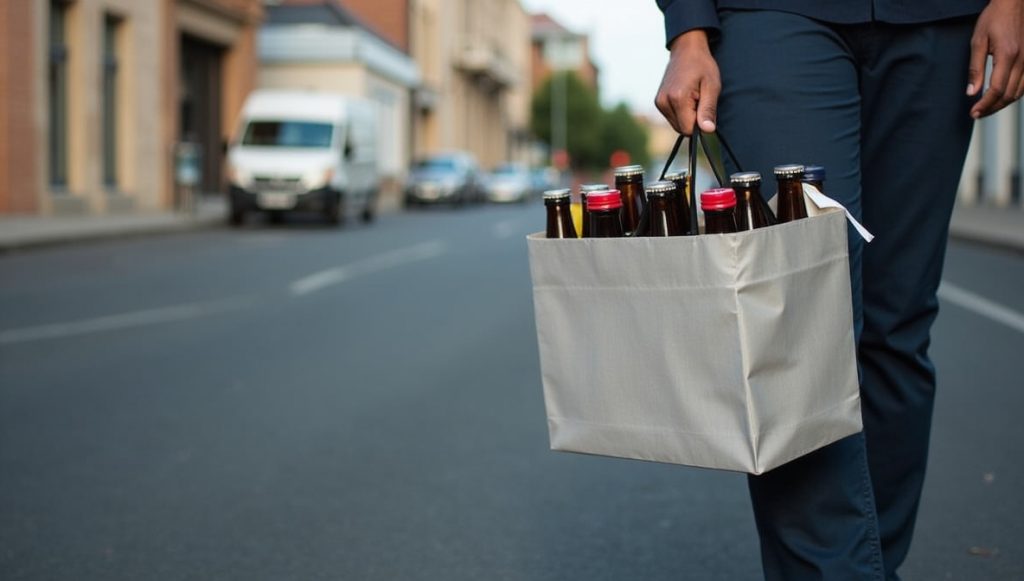
The beverage delivery industry has evolved far beyond simple phone orders and manual dispatch systems. What once depended heavily on human coordination, phone calls, and static delivery routes is now being reshaped by artificial intelligence (AI) and GPS tracking technologies. These innovations are not just improving efficiency—they are redefining how customers discover, order, and receive beverages in real time.
From smarter route planning to predictive demand forecasting and live delivery visibility, AI and GPS are at the core of a new, hyper-efficient delivery ecosystem. This transformation is making beverage delivery faster, more reliable, and more personalized than ever before.
In this post, we’ll explore how AI and GPS tracking are transforming beverage delivery experiences, the key technologies behind them, and what the future looks like for alcohol delivery app development in this rapidly growing industry.
The Shift From Traditional Delivery to Intelligent Systems
Traditionally, beverage delivery relied on basic order management systems. A customer placed an order, a store processed it manually, and a delivery person was assigned based on availability or proximity. This model had several limitations:
- Delayed dispatching due to manual assignment
- Inefficient routing leading to longer delivery times
- Lack of real-time order visibility for customers
- Poor demand prediction causing stock issues
- Limited personalization
As customer expectations grew—especially for instant delivery—these inefficiencies became more visible. People now expect not just speed, but transparency and accuracy. This demand has pushed businesses toward AI-driven and GPS-enabled systems.
Role of AI in Modern Beverage Delivery Systems
Artificial intelligence is the backbone of modern delivery platforms. It processes large volumes of data to make intelligent decisions that humans cannot perform at the same speed or scale.
1. Predictive Demand Forecasting
One of the most impactful applications of AI is predicting what customers are likely to order and when.
By analyzing:
- Historical purchase data
- Weather conditions
- Local events
- Seasonal trends
- Time of day patterns
AI systems can forecast demand with impressive accuracy. For example, beer sales may spike during weekends or sports events, while wine demand might increase during festive seasons.
This helps businesses:
- Stock inventory efficiently
- Reduce wastage
- Ensure popular products are always available
2. Intelligent Order Recommendation Systems
AI also powers personalized recommendations. Similar to streaming platforms suggesting movies, beverage apps now suggest products based on user behavior.
Examples include:
- Suggesting craft beers to frequent beer buyers
- Recommending premium wines based on past purchases
- Offering discounts on frequently bought items
This not only increases sales but also enhances user experience by making discovery easier.
3. Automated Order Processing
AI reduces human involvement in order handling by automating:
- Order validation
- Payment verification
- Age verification compliance (where applicable)
- Fraud detection
This ensures smoother operations and reduces errors that can delay deliveries.
4. Smart Inventory Management
AI continuously monitors inventory levels and triggers restocking alerts. Advanced systems even automate procurement decisions.
Benefits include:
- Avoiding stockouts of popular beverages
- Reducing overstocking of slow-moving items
- Optimizing warehouse storage
5. Dynamic Pricing Models
Some beverage delivery platforms use AI to adjust pricing based on:
- Demand spikes
- Local competition
- Time-based factors
- Inventory levels
This ensures maximum profitability while staying competitive in the market.
How GPS Tracking Enhances Delivery Experience
While AI works behind the scenes, GPS tracking brings transparency and real-time visibility to users and businesses.
1. Real-Time Order Tracking
One of the most appreciated features by customers is live order tracking.
With GPS integration:
- Customers can see the delivery person’s real-time location
- Estimated delivery times are updated dynamically
- Delays are communicated automatically
This eliminates uncertainty and improves trust.
2. Optimized Route Navigation
GPS systems combined with AI-based routing engines calculate the fastest and most efficient delivery routes by considering:
- Traffic conditions
- Road closures
- Distance and delivery priority
- Weather conditions
This reduces delivery time significantly and improves fuel efficiency.
3. Geo-Fencing for Hyperlocal Deliveries
Geo-fencing allows businesses to define service boundaries. When a customer places an order:
- The system checks if they are within the delivery zone
- Automatically assigns the nearest delivery agent
- Ensures compliance with local regulations
This is especially important in regulated beverage markets.
4. Delivery Agent Tracking and Management
Businesses can monitor delivery personnel in real time, enabling:
- Performance tracking
- Faster dispatch decisions
- Safety monitoring
- Reduced idle time
This leads to better workforce optimization.
5. Proof of Delivery (POD)
GPS-enabled apps often include digital proof of delivery features such as:
- OTP verification
- Digital signatures
- Location stamps
This ensures accountability and reduces disputes.
The Combined Power of AI and GPS
While AI and GPS are powerful individually, their real impact comes when they are integrated.
Together, they enable:
1. Intelligent Dispatching
AI analyzes delivery load, order priority, and driver location using GPS data to assign the best possible delivery agent automatically.
Result:
- Faster order allocation
- Reduced delivery delays
- Balanced workload among drivers
2. Real-Time Route Optimization
AI continuously recalculates delivery routes based on live GPS data and external conditions like traffic congestion.
This ensures:
- Shortest delivery times
- Fuel efficiency
- Reduced customer wait time
3. Predictive ETA Updates
Instead of static delivery estimates, AI + GPS systems provide dynamic ETAs that adjust in real time based on:
- Traffic changes
- Delivery queue changes
- Weather conditions
Customers receive more accurate and reliable updates.
4. Smart Batch Deliveries
AI groups multiple nearby orders and assigns them to a single delivery route using GPS clustering techniques.
This leads to:
- Reduced delivery costs
- Higher delivery efficiency
- Lower environmental impact
Enhancing Customer Experience Through Technology
The ultimate goal of integrating AI and GPS is to improve the customer experience. Here’s how users benefit directly:
Faster Deliveries
Optimized routing and smart dispatching reduce delivery times significantly.
Transparency
Customers can track every stage of their order in real time.
Personalization
AI ensures that users receive recommendations tailored to their preferences.
Reliability
Predictive systems reduce errors and improve order accuracy.
Convenience
Seamless ordering, tracking, and delivery make the entire process frictionless.
Business Benefits of AI and GPS Integration
Beyond customer satisfaction, businesses also gain significant advantages:
1. Reduced Operational Costs
Optimized routes and automated systems reduce fuel, labor, and administrative costs.
2. Higher Delivery Efficiency
More deliveries can be completed in less time with fewer resources.
3. Improved Customer Retention
Better experience leads to repeat customers and higher loyalty.
4. Data-Driven Decision Making
AI provides actionable insights based on customer behavior and operations data.
5. Scalability
Businesses can expand into new regions without significantly increasing operational complexity.
Challenges in Implementation
Despite its benefits, integrating AI and GPS tracking is not without challenges:
1. High Initial Investment
Advanced systems require significant upfront technology investment.
2. Data Privacy Concerns
Handling location data requires strict compliance and security measures.
3. Regulatory Restrictions
Beverage delivery laws vary across regions and must be carefully managed.
4. Technical Complexity
Integrating multiple systems (AI, GPS, payment, inventory) requires robust architecture.
5. Dependency on Connectivity
Real-time tracking depends heavily on stable internet and GPS signals.
The Future of Beverage Delivery Technology
The future of beverage delivery will likely be even more intelligent and automated. Some emerging trends include:
1. Autonomous Delivery Vehicles
Drones and self-driving vehicles may handle last-mile delivery in the future.
2. Voice-Activated Ordering
Users will place orders using smart assistants.
3. Hyper-Personalized AI Agents
AI will act as personal beverage assistants, suggesting products based on mood, weather, and habits.
4. Blockchain for Transparency
Blockchain may be used for secure payment and delivery verification.
5. Fully Predictive Delivery Systems
Orders may be prepared and dispatched even before users confirm them, based on predictive behavior.
Conclusion
AI and GPS tracking are fundamentally transforming beverage delivery experiences by making them faster, smarter, and more customer-centric. What used to be a manual and often unpredictable process has now become a highly optimized, data-driven system.
From intelligent recommendations and demand forecasting to real-time tracking and dynamic routing, these technologies are reshaping every aspect of the industry. As innovation continues, beverage delivery will move closer to a fully automated, predictive, and seamless ecosystem.
Businesses that adopt these technologies early will not only improve efficiency but also gain a significant competitive advantage in an increasingly digital marketplace.