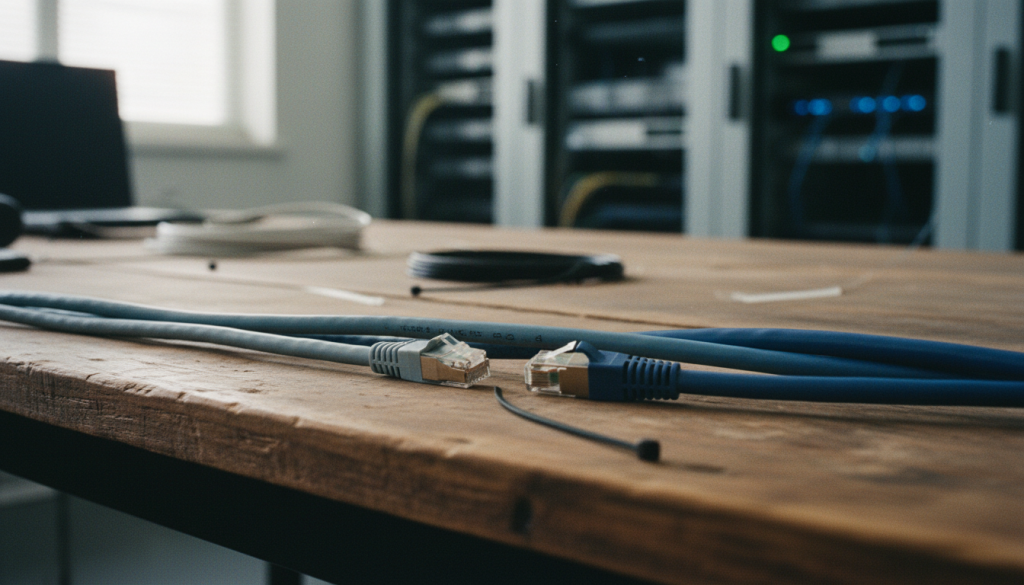
When planning a network infrastructure upgrade, one of the most common questions organizations face is whether to install Cat6 or Cat6a Ethernet cabling. Both cable categories are widely used in modern networking environments and provide significantly better performance than older standards like Cat5e.
However, when considering long-term installations especially in commercial buildings, offices, and data centers, the decision becomes more complex. Network designers must evaluate bandwidth requirements, cable distance limitations, electromagnetic interference, and future scalability.
Choosing the right cable today can determine how easily a network adapts to technological advancements over the next decade.
Understanding Cat6 and Cat6a Ethernet Cables
Ethernet cables are categorized based on their performance capabilities, including bandwidth capacity and data transmission speeds. While Cat6 and Cat6a may appear similar, they are designed to support different networking requirements.
Cat6 Ethernet Cables
Cat6 cables were developed to support gigabit Ethernet networks and can handle speeds up to 10 Gbps over 50 meters. They offer improved shielding and reduced crosstalk compared to earlier cable categories.
Cat6 is often used in residential installations, small office networks, and environments where high-speed connectivity is required but distances between network devices remain relatively short.
These cables provide a cost-effective upgrade from Cat5e while still delivering strong performance for most typical networking tasks.
Cat6a Ethernet Cables
Cat6a, or Category 6 augmented cables, were designed specifically to support higher bandwidth and more demanding enterprise network environments. They support 10 Gigabit Ethernet over the full 100-meter channel length, making them ideal for larger installations.
Many organizations install Cat6a cable for enterprise networks because it offers enhanced shielding, reduced interference, and better performance in high-density environments such as office buildings, campuses, and data centers.
The additional insulation and improved construction allow Cat6a cables to handle higher data loads while maintaining signal integrity across longer distances.
Distance and Performance Considerations
One of the most important differences between Cat6 and Cat6a cables is how well they perform over longer distances.
Cat6 cables can technically support 10 Gigabit Ethernet, but only for distances of up to approximately 50 meters under ideal conditions. Beyond that range, signal degradation may occur, forcing networks to operate at lower speeds.
Cat6a cables, however, are specifically designed to support 10 Gbps speeds across the full standard Ethernet channel length of 100 meters. This makes them more suitable for large office environments, campus networks, and data centers where devices may be located far from the network switch.
For organizations planning long-term installations, this extended performance range can make a significant difference in network flexibility.
Protection Against Interference
In busy network environments with large volumes of cabling, electromagnetic interference and alien crosstalk can negatively impact signal quality.
Cat6a cables include enhanced shielding and improved internal construction to reduce interference between neighboring cables. This becomes particularly important in high-density installations where multiple cables run through the same pathways or cable trays.
By minimizing signal interference, Cat6a cables provide more consistent performance and help maintain high-speed data transmission even in crowded networking environments.
Supporting Future Network Technologies
Technology adoption continues to push network infrastructure toward higher speeds and greater bandwidth capacity. Applications such as cloud computing, high-definition video conferencing, large-scale data storage, and Internet of Things (IoT) deployments all place increasing demands on network systems.
Organizations that install cabling infrastructure today often expect it to remain in place for 10 to 15 years or more. During that time, networking standards and bandwidth requirements may evolve significantly.
Cat6 cables may meet current performance needs, but Cat6a provides greater headroom for future upgrades. Networks built with Cat6a infrastructure are better prepared to support emerging technologies without requiring major cabling replacements.
This future-ready capability makes Cat6a particularly attractive for enterprise environments and large commercial installations.
Installation and Cost Considerations
Despite its advantages, Cat6a cabling does come with certain trade-offs that organizations should consider during network planning.
Cat6a cables are generally thicker and less flexible than Cat6 cables due to their additional shielding and insulation. This can make installation slightly more complex, particularly in tight cable pathways or crowded network racks.
Additionally, Cat6a cables typically cost more than Cat6 cables, both in terms of materials and installation labor. However, when evaluating long-term infrastructure investments, the difference in cost may be offset by the extended lifespan and reduced need for upgrades.
For many businesses, the decision ultimately depends on balancing current budget constraints with future network requirements.
Choosing Quality Cabling
Regardless of whether Cat6 or Cat6a cables are selected, the quality of the cabling materials plays a critical role in network reliability.
Low-quality cables with poor copper conductors or inadequate shielding may struggle to deliver consistent speeds and could introduce signal loss over longer distances. These issues often become more noticeable in larger installations where cables run through extensive pathways.
Working with specialized suppliers that certify their copper quality and manufacturing standards helps ensure that the network performs as expected. High-quality cables reduce interference, improve signal stability, and support long-term infrastructure reliability.
Final Verdict
Both Cat6 and Cat6a Ethernet cables provide excellent performance for modern networking environments, but their suitability depends on the scale and future requirements of the installation.
Cat6 cables offer strong performance for smaller networks and shorter cable runs, making them a practical choice for many residential and small office applications. However, Cat6a cables provide greater bandwidth capacity, improved interference protection, and reliable 10 Gigabit speeds over longer distances.
For organizations planning long-term infrastructure installations, investing in Cat6a cabling can provide the flexibility and scalability needed to support evolving technologies and increasing network demands.
By carefully evaluating performance requirements and choosing high-quality materials, businesses can build network systems that remain reliable and efficient for many years to come.