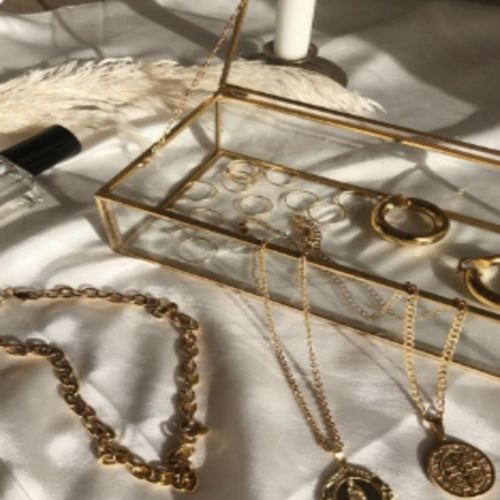
In a world increasingly dominated by automation and speed, the allure of the handmade object remains a powerful force. This is nowhere more evident than in the realm of fine jewelry, where a gold necklace for women crafted by human hands carries a weight that far exceeds its metal value. There is an intimate dialogue between the artisan and the material, a conversation of fire, force, and finesse that results in a wearable masterpiece. For the discerning woman, a handmade gold necklace is not merely an accessory but a testament to human creativity and a rebellion against the uniformity of mass production.
This article explores the captivating world of artistic handmade gold necklaces. We will journey into the workshops where raw metal transforms into liquid light, examine the ancient techniques that keep tradition alive, and discover why these unique pieces resonate so deeply with the modern spirit. You will learn how the imperfections of the hand create perfection in design and how wearing such a piece becomes an act of personal expression unlike any other.
The Soul of the Artisan in Every Link
The primary distinction of a handmade gold necklace lies in its origin story. Mass-produced jewelry is born from molds and machines, designed for efficiency and identical replication. In stark contrast, a handmade piece begins with an idea and a raw ingot of gold. The artisan sits at a bench, tools in hand, and pours their focus, skill, and even their mood into the metal. This transfer of energy imbues the necklace with a tangible soul. When you hold a handmade chain, you can almost feel the patience required to shape each link and the steady hand that soldered them closed.
This connection to the maker offers a profound sense of intimacy. The necklace is no longer an anonymous object purchased from a display case; it is a bridge to another human being’s passion. This emotional provenance adds a layer of value that cannot be quantified. It transforms the act of wearing the necklace into a celebration of human potential and dedication. Whether it is a rugged, hammered pendant or a delicate, filigree collar, the presence of the maker is always felt, whispering stories of the studio and the fire.
Celebrating Imperfection as Beauty
One of the most compelling aspects of handmade gold jewelry is the celebration of the organic. Machines strive for mathematical precision, erasing any sign of deviation. The human hand, however, naturally introduces subtle variations that give a piece character. A handmade gold necklace might feature a texture that is slightly uneven, a curve that feels fluid rather than geometric, or a finish that plays with light in unexpected ways. These are not flaws; they are the fingerprints of the process.
Japanese aesthetics often refer to this concept as wabi-sabi, the appreciation of beauty that is imperfect, impermanent, and incomplete. In the context of a gold necklace, this might manifest in the way a hammered surface reflects the light differently at every angle, creating a shimmer that feels alive. It creates a warmth that industrial perfection simply cannot replicate. Wearing such a piece signals a confidence in one’s own skin, an understanding that true beauty lies in uniqueness rather than standardization. It aligns the wearer with the natural world, where no two leaves or stones are exactly alike.
Ancient Techniques in a Modern World
The creation of a handmade gold necklace often involves techniques that have remained unchanged for centuries. Artisans act as custodians of history, keeping ancient skills alive through their work. One such technique is granulation, where tiny spheres of gold are fused onto a surface to create intricate patterns. This method was perfected by the Etruscans thousands of years ago and requires a mastery of heat control that few possess. Seeing a modern necklace adorned with granulation is like looking through a window into the past, witnessing a skill that has survived the rise and fall of empires.
Forging is another fundamental technique where the goldsmith uses hammers to shape the metal while it is hot or cold. This physical manipulation compresses the gold’s crystalline structure, making it harder and more durable while shaping it into organic forms. The rhythmic sound of the hammer striking the anvil is the heartbeat of the workshop. Through repoussé and chasing, artisans push and pull the metal to create relief designs, sculpting scenes or abstract motifs directly into the gold. These methods require a lifetime of dedication to master, ensuring that every handmade necklace is a triumph of skill over material.
The Journey from Inspiration to Adornment
The design process for an artistic gold necklace is rarely linear. It often begins with a spark of inspiration drawn from the world around the artisan. Some find their muse in the architectural lines of a cityscape, translating steel girders and concrete angles into structural gold collars. Others look to nature, capturing the delicate skeleton of a decaying leaf or the rugged texture of tree bark in solid yellow gold. This artistic intent ensures that the necklace is not just decorative but narrative.
Unlike commercial designers who must consider mass appeal and trend forecasting, the independent artisan is free to follow their own creative compass. They can experiment with unusual asymmetry, bold proportions, or unconventional stone settings. This freedom results in jewelry that challenges the status quo. A handmade necklace might combine rough, unpolished gold with sleek, high-shine elements, creating a contrast that dazzles the eye. It invites the wearer to look closer, to explore the details, and to interpret the artist’s vision in their own way.
Styling the Unique and the Personal
Incorporating a handmade gold necklace into a wardrobe is an exercise in personal style. Because these pieces possess such strong character, they often become the focal point of an ensemble. A heavy, forged gold chain links perfectly with the crisp simplicity of a white linen shirt, adding a touch of primal luxury to a casual look. The texture of the metal contrasts beautifully with the softness of the fabric, creating a tactile experience that is both comfortable and chic.
For evening wear, an artistic statement piece can transform a simple black dress into a gallery-worthy outfit. A sculptural gold collar that rests along the collarbone draws the eye upward, illuminating the face. Because the piece is handmade, there is no risk of walking into a room and seeing someone else wearing the exact same item. It guarantees exclusivity. The wearer becomes a curator of their own appearance, selecting pieces that speak to their individual taste rather than following the herd.
Layering offers another avenue for expression. Mixing a vintage handmade locket with a contemporary artisan chain creates a rich tapestry of textures and eras. The key is to let the pieces converse with one another without overcrowding. The eclectic nature of handmade jewelry lends itself well to this bohemian approach, where rules are less important than the overall feeling of the composition. It allows a woman to wear her history and her artistic sensibilities around her neck.
An Heirloom for the Future
While we often think of heirlooms as antique items we inherit, buying a handmade gold necklace today is an act of creating a future heirloom. The durability of gold combined with the quality of artisanal construction ensures that these pieces will last for generations. Unlike fast fashion jewelry that is destined for the landfill after a season, a handmade gold necklace is built to endure. It is an investment in permanence.
As the necklace is worn, it accumulates the patina of life. Tiny scratches and softening of edges map the journey of the wearer, adding yet another layer of story to the piece. When it is eventually passed down to a daughter or granddaughter, it carries with it not just the legacy of the artisan who made it, but the essence of the woman who wore it. It becomes a talisman of family history, a golden thread connecting the past to the future. In an age of disposability, choosing something made to last is a profound statement of values.
Conclusion
The handmade gold necklace stands as a beacon of artistry, humanity, and enduring beauty. It rejects the cold precision of the machine in favor of the warm, imperfect touch of the human hand. From the ancient techniques used to forge it to the unique inspiration that shapes it, every aspect of such a necklace celebrates the creative spirit. Wearing these pieces is not just about adornment; it is about connection—to the maker, to history, and to one’s own sense of individuality. As we navigate a complex modern world, the simple, honest beauty of a handmade gold necklace offers a grounding reminder of what humans are capable of creating with passion, patience, and a little bit of fire.