


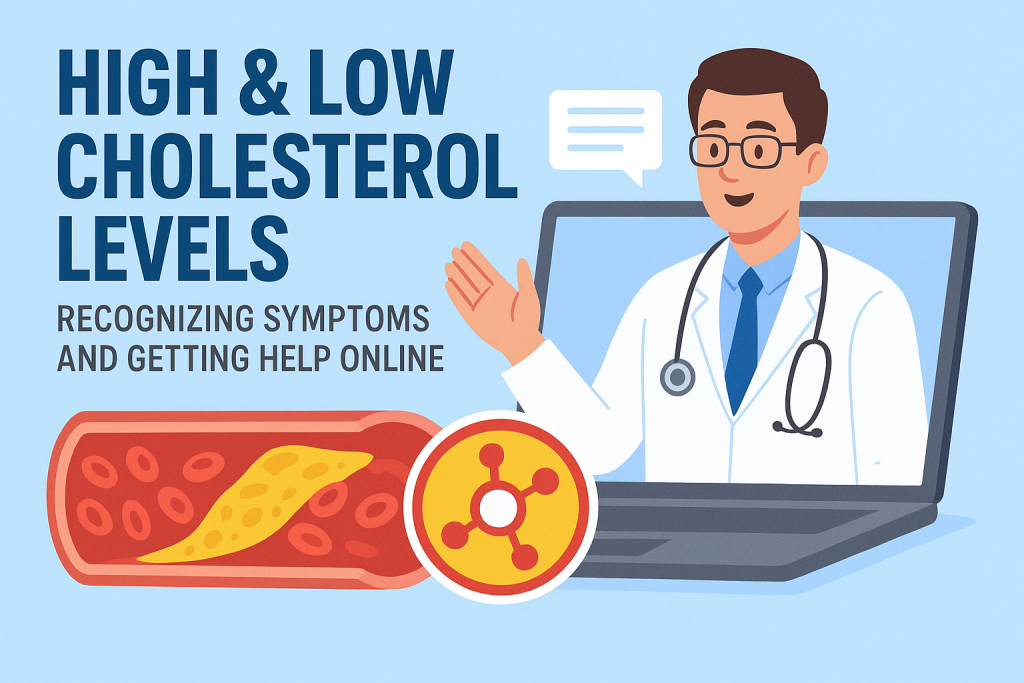
Cholesterol plays a major role in your overall health, but most people don’t realize when their levels are too high or too low. Unlike conditions that show immediate signs, cholesterol issues develop quietly. This is why understanding High & Low Cholesterol Levels, how they affect your body, and when to seek help is essential especially now, when online consultations make professional care more accessible than ever.
In this guide, we break down the causes, symptoms, health risks, and online treatment options related to cholesterol imbalance. Whether you’re managing chronic health concerns or simply want to stay informed, this article will help you recognize the warning signs early and take control of your heart health.
What Is Cholesterol?
Cholesterol is a fatty substance found in your blood. Your body needs some cholesterol to build healthy cells, produce hormones, and make vitamin D. However, too much or too little cholesterol can create serious health problems.
There are three main types:
1. LDL (Low-Density Lipoprotein)
Often called “bad cholesterol,” LDL builds up in blood vessels and contributes to plaque formation, leading to blockages.
2. HDL (High-Density Lipoprotein)
Referred to as “good cholesterol,” HDL removes excess cholesterol from your bloodstream and transports it to the liver for removal.
3. Triglycerides
These are fats your body stores for energy. High levels of triglycerides combined with High & Low Cholesterol Levels greatly increase your risk of heart disease.
A healthy balance is key, not too high and not too low.
Understanding High Cholesterol Levels
High cholesterol is one of the most common health concerns globally. It often develops silently, with no early symptoms, which is why regular monitoring is crucial.
Causes of High Cholesterol
Several factors can elevate your cholesterol levels:
1. Unhealthy Diet
Foods high in saturated fats, trans fats, and refined carbohydrates raise LDL levels and triglycerides. Common culprits include:
- Fried foods
- Fast food
- Processed meats
- Full-fat dairy products
2. Lack of Physical Activity
Sedentary lifestyles lower HDL and raise LDL.
3. Genetics
Familial hypercholesterolemia is an inherited condition that causes dangerously high cholesterol.
4. Certain Medical Conditions
These include:
- Hypothyroidism
- Kidney disease
- Diabetes
- Liver disorders
5. Smoking & Alcohol Consumption
Smoking lowers HDL, while excessive alcohol increases triglycerides.
Symptoms of High Cholesterol Levels
High cholesterol rarely shows symptoms until a major medical issue occurs. Still, some warning signs may indicate long-standing elevated levels:
1. Chest Pain (Angina)
Caused by reduced blood flow due to plaque buildup.
2. Fatigue or Feeling Sluggish
Poor circulation affects overall energy levels.
3. Shortness of Breath
Occurs when arteries supplying the heart or lungs are affected.
4. Numbness in Extremities
Restricted blood flow leads to tingling or weakness.
5. Yellowish Fat Deposits (Xanthomas)
These may appear on eyelids, elbows, knees, or tendons.
If you experience these symptoms, especially if you have risk factors, it’s crucial to seek medical help.
Understanding Low Cholesterol Levels
While high cholesterol is well-known, low cholesterol is an equally important but often overlooked concern. In fact, extremely low cholesterol levels can have significant effects on mental and physical health.
Causes of Low Cholesterol
Low cholesterol may occur due to:
1. Malnutrition
Inadequate intake of essential fats lowers cholesterol production.
2. Hyperthyroidism
An overactive thyroid gland speeds up metabolism, reducing cholesterol.
3. Chronic Infections
Long-term illnesses can disrupt metabolic functions.
4. Liver Diseases
Since the liver produces cholesterol, damage can lower levels drastically.
5. Genetic Disorders
Certain rare conditions impair cholesterol formation.
Symptoms of Low Cholesterol Levels
Low cholesterol affects hormone production, brain health, and cell repair. Symptoms may include:
1. Mood Changes
Low cholesterol can influence serotonin levels, leading to:
- Anxiety
- Irritability
- Depression
2. Poor Concentration
The brain relies on cholesterol for nerve signaling.
3. Fatigue or Weakness
Low cholesterol affects vitamin D and hormone production, affecting energy.
4. Muscle Pain
Hormonal imbalance may cause aches or spasms.
5. Increased Risk of Hemorrhagic Stroke
Weak blood vessels are more vulnerable to ruptures.
Recognizing these symptoms early allows for timely medical evaluation and treatment.
Health Risks Associated With High & Low Cholesterol Levels
Cholesterol imbalances can have long-term consequences. Understanding the risks helps you stay proactive.
Major Risks of High Cholesterol
1. Heart Disease
Plaque buildup narrows arteries, leading to coronary artery disease.
2. Stroke
Blocked blood flow to the brain can cause ischemic stroke.
3. Peripheral Artery Disease (PAD)
Reduced blood flow to limbs results in pain and numbness.
4. High Blood Pressure
Thickened arteries force the heart to work harder.
Major Risks of Low Cholesterol
1. Mental Health Disorders
Scientific studies link very low cholesterol to mood disorders.
2. Hormonal Imbalance
Cholesterol is essential for testosterone, estrogen, and cortisol production.
3. Vitamin D Deficiency
Low cholesterol interferes with vitamin D formation.
Diagnosing High & Low Cholesterol Levels
Testing is the only accurate way to diagnose cholesterol problems. A lipid panel measures:
- LDL
- HDL
- Total cholesterol
- Triglycerides
Doctors recommend testing:
- Every 4–6 years for healthy adults
- Annually for people with risk factors
If you experience symptoms or have a family history of abnormal cholesterol, you may need more frequent testing.
Online Help for Managing High & Low Cholesterol Levels
With digital healthcare improving rapidly, many people now choose online medical support for cholesterol management. This approach is efficient, private, and accessible from anywhere.
Here’s how online medical platforms, including HelloGP, can help.
1. Online Consultations with Qualified Doctors
You can discuss symptoms, lifestyle habits, and medical history with certified practitioners. They can analyze your risks, interpret lab results, and guide treatment.
2. Digital Prescriptions
If your condition requires medication such as:
- Statins for high cholesterol
- Thyroid medication (if linked to low cholesterol)
- Supplements to improve nutritional imbalance
A doctor can issue a prescription online and have it delivered to your doorstep.
3. Home Test Kits
Many online healthcare services provide at-home cholesterol testing kits. You simply collect a small blood sample and send it to the lab for analysis.
4. Personalized Diet & Lifestyle Plans
Diet and exercise play a major role in cholesterol management. Online platforms allow access to:
- Dieticians
- Cardiologists
- General practitioners
These professionals help design personalized meal plans and exercise routines tailored to your needs.
5. Follow-Up & Continuous Monitoring
Cholesterol needs long-term management. Online healthcare providers offer regular follow-ups without requiring physical visits, making it easier to stay consistent.
How to Maintain Healthy Cholesterol Levels
Whether dealing with high or low levels, lifestyle changes support overall health.
1. Eat a Heart-Healthy Diet
Focus on:
- Whole grains
- Fruits and vegetables
- Lean proteins
- Nuts and seeds
- Healthy oils (olive, avocado)
Avoid:
- Trans fats
- Processed foods
- Excessive sugars
2. Exercise Regularly
150 minutes of moderate exercise per week is ideal.
Walking, cycling, swimming, and light strength training are great options.
3. Quit Smoking
Smoking reduces HDL and increases cardiovascular strain.
4. Limit Alcohol Intake
Moderation is crucial, especially if you already have elevated triglycerides.
5. Manage Stress
Chronic stress affects hormones and cholesterol levels.
Use:
- Meditation
- Deep breathing
- Yoga
- Mindfulness
When to Seek Professional Help
You should contact a healthcare provider if you notice:
- Persistent fatigue
- Mood changes
- Chest pain
- Numbness or tingling
- Unexplained weight loss
- Family history of heart disease
These signs may indicate abnormal cholesterol levels that need urgent attention.
Final Thoughts
Understanding High & Low Cholesterol Levels is vital for protecting your long-term health. Even though symptoms are often subtle, the risks associated with cholesterol imbalance are serious. Thankfully, with online healthcare services, getting help has never been easier. Platforms like HelloGP offer convenient consultations, digital prescriptions, and continuous support allowing you to manage your cholesterol levels from the comfort of your home.
Prioritize regular testing, stay informed, and make healthy lifestyle choices. Your heart and overall well-being depend on it.
