Walk through any major agri expo in India today, and you will see something that felt futuristic just a few years ago. Drones hovering over crop models. Spray demonstrations. Startups talking about sensors and mapping tools.
But here is the real story. It is not just about flying machines. It is about building them at home. And that is where policy meets production.
India’s Production Linked Incentive program, better known as the PLI scheme, is quietly reshaping how Agriculture Drone Parts are designed and manufactured inside the country. At first glance, incentives sound like paperwork. In reality, they are changing factory floors.
Let’s break it down.
The PLI Scheme Is Creating Financial Incentives That Push Local Production of Agriculture Drone Parts
The PLI framework offers performance-based incentives to manufacturers that increase domestic output. In simple terms, the more you produce locally, the more support you receive.
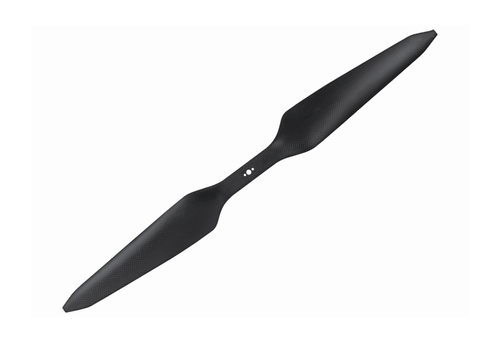
For companies making Agriculture Drone Parts such as motors, flight controllers, propellers, batteries, frames, and spraying systems, this matters a lot. Earlier, many of these components were imported, especially high-precision electronics and power systems. That made drones costlier and supply chains uncertain.
Under the drone-focused PLI initiative launched by the Government of India in 2021 and continuing through the mid-2020s, manufacturers receive incentives tied to value addition within India. This pushes companies to source raw materials locally, assemble domestically, and build supplier networks.
It sounds technical, but think of it this way: if you are a startup building drones for farmers, your margins improve when local parts are available at scale. Over time, that shifts the entire ecosystem.
Interestingly, critics initially said the drone PLI allocation was small compared to other sectors. True. But drones are still an emerging industry; targeted support at an early stage can have a multiplier effect.
The Scheme Is Attracting Investments And Building Manufacturing Clusters
Policy alone does not build factories. Investment does.
Since the introduction of drone specific incentives, several Indian companies have expanded facilities for electronics assembly, composite materials, and battery integration. States like Tamil Nadu, Karnataka, and Telangana have seen growing interest in drone component manufacturing clusters.
What is happening behind the scenes?
- MSMEs are entering the supply chain
- Electronics firms are diversifying into UAV components
- Research labs are collaborating with private players
This clustering effect reduces production costs over time. Shared suppliers. Shared logistics. Skilled workforce mobility.
And here is the twist. Some investors were hesitant at first because agricultural drones seemed niche. Now, with precision farming and government backed agri digitization programs expanding, demand visibility has improved. That reassurance pulls in capital.
For you as a reader, this means the devices used for crop monitoring and spraying are less dependent on overseas shipments. Production is happening closer to the farms.
It Is Reducing Import Dependence And Strengthening Supply Chain Resilience
Before the push for localization, a large share of critical drone electronics came from global suppliers. That worked fine until global disruptions hit. Semiconductor shortages and logistics delays exposed vulnerabilities.
By incentivizing domestic value addition, the PLI structure encourages local fabrication and assembly. Even if certain chips are still imported, integration and testing increasingly happen in India.
This shift does two things:
- Cuts lead times
- Improves quality control
There is also a strategic angle. Agriculture is a sensitive sector. When drone hardware is built domestically, data security and maintenance become easier to manage.
Of course, complete self-reliance is unrealistic in the short term. Advanced sensors and certain high-end components may still be sourced globally. But partial localization already reduces risk. It is not perfect autonomy; it is practical resilience.
It Is Encouraging Innovation, Standards, And Export Potential
Here is something people often overlook. Incentives tied to performance also encourage efficiency.
To qualify and stay competitive, manufacturers must improve design, reduce defects, and comply with aviation regulations set by the Directorate General of Civil Aviation. Quality standards rise because companies cannot afford repeated compliance failures.
Research and development is also getting attention. Indian startups are working on lightweight frames, better battery management systems, and AI-enabled navigation software integrated with drone hardware. When Agriculture Drone Parts are built locally, feedback loops become shorter. Engineers can test, tweak, and relaunch faster.
There is export potential too. Countries in Southeast Asia and Africa face similar agricultural challenges. If India can produce reliable and cost-effective drone components, it can serve those markets.
Still, the journey is ongoing. Incentives help, but sustained demand and global competitiveness will decide long-term success.
Conclusion
So, is the PLI scheme a silver bullet? Not exactly. Policy alone cannot guarantee innovation or market dominance.
But it has clearly nudged the industry in a new direction. Domestic production of drone components is rising, supply chains are maturing, and investors are paying attention.
If you care about the future of Indian agriculture, this shift matters. The drones flying above fields are not just tools for spraying or mapping. They are symbols of a manufacturing story unfolding on the ground.