


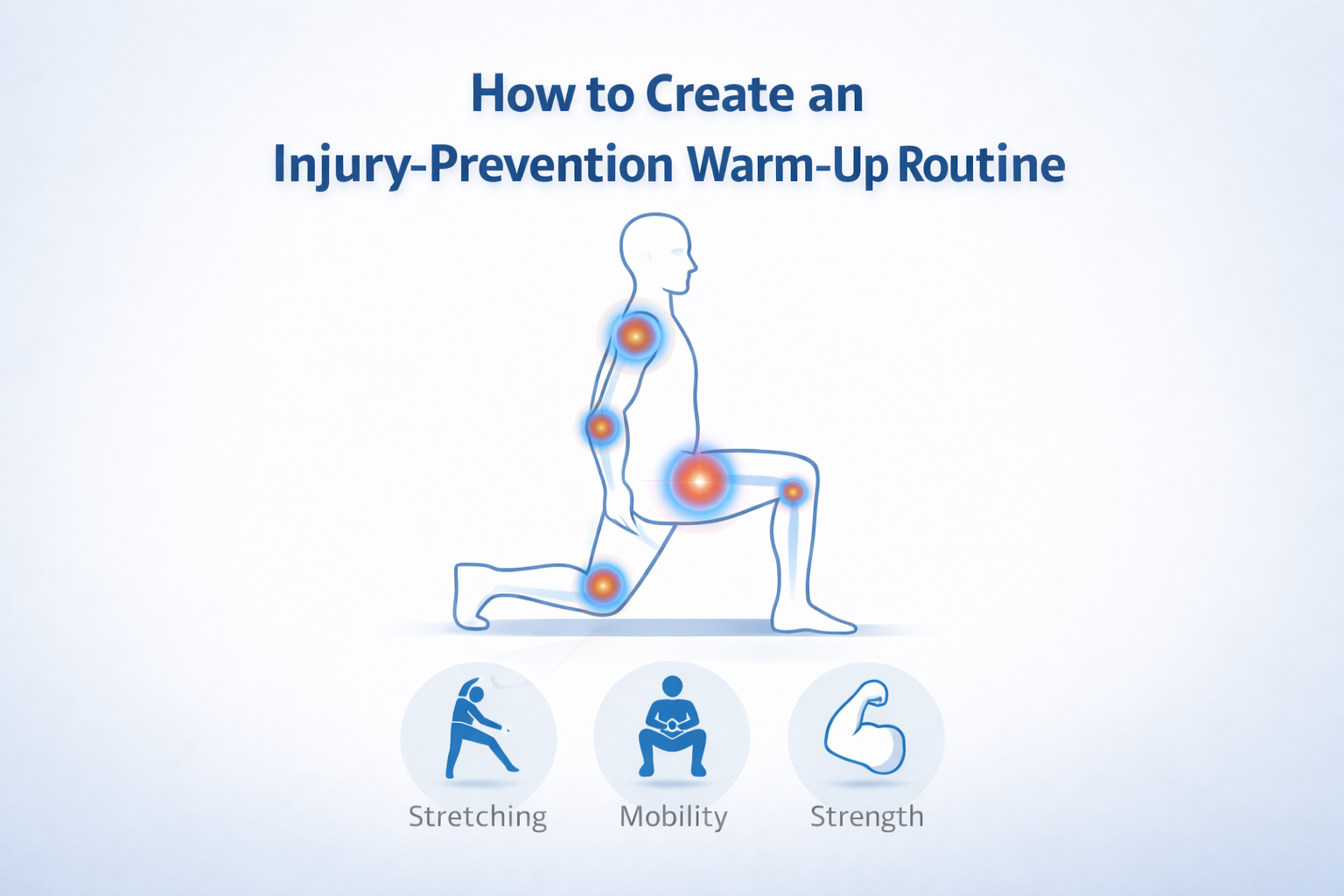

An injury-prevention warm-up routine prepares muscles, joints, and the nervous system for physical activity. A structured warm-up reduces injury risk, improves mobility, and enhances performance.
Dr. Mufaddal Gombera, MD, Orthopedic Surgeon at Mufaddal Gombera, MD / Fondren Orthopedic Group, states:
“A proper warm-up activates key muscle groups and improves joint stability, significantly reducing the likelihood of acute and overuse injuries.”
Dr. Gombera is Board-Certified in Orthopedic Surgery and Sports Medicine. He trained at Baylor College of Medicine, University of Michigan, and Northwestern University. He serves as Director of the Hip Preservation Center at Texas Orthopedic Hospital and Clinical Assistant Professor at UTMB.
1. What Is an Injury-Prevention Warm-Up Routine?
An injury-prevention warm-up routine is a sequence of exercises that increases blood flow, activates muscles, and improves joint mobility before activity.
- Increase muscle temperature to improve flexibility
- Activate stabilizing muscle groups
- Enhance neuromuscular coordination
- Prepare joints for load and movement
Fact: Structured warm-ups reduce sports injury risk by up to 30–50% in controlled studies.
2. What Are the Key Components of a Warm-Up?
A complete warm-up includes mobility, activation, and movement preparation phases.
Dynamic mobility:
- Perform leg swings to mobilize hips
- Use arm circles to activate shoulders
- Add torso rotations to prepare the spine
Muscle activation:
- Use glute bridges to activate hip stabilizers
- Perform bodyweight squats for lower body activation
- Include planks for core stability
Movement preparation:
- Practice lunges to prepare functional movement
- Perform light jogging or skipping drills
- Include sport-specific drills
3. How Long Should a Warm-Up Last?
An effective warm-up lasts 10–15 minutes depending on activity intensity.
- 5 minutes: light aerobic activity
- 5–10 minutes: dynamic stretching and activation
Observation: Shorter warm-ups reduce effectiveness, while longer routines may cause fatigue.
4. Why Is Dynamic Stretching Better Than Static Stretching?
Dynamic stretching improves mobility and performance, while static stretching may reduce power output before activity.
- Dynamic stretching increases blood flow and range of motion
- Static stretching is more effective post-exercise
Example: Athletes using dynamic warm-ups show improved sprint and jump performance.
5. How Does a Warm-Up Prevent Injuries?
A warm-up prepares muscles and joints to handle stress, reducing strain and instability.
- Improve joint stability through muscle activation
- Increase tissue elasticity to prevent tears
- Enhance coordination to reduce movement errors
Fact: Neuromuscular warm-up programs reduce ACL injury rates in athletes.
6. What Exercises Should You Include?
Include compound, functional movements targeting major muscle groups.
- Include lunges for hip and knee stability
- Use squats to activate lower body muscles
- Add high knees for cardiovascular activation
- Perform lateral shuffles for agility
7. How Should Warm-Ups Differ by Sport?
Warm-ups should match sport-specific movement patterns and intensity.
- Runners: focus on lower body mobility and stride drills
- Weightlifters: emphasize joint activation and light resistance sets
- Team sports: include agility and directional change drills
Example: Soccer players benefit from dynamic drills involving cutting and sprinting.
8. What Mistakes Should You Avoid?
Common mistakes reduce the effectiveness of warm-ups and increase injury risk.
- Skipping warm-up entirely
- Using only static stretching
- Rushing through movements without control
- Ignoring sport-specific preparation
9. Can Warm-Ups Improve Performance?
Warm-ups improve strength, speed, and coordination by activating the nervous system.
- Increase reaction time and muscle responsiveness
- Enhance power output during activity
- Improve overall movement efficiency
Statistic: Proper warm-ups improve performance metrics by 5–10% in athletes.
10. What Is a Sample Injury-Prevention Warm-Up Routine?
| Phase | Exercise | Duration |
|---|---|---|
| Aerobic | Light jogging or cycling | 3–5 minutes |
| Mobility | Leg swings, arm circles, hip rotations | 3–5 minutes |
| Activation | Glute bridges, squats, planks | 3–5 minutes |
| Movement | Lunges, high knees, agility drills | 3–5 minutes |
Dr. Mufaddal Gombera, MD advises:
“Consistent, structured warm-up routines tailored to your activity significantly reduce injury risk and improve long-term joint health.”
Key Takeaways
- Warm-ups increase blood flow and prepare joints
- Dynamic stretching improves performance and mobility
- Sport-specific routines reduce injury risk
- Consistency enhances long-term joint health
