


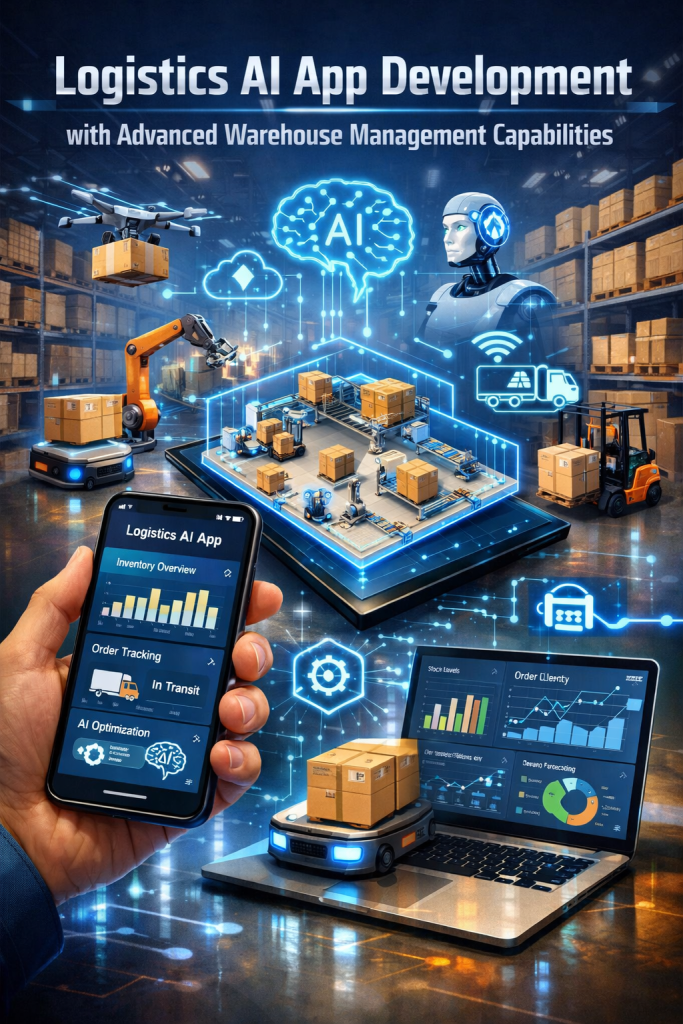
The logistics industry is undergoing a massive transformation as supply chains become faster, more complex, and increasingly data-driven. Warehouses, once considered simple storage hubs, are now central to operational efficiency, customer satisfaction, and delivery speed. To manage this shift, companies are rapidly adopting intelligent technologies that automate decisions, reduce errors, and streamline workflows. This is where Logistics AI App Development plays a critical role.
AI-powered logistics applications are no longer optional, they are becoming essential tools for businesses aiming to scale operations while maintaining accuracy and speed. With advanced warehouse management capabilities embedded into smart logistics platforms, companies can move beyond manual processes and unlock real-time control across their entire fulfillment ecosystem.
The Growing Challenges in Warehouse Operations
Modern warehouses face pressure from multiple directions:
- Rising order volumes from eCommerce growth
- Shorter delivery expectations
- Complex inventory management across locations
- Labor shortages and operational inefficiencies
- Lack of real-time visibility
Traditional warehouse management systems struggle to keep pace with these demands because they rely heavily on static data and manual oversight. As logistics networks expand, the absence of intelligent automation leads to delayed shipments, stock inaccuracies, and increased operational costs.
How AI is Revolutionizing Warehouse Efficiency
Advanced AI technologies are redefining how warehouses function by enabling:
- Predictive inventory planning
- Automated stock replenishment
- Smart order allocation
- Real-time warehouse mapping
- Intelligent task distribution
With AI-driven systems, warehouses become proactive rather than reactive. They can anticipate demand fluctuations, optimize product placement, and reduce wasted movement across fulfillment zones.
The integration of AI in Warehouse Management allows logistics companies to make faster, data-backed decisions while minimizing costly human errors.
Key Capabilities Enabled by AI Logistics Applications
Modern AI-powered logistics apps offer advanced warehouse features such as:
1. Predictive Inventory Optimization
AI analyzes historical demand and seasonal patterns to ensure accurate stock levels and reduce overstocking or shortages.
2. Smart Warehouse Slotting
Products are automatically placed in optimal locations based on order frequency, size, and dispatch priority.
3. Automated Picking & Packing Intelligence
AI reduces manual routing inefficiencies and shortens fulfillment cycles.
4. Real-Time Tracking Across Warehouse Movements
Live monitoring of goods from inbound to outbound stages.
5. Labor & Resource Allocation
AI assigns tasks dynamically to maximize workforce productivity.
Business Benefits for Logistics Providers
Adopting AI-powered warehouse logistics delivers measurable advantages:
- Faster delivery turnaround
- Reduced operational expenses
- Increased warehouse throughput
- Accurate inventory visibility
- Lower dependency on manual intervention
- Better customer experience
Companies leveraging Logistics AI App Development gain a competitive edge by transforming warehouses into intelligent fulfillment centers that operate with speed and precision.
Real-World Logistics Scenario
Consider a mid-sized logistics company managing multiple urban warehouses. Manual stock monitoring caused frequent mismatches between available inventory and shipment commitments, leading to delays and revenue loss.
After implementing an AI-driven logistics platform:
- Inventory accuracy improved by 40%
- Picking time reduced by 30%
- Warehouse productivity increased significantly
- Shipment delays dropped drastically
AI converted fragmented warehouse operations into a synchronized, automated system.
Choosing the Right AI Logistics Partner
Implementing intelligent logistics software requires expertise in both AI and supply chain workflows. The right technology partner ensures:
- Custom-built warehouse automation
- Scalable AI models
- Seamless integration with existing systems
- Secure and reliable deployment
SSTech System specializes in delivering tailored AI-driven logistics applications designed to modernize warehouse and supply chain operations.
The Future of AI-Powered Warehousing
Warehouses are rapidly evolving into autonomous ecosystems powered by:
- AI-driven robotics
- Predictive demand systems
- Smart IoT integrations
- Fully automated fulfillment chains
Businesses that invest early in Logistics AI App Development will lead the next generation of digital logistics and gain long-term operational advantages.
Conclusion
AI is no longer a futuristic concept in logistics, it is actively reshaping warehouse management today. From predictive inventory to automated workflows and real-time visibility, AI-powered logistics applications are unlocking new levels of efficiency and scalability.
