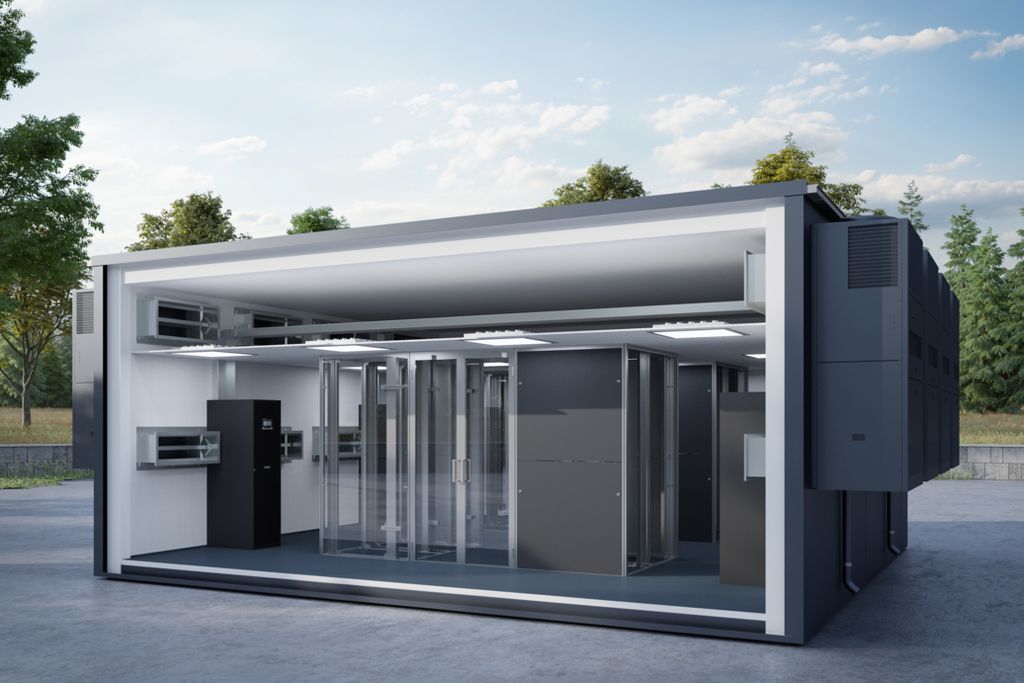
In today’s fast-paced digital world, businesses and organizations require IT infrastructure that is not only reliable but also flexible and rapidly deployable. A Modular data center offers a solution that meets these demands by providing prefabricated, scalable, and self-contained units for housing servers, storage systems, and networking equipment. Unlike traditional data centers, modular designs allow organizations to deploy IT infrastructure quickly, scale capacity efficiently, and optimize operational costs. Understanding the structure, benefits, applications, and operational considerations of modular data centers highlights why they are becoming an essential component of modern IT strategies.
The Evolution of Data Center Design
Traditional data centers have long been the backbone of enterprise IT operations, offering controlled environments for critical computing resources. While effective, these facilities require significant capital investment, extensive construction timelines, and fixed locations that limit flexibility. As businesses face increasing demands for rapid deployment, adaptability, and energy efficiency, conventional data centers struggle to meet evolving requirements. Modular data centers emerged as a solution, combining the reliability of traditional facilities with the speed, flexibility, and cost-effectiveness of prefabricated units.
What Is a Modular Data Center?
A modular data center is a self-contained, prefabricated unit designed to house servers, storage devices, networking equipment, and supporting infrastructure such as cooling and power systems. These units are often built using standardized shipping containers or custom enclosures, enabling them to be transported, deployed, and expanded with ease. The modular design allows organizations to add capacity incrementally by combining multiple units, forming a larger data center network. Each module is engineered to operate independently or integrate seamlessly with others, providing scalability without the time-consuming construction and planning typically associated with traditional data centers.
Key Advantages of Modular Data Centers
One of the primary benefits of modular data centers is rapid deployment. Prefabricated units are pre-tested in controlled environments, allowing them to be installed and operational within weeks rather than months. This speed is particularly valuable for businesses that need immediate expansion or temporary IT capacity. Mobility is another significant advantage, as modular units can be transported to remote locations, disaster recovery sites, or temporary project areas with relative ease.
Energy efficiency is also a major consideration. Modular data centers are designed with optimized layouts and advanced cooling systems, including precision air conditioning or liquid cooling solutions, to minimize energy consumption while maintaining optimal operating conditions for high-density computing equipment. Their compact footprint reduces the space required for installation, making them suitable for urban locations or sites with limited available land.
Design and Technical Features
Modular data centers are engineered to ensure reliability, security, and operational efficiency. Integrated cooling systems maintain stable temperatures, while redundant power distribution systems, including uninterruptible power supplies and backup generators, ensure uninterrupted operation. Security measures, such as controlled access, surveillance, and fire suppression, protect both equipment and data. Despite their modular and compact form, these data centers are designed to meet industry standards for uptime, performance, and environmental control, making them suitable for critical applications across various sectors.
Applications Across Industries
The versatility of modular data centers has made them increasingly popular across multiple industries. Telecommunications providers utilize modular units to support edge computing, processing data closer to end-users and reducing latency. Industrial operations, such as mining, oil and gas, and construction, benefit from portable data centers that provide IT infrastructure in remote or challenging locations. Military and emergency response organizations deploy modular data centers for mission-critical operations requiring rapid deployment. Enterprises also use these units to manage peak demand, support disaster recovery, or expand IT capacity efficiently. The flexibility and adaptability of modular data centers make them a practical solution for nearly any operational scenario requiring scalable and reliable IT infrastructure.
Scalability and Modularity
Scalability is a defining characteristic of modular data centers. Organizations can start with a single unit and expand capacity by adding additional modules as operational needs grow. Each module can function independently or integrate with other units to form a larger, networked data center environment. This modular approach reduces the risk of over-provisioning and allows IT resources to align closely with demand. Furthermore, upgrades to power, cooling, or networking components can be implemented without disrupting ongoing operations, ensuring that modular data centers remain adaptable to evolving technological and business requirements.
Cost Efficiency and Operational Benefits
Modular data centers offer significant cost advantages over traditional facilities. Prefabrication lowers initial capital expenditure, while energy-efficient design and compact layouts reduce operational costs. Maintenance is simplified, as self-contained units can be serviced or replaced without affecting other operations. The mobility of modular units allows them to be redeployed to different locations or projects, enhancing return on investment. Overall, modular data centers provide organizations with a cost-effective, flexible, and high-performance IT infrastructure solution.
Security and Reliability
Despite their compact size, modular data centers provide robust security and reliability. Physical access controls, environmental monitoring, and surveillance protect equipment and data from potential threats. Redundant power and cooling systems ensure continuous operation even under adverse conditions. Many modular data centers are designed to meet stringent industry standards, making them suitable for critical applications in healthcare, finance, telecommunications, and industrial operations. These design considerations ensure dependable performance while maintaining high levels of safety and security.
Future Trends and Innovations
The adoption of modular data centers is expected to increase as organizations seek scalable, energy-efficient, and rapidly deployable IT solutions. Advances in cooling technology, energy management, and integration with cloud and edge computing platforms are enhancing the value and performance of these units. As digital transformation drives the need for more flexible IT infrastructure, modular data centers provide a forward-looking solution capable of meeting current and future business demands. Their adaptability ensures organizations can respond to evolving technological requirements without major infrastructure investments.
Conclusion: Embracing Modular Data Centers for Modern IT Needs
Modular data centers are transforming the approach to IT infrastructure by offering rapid deployment, scalability, mobility, and energy efficiency. From edge computing and remote operations to enterprise expansion and disaster recovery, these prefabricated, self-contained units provide a versatile alternative to traditional brick-and-mortar data centers. By understanding their design, benefits, and applications, organizations can leverage modular data centers to build cost-effective, resilient, and future-ready IT infrastructure. With their combination of flexibility, performance, and operational efficiency, modular data centers are becoming a strategic solution for businesses navigating the demands of an increasingly digital world.