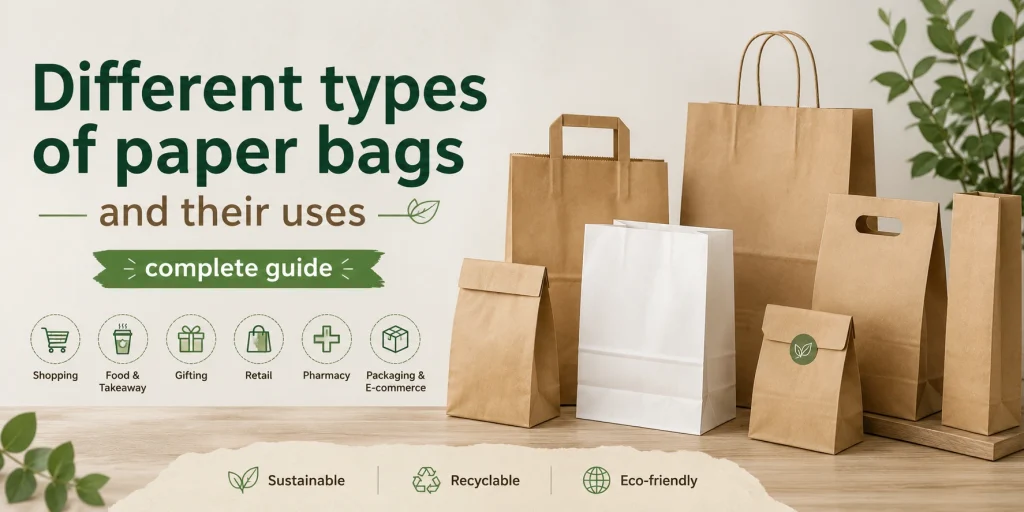
Paper bags have become a go-to choice for brands and retailers looking for eco-friendly packing materials that balance strength, printability, and sustainability. Whether you are producing white paper bags for premium retail or brown paper bags for groceries and food delivery, the manufacturing process follows a systematic, machine-driven workflow designed for speed, consistency, and durability.
Below is a step-by-step explanation of how modern paper bag manufacturing works, from raw paper rolls to finished, market-ready packing materials.
1. Raw Material Selection: Choosing the Right Paper
The process starts with selecting the right paper, usually supplied in large rolls. Brown paper bags are commonly made from kraft paper derived from wood pulp, known for high strength and tear resistance, making them ideal for groceries and industrial packing materials. White paper bags, on the other hand, are typically made from bleached kraft or coated papers to give a cleaner, more premium look for fashion, gifting, or cosmetic brands.
Manufacturers choose the paper grade based on GSM (grams per square meter), burst strength, and intended use. Lightweight paper might be used for bakery or pharmacy bags, while higher GSM is preferred for heavy retail and food delivery applications. Before moving to the machine, each paper roll is checked for defects and moisture content to ensure smooth running and consistent bag quality.
2. Unwinding and Paper Feeding
Once the roll is approved, it is mounted on the unwinding unit of the paper bag making machine. The machine unwinds the paper at a controlled speed, keeping proper tension to avoid wrinkles, misalignment, or tearing.
Sensors and tension control systems ensure the paper web runs straight and stable as it travels into the next stages. This is critical, especially when producing large batches of brown paper bags for supermarkets or white paper bags with tight print registration, where even small misalignments can cause waste.
3. Printing and Branding (Optional but Common)
If the bags require logos, branding, or artwork, printing is usually done before the bag is formed. Most manufacturers use flexographic printing for high-speed, large-volume production, while some opt for offset printing when high-resolution graphics and vibrant colors are required for premium white paper bags.
After printing, the paper passes through drying units so the inks cure properly. This prevents smearing or offsetting when the web is folded and glued later. At this stage, brands often differentiate between product lines—for example, simple one-color branding on brown paper bags used as cost-effective packing materials, and full-color designs on white paper bags for high-end retail.
4. Tube Formation and Gusseting
Next, the flat printed (or unprinted) paper web moves into the forming section. Here, the paper is guided over a forming plate, which folds it into a continuous tube. Adhesive is applied along the overlap to create the side seam.
If the bag needs expandable sides, rotating discs or special tools tuck in the sides of the tube to form gussets. These gussets allow both white and brown paper bags to expand in volume, making them more practical for carrying groceries, food containers, or e-commerce packing materials without increasing the base footprint.
5. Precision Cutting into Individual Bags
Once the tube is formed, it runs continuously through the machine until it reaches the cutting station. Here, sensors read registration marks printed on the paper and trigger servo-driven cutters at precise intervals. This ensures that each bag is cut to the exact length specified in the order, and that printed artwork is correctly positioned on the front and back panels.
This cutting accuracy is especially important for white paper bags with detailed branding, where misaligned cuts can ruin the aesthetic, and for large-volume brown paper bags where optimization of paper usage directly impacts cost efficiency.
6. Bottom Formation, Gluing, and Sealing
After cutting, each tube segment enters the bottom-forming section. The machine folds the lower end of the tube into flaps that are then glued to create either a V-bottom or a square bottom, depending on the bag style. Square-bottom bags are common in retail and grocery because they stand upright and are easier to pack.
A carefully controlled amount of adhesive is applied to the bottom flaps, and pressure is used to secure the seal until the glue sets. This step determines how much weight the bag can safely carry, which is critical when brown paper bags are used for heavy food items or white paper bags are used for luxury products packaged in boxes.
7. Handle Making and Attachment (If Required)
For shopping-style paper bags, handles are added either inline or on a separate machine. Typical options include twisted paper handles, flat paper handles, or rope/cotton handles for more premium applications.
Handle patches (extra layers of paper) are often applied on the inside of the bag to reinforce the attachment area. This reinforcement is particularly important when paper bags are used as primary packing materials for clothing, shoes, or other high-value items that customers carry over longer distances.
8. Quality Control and Final Packing
Before dispatch, finished bags undergo strict quality checks. Inspectors or automated systems check for print defects, misaligned folds, weak seams, or improper handle attachment. Random samples are often tested for load capacity, especially for brown paper bags used in grocery and food packaging, where failure can directly impact customer trust.
Once approved, the paper bags are counted, stacked, and packed—either in bundles or cartons—ready to be shipped to retailers, brands, or distributors. These finished white paper bags and brown paper bags then enter the supply chain as eco-friendly, recyclable packing materials that support businesses trying to reduce plastic usage.
To tune this blog for your target audience and SERP goals, it would help to know: are you planning to target buyers of paper bags (B2B) or general readers searching for eco-friendly packing materials, and which country or market are you optimizing for?