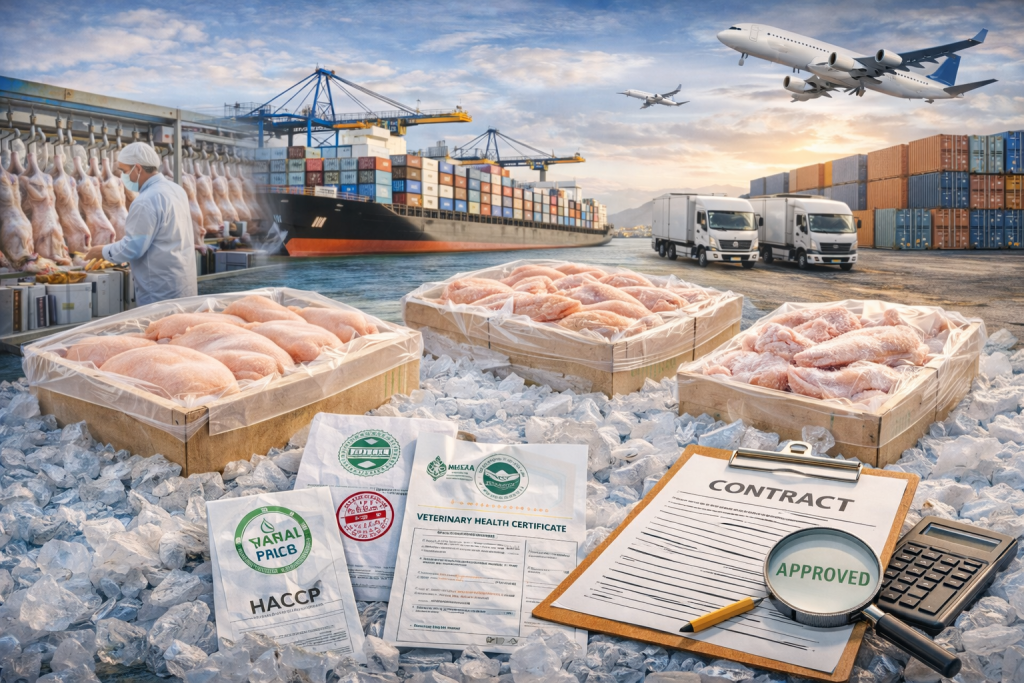
Introduction to Poultry Export
Poultry export has become one of the most important sectors in global food trade. As demand for affordable protein continues to rise worldwide, countries with strong poultry production systems are playing a crucial role in food security.
Among these nations, Brazil stands out as a dominant force. From brazil chicken shipments to large-scale frozen chicken wholesale contracts, the poultry export industry is expanding rapidly.
This article explores how poultry export works, which countries lead the market, what certifications are required, and what importers should consider when sourcing chicken internationally.
What Is Poultry Export?
Poultry export refers to the international trade of poultry products, including:
- Whole frozen chicken
- Chicken leg quarters
- Chicken breast fillets
- Chicken wings
- Mechanically deboned meat
- Processed poultry products
Exporting poultry involves strict regulatory compliance, health inspections, and cold chain logistics to ensure safety during transportation.
Why Poultry Export Is Growing Rapidly
Several global trends are driving poultry export growth.
1. Rising Global Population
The global population continues to increase, particularly in Africa and Asia. As more people require affordable protein, poultry becomes the preferred choice.
2. Affordability Compared to Beef
Chicken is generally cheaper to produce than beef, making it accessible for lower-income markets.
3. Religious Acceptance
Unlike pork, chicken is widely accepted across cultures and religions. With halal chicken export options available, it serves Muslim-majority markets effectively.
4. Urbanization
As cities expand, demand for convenient, frozen poultry products increases.
Top Poultry Exporting Countries
Several countries dominate the poultry export market.
Brazil
Brazil is a global leader due to scale, cost efficiency, and halal certification capability. Brazil meat exporters supply more than 150 countries worldwide.
United States
The US exports significant poultry volumes, especially to Mexico and Asian markets.
Thailand
Thailand is known for processed poultry products.
Turkey and Poland
These countries supply European and Middle Eastern markets.
Among these, brazil chicken exporters hold a competitive edge in pricing and halal certification.
Brazil’s Role in Poultry Export
Brazil’s poultry export industry benefits from:
- Abundant corn and soy feed supply
- Advanced processing facilities
- Government veterinary oversight
- Strong export logistics
Brazilian chicken suppliers operate vertically integrated systems that ensure consistent quality from farm to shipment.
This efficiency makes brazil chicken one of the most competitive products in global poultry export markets.
Halal Poultry Export and Certification
Halal poultry export is essential for serving Muslim-majority countries.
Certified exporters must ensure:
- Religious compliance during slaughter
- Documentation from approved halal authorities
- Separate processing lines to avoid contamination
Brazil is a major supplier of halal-certified poultry, strengthening its dominance in Middle Eastern markets.
Frozen Chicken Wholesale and Export Logistics
Most poultry export shipments are frozen products.
Frozen chicken wholesale offers several advantages:
- Long shelf life (up to 12 months at -18°C)
- Reduced spoilage risk
- Easier long-distance shipping
- Inventory flexibility for importers
Cold chain management is critical. Exporters must maintain continuous temperature monitoring during transport.
Key Certifications Required in Poultry Export
Reliable chicken exporters must provide:
- Veterinary Health Certificate
- Certificate of Origin
- HACCP certification
- ISO 22000 compliance
- Halal certification (if required)
Without proper documentation, shipments may be rejected at destination ports.
Pricing Factors in Poultry Export
Several factors influence export pricing:
| Factor | Impact Level |
|---|---|
| Feed cost | High |
| Global demand | High |
| Cut type | Medium |
| Shipping distance | High |
| Currency exchange | Medium |
Importers should monitor global grain prices, as they directly affect poultry costs.
Challenges in the Poultry Export Industry
Despite strong growth, the industry faces challenges:
- Avian influenza outbreaks
- Shipping container shortages
- Regulatory changes
- Currency volatility
- Environmental concerns
Diversified exporters with strong compliance systems manage these risks more effectively.
Future Trends in Poultry Export
Looking ahead to 2026 and beyond:
- Increased demand from Africa
- Growth in processed poultry products
- Stronger sustainability regulations
- Digital traceability systems
Countries investing in technology and ESG compliance will lead future poultry export markets.
Strategic Advice for Importers
To succeed in poultry export sourcing:
- Work with experienced brazil meat exporters.
- Verify certifications before each shipment.
- Secure long-term frozen chicken wholesale contracts.
- Maintain buffer inventory.
- Diversify supply sources where possible.
Long-term partnerships reduce risk and improve cost stability.
Conclusion
Poultry export remains one of the fastest-growing segments of global food trade. With rising demand for affordable protein, countries like Brazil continue to dominate through scale, compliance, and competitive pricing.
For importers and distributors, partnering with reliable chicken exporters ensures stable supply chains and long-term profitability in a competitive global market.