Few situations on the road trigger instant anxiety like seeing that temperature gauge climb into the red zone or watching steam roll out from under your hood. The good news is that overheating doesn’t automatically mean your engine is ruined. What matters most is what you do in the next few minutes. Panic leads to poor decisions, but a calm, methodical approach can save your engine from catastrophic damage. This guide walks you through exactly what to do, from the first moment you notice trouble to the final step of getting back on the road safely. Each step builds on the last, so follow them in order and resist the urge to skip ahead or take shortcuts.
Step One: Recognize the Warning Signs Immediately
Your car rarely what to do when car overheats giving you a heads-up first, so learning to spot the early warnings gives you a crucial head start. Keep one eye on your temperature gauge during normal driving—know where the needle usually sits so you can spot a climb immediately. Beyond the gauge, pay attention to a sudden loss of air conditioning performance, steam or vapor rising from the edges of the hood, a sweet syrup-like smell that indicates leaking coolant, or a warning light shaped like a thermometer. Some cars also reduce engine power automatically when overheating begins, a feature called limp mode. The moment you notice any of these signs, consider yourself in an active situation. Do not tell yourself it might go away on its own, because it won’t.
Step Two: Take Immediate Action While Still Moving
Your first instinct might be to slam on the brakes and shut off the engine, but that is actually one of the worst things you can do. Instead, take three specific actions while keeping the car moving. First, turn off the air conditioner completely to reduce the load on the engine. Second, turn your heater and blower fan to maximum temperature and highest speed. This sounds crazy on a summer day, but the heater core acts as a mini radiator, pulling heat away from the engine and into the cabin. Third, if you are stuck in stop-and-go traffic, shift into neutral and gently raise your engine RPMs to about two thousand. This increases coolant flow and airflow through the radiator. Continue driving slowly if possible, but head immediately toward a safe stopping location.
Step Three: Find a Safe Place to Pull Over
Your priority now is getting off the road without making the overheating worse or endangering yourself and others. Look for a wide shoulder, an off-ramp, a parking lot, or a rest area. Avoid stopping on bridges, in tunnels, on blind curves, or anywhere your car might be struck by passing traffic. Once you have selected a spot, signal your intention and pull over gently without sudden acceleration or braking. Put the car in park and set the parking brake, but do not turn off the engine yet. Allow the engine to idle for one to two minutes while the heater continues running. This idling period lets the water pump and radiator fan continue moving coolant and air across the hot engine. After that brief cooldown idle, turn the engine off completely.
Step Four: Wait Patiently for Things to Cool Down
Here comes the hardest part of the entire process: doing absolutely nothing for a while. Your engine and cooling system are extremely hot and highly pressurized. Opening anything under the hood right now could send boiling coolant exploding onto your skin and face, causing severe burns. Plan to wait at least thirty minutes before even touching the hood latch. Use this time to stay safe. If you are on a busy highway, exit the car on the passenger side away from traffic. Put on your hazard lights. Raise the hood slightly but do not prop it open fully; this allows heat to escape gradually. Call for roadside assistance if you have it. Do not let children or pets near the front of the car. Patience protects you from injury and protects your engine from thermal shock.
Step Five: Inspect Safely Once Everything Is Cool
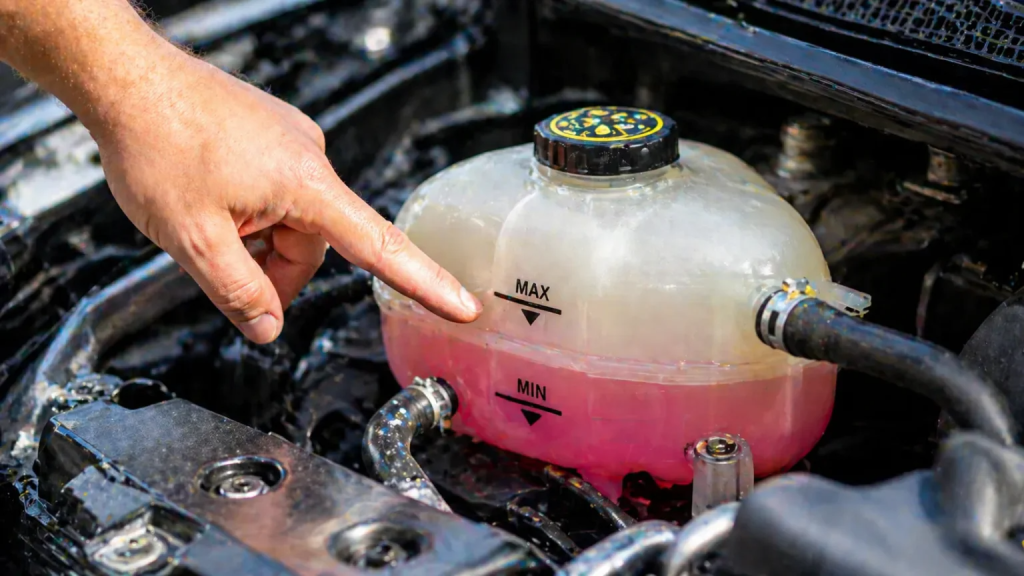
After at least half an hour has passed, you can carefully approach the front of the car. Place your hand a few inches above the hood without touching it. If you still feel intense heat radiating upward, wait another fifteen minutes. When the hood feels merely warm to the touch, open it fully and prop it securely. Look for obvious problems: a broken serpentine belt, visible coolant leaks underneath the car, or a cracked radiator hose. Check the coolant overflow reservoir, usually a translucent plastic tank. If it is empty or very low, you have found your issue. Now, and only now, can you think about the radiator cap. Place a thick folded rag over the cap and turn it slowly just one-quarter turn. Listen for a hiss of escaping pressure. Wait until that hiss stops completely before removing the cap the rest of the way.
Step Six: Add Coolant or Water to Get Moving Again
With the cap safely removed, check the coolant level inside the radiator itself. It should be full to the brim. If it is low, add a fifty-fifty mixture of coolant and distilled water if you have it. In an emergency, plain tap water works fine to get you to a repair shop. Pour slowly to avoid trapping air bubbles in the system. Fill the radiator completely, then top off the overflow reservoir to its maximum mark. Replace the radiator cap tightly. Start the engine and watch the temperature gauge closely. Keep the heater running on full blast. If the gauge remains in the normal range, you can attempt to drive to a mechanic or home. Drive gently with low RPMs and avoid heavy acceleration. If the temperature starts climbing again at any point, pull over and repeat the cooling process. Do not attempt highway speeds or long distances.
Step Seven: Address the Underlying Cause, Not Just the Symptom
You added coolant and the car is running cool again, but the problem is not solved—you have only treated a symptom. Overheating always has an underlying cause, and that cause will not fix itself. Common culprits include a stuck thermostat, a failed water pump, a leaking radiator hose, a broken radiator fan, or a head gasket issue. Driving for weeks or months without addressing the root problem guarantees another overheating episode, likely at the worst possible moment. Make an appointment with a trusted mechanic as soon as possible. Tell them exactly what happened, what you did in response, and whether you added plain water or proper coolant. A professional pressure test and cooling system inspection will find the real problem. Replacing a hundred-dollar thermostat now is far cheaper than replacing a thousand-dollar engine later.