Home buying has traditionally been a test of endurance. It meant endless weekends in the midst of traffic. Potential buyers would drive from one place to the next. They frequently found that the property didn’t look like the photos on the internet. It was an exhausting, slow process for everyone who was involved.
Technology has finally come in to help solve this issue. VR in Real Estate has transformed the game completely. It’s not just a futuristic trick that is only seen in sci-fi films. Nowadays, it’s an actual tool utilized by top developers and agents all over the world. It helps bridge the gap between imagination and reality.
This change isn’t just about the latest gadgets. It’s about reducing time, reducing costs and making better choices. The marketplace is rapidly changing. Anyone who isn’t ready to change is at risk of being lost.
Why Virtual Reality In Real Estate is a Must-Have for Modern Agencies?
The most difficult part of selling your property can be what’s known as the “imagination space.” If a potential buyer is browsing a floorplan, they are quite simply unable to see the space. If they are looking at an empty space, how on earth are you going to sell the home?
VR in Real Estate can solve this problem instantly. It gives you a full-immersive experience. Buyers wear headsets and stand in the kitchen. They can stroll through the hallway. They will be able to see precisely what happens when the sun’s morning rays strike the living room floor.
This creates an emotional bond. It is the emotions that drive sales. Images that are static are inactive; the VR experience is interactive. It transforms a viewer into an active participant. This allows buyers to “live” in their home before they sign the contract.
Key Benefits of Implementing VR Solutions for Property Tours
For the buyer of today, their time can be the best resource. Looking at five properties in person could require a whole weekend. With VR technologies, it’s only 30 minutes.
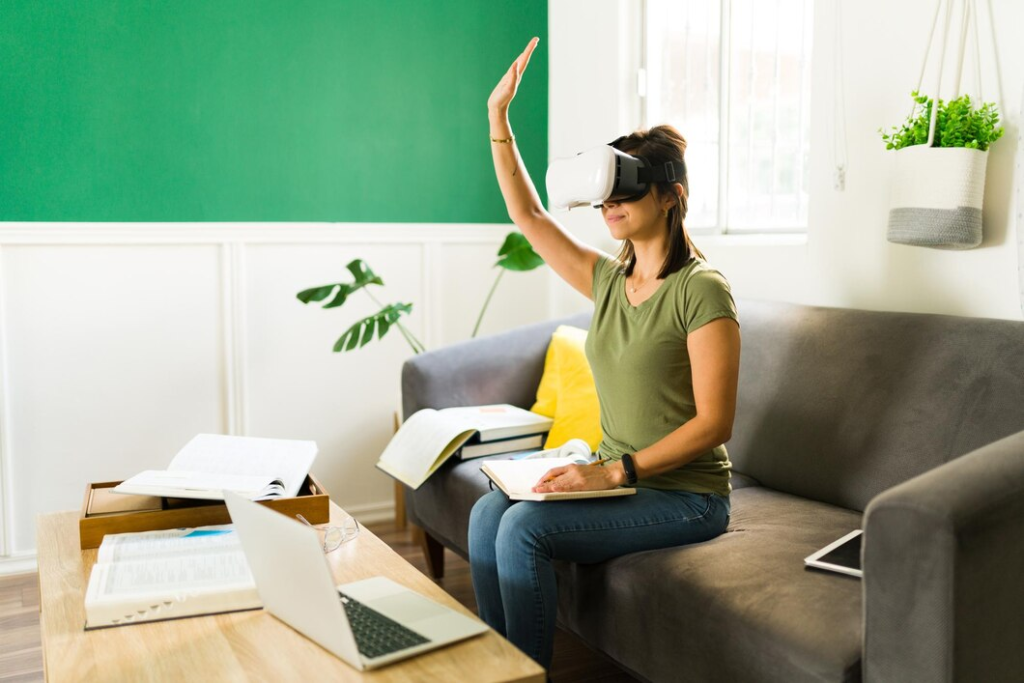
Buyers can visit houses from their sofa. This is crucial in the case of the purpose of moving. Imagine a customer who is moving from London in the UK to New York. They don’t have to travel across the ocean for their first visit. They can narrow their choices by using a digital method first.
Why buyers prefer digital shows:
- It’s convenient: Tours are available anytime, irrespective of weather conditions or traffic.
- Freedom: It allows users to move throughout each area at their own speed.
- Information: High-definition renders show textures, materials and depth.
- Comparative: It is easy to switch between properties immediately to check out features.
The anxiety of not knowing is eliminated. The customer enters the actual location, having a good idea of the design. This makes the visit more efficient.
How Professional Virtual Reality Services Scale Real Estate Marketing?
Real estate agents are faced with their own challenges. Staging a property using furniture and other furnishings is costly. Scheduling open houses can be an administrative problem. Handling “window customers” is a waste of time.
VR services offer a robust instrument for selling. They function as filters. The most serious buyers utilize VR to prove their desire. At the point they ask for an actual visit, they’re already qualified prospects.
Cost-Efficiency of Virtual Reality Solutions
Selling a vacant property is difficult. It’s cold and small. Physical staging involves hiring furniture and hiring moving companies. It is expensive and can cost hundreds of dollars.
Virtual Reality solutions allow digital staging. A card designer can occupy free space with beautiful 3D furniture. They can customize this as per the choice of the purchaser. Should the buyer opt for contemporary minimalism? Perhaps rustic style? Or maybe rustic appeal? The VR model is adaptable in a flash. This lets the purchaser understand the possibilities of VR.
The Impact of Extended Reality (XR) on Real Estate
Even though Virtual Reality in Real Estate immerses you completely, other technologies are also playing a significant role. The industry is moving towards the concept of Extended Reality (XR) in Real Estate.
XR within Real Estate encompasses VR, Augmented Reality (AR), and Mixed Reality (MR).
Transforming the Space with AR Solutions
Augmented Reality differs from VR. It overlays digital components onto actual reality. The majority of people utilize AR Solutions on their tablets or smartphones.
Imagine yourself in a barren apartment. You reach for your smartphone. The screen will be able to show a sofa-like image at the bottom. You can alter its hue. You can also measure the space on your wall to make a bookcase.
AR is available to everyone because every person is connected to a mobile device. It eliminates the barriers to entry. It is great for:
- Verifying that furniture is suitable.
- Imagine a renovation before taking down walls.
- The view of infrastructure, such as wiring or pipes, is hidden behind walls.
Using VR In Real Estate to Sell Off-Plan Projects
The most difficult object to market is selling a home that isn’t even built. Developers of off-plan homes are reliant on drawings and renderings. They are often flat and inconvenient.
VR In Real Estate shines brightest here. Developers are able to build the whole project within a digital.
How to harness the Power of the Digital Walkthrough
Buyers can walk into the luxury condominium that is only a slit through the dirt. You can take a look from the balcony located on the 20th level. You can also see the completed lobby.
This eases the buyer’s anxiety. They aren’t purchasing a promise, they are purchasing a graphical real. This results in more rapid pre-sales and better liquidity for the developers. This transforms a risky investment into a secure investment.
Comparing 360-Tours and High-End Virtual Reality Solutions
It is essential to distinguish between different kinds of VR solutions.
360-Degree Video
This is the simplest choice. It combines images. The user is in one location and then looks around. It’s useful, but it’s inactive. It is not able to move forward or interact with it.
Interactive VR Experiences
This is the highest quality. It utilizes game-engine technology. Users can walk around the world. They are able to open doors. They can also turn on the lights. This kind of interaction creates the feeling of belonging.
The most luxurious real estate uses immersive VR. It creates a “memory” that evokes the house that is real. The brain interprets the sensation as a physical trip.
The Future Landscape of VR In Real Estate
Technology is constantly improving. Headsets are getting lighter and more affordable. Graphics are evolving into photorealistic.
We are seeing the emergence of “Digital twins.” Digital twins are an exact representation of a real building. It’s used to help with more than sales. It assists with the maintenance of properties and also property administration.
Artificial Intelligence is also joining the mix. AI can assess a customer’s reactions in a VR tour. If they stay in the kitchen, then the AI recognizes this is an important area. This method of data-driven refinement improves the selling process.
VR applications will soon become the norm and not the exception. It is no longer necessary to rely purely on 2D photographs are now over.
Conclusion
The introduction of VR in real Estate is a significant shift in human interaction. It’s not just about the speed of transaction. It’s about breaking down barriers. It’s to make the idea of owning a home easier to access and more clear.