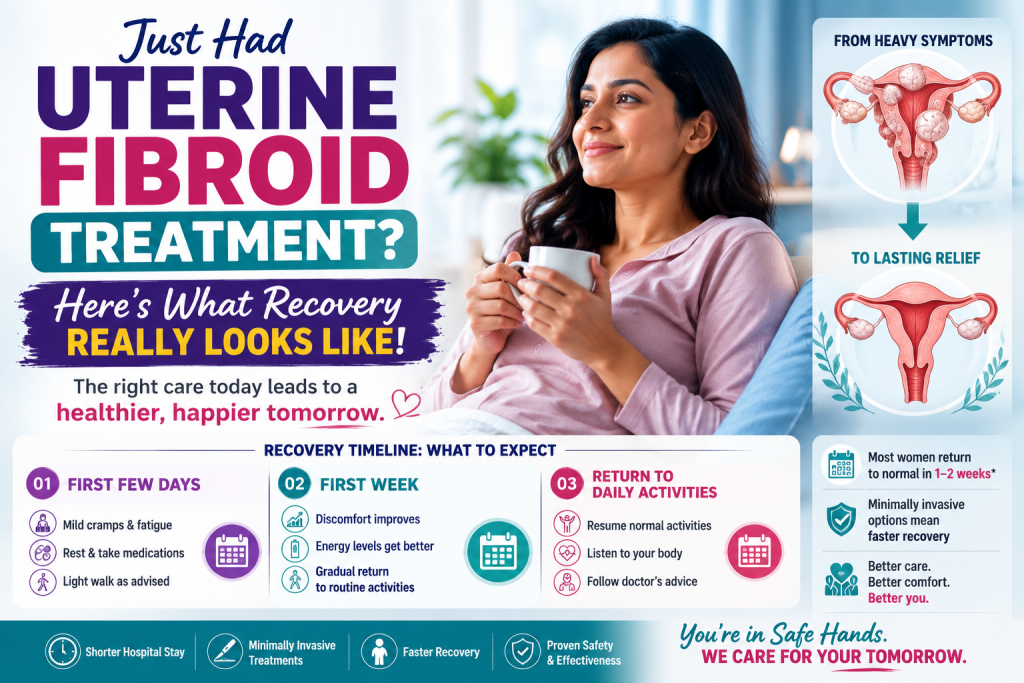
Heavy periods, pelvic pressure, frequent urination, and lower abdominal discomfort can make daily life difficult for women living with a uterine fibroid. After finally deciding to seek uterine fibroid treatment, many patients have another important question: how long will recovery take?
The answer depends largely on the type of uterine fibroid treatment performed. Recovery can vary significantly between traditional surgery and minimally invasive procedures. Some women may need several weeks before returning to normal activities, while others resume their routine much sooner.
Understanding what happens during recovery helps reduce anxiety and allows patients to prepare realistically for the healing process. Knowing what is normal, what symptoms to expect, and when to seek medical advice can make the experience smoother and more comfortable.
Why Does Recovery Differ Between Uterine Fibroid Treatments?
Not all uterine fibroids affect the body in the same way, and neither do their treatments.
Some procedures require surgical incisions and tissue removal, while others work by shrinking fibroids without major surgery.
Common treatment options for a uterine fibroid include:
- Medication-based management
- Myomectomy (fibroid removal surgery)
- Hysterectomy (uterus removal surgery)
- Uterine Fibroid Embolization (UFE)
Because these treatments vary in complexity, recovery timelines differ as well.
The less invasive the procedure, the shorter the recovery period is often likely to be.
What Happens Immediately After Uterine Fibroid Treatment?
The first few hours after uterine fibroid treatment are usually focused on observation and symptom management.
Patients may experience:
- Mild pelvic discomfort
- Cramping
- Fatigue
- Nausea in some cases
- Temporary bloating
These symptoms are generally expected and often improve gradually over the first few days.
Most women are encouraged to begin gentle movement as soon as it is safe to do so.

What Is Recovery Like After Uterine Fibroid Embolization?
Uterine Fibroid Embolization (UFE) is a minimally invasive procedure performed by an interventional radiologist and is considered one of the most effective non-surgical options for treating a uterine fibroid.
During the procedure, tiny particles are used to block the blood vessels supplying the fibroids. Without an adequate blood supply, the fibroids gradually shrink.
Recovery following UFE is often faster than recovery from major surgery.
Many patients experience:
- Pelvic cramping for several days
- Mild fatigue
- Low-grade fever
- Temporary loss of appetite
- Mild nausea
According to the Society of Interventional Radiology, most women return to normal activities within one to two weeks following Uterine Fibroid Embolization.
Many patients are surprised by how quickly daily activities become manageable again after UFE.
How Long Does Recovery Take After Myomectomy?
Myomectomy involves surgical removal of a uterine fibroid while preserving the uterus.
Recovery depends on the surgical approach.
A minimally invasive laparoscopic myomectomy may require a few weeks of recovery, while an open abdominal myomectomy generally requires longer healing.
Many women can expect:
- Activity restrictions for several weeks
- Temporary abdominal soreness
- Fatigue during healing
- Gradual return to normal exercise
According to the American College of Obstetricians and Gynecologists (ACOG), recovery after abdominal myomectomy may take four to six weeks or longer.
What About Recovery After Hysterectomy?
A hysterectomy removes the uterus entirely and may be recommended in certain cases involving large or multiple uterine fibroids.
Because it is a more extensive procedure, recovery is usually longer than with UFE.
Common experiences include:
- Surgical soreness
- Temporary movement limitations
- Fatigue
- Activity restrictions
- Longer recovery before strenuous exercise
Depending on the surgical method used, full recovery may take several weeks.
Is Pelvic Cramping Normal During Recovery?
Yes.
Cramping is particularly common after Uterine Fibroid Embolization because the fibroids begin to lose their blood supply and shrink.
The intensity varies from patient to patient.
Most women notice that:
- Cramping is strongest during the first few days
- Symptoms gradually improve
- Pain medications help control discomfort
- Normal activities become easier as healing progresses
Persistent or severe pain should always be discussed with the treating doctor.
When Can Daily Activities Resume?
Recovery does not mean complete bed rest.
In fact, gentle movement often supports healing.
Most patients can gradually return to:
- Walking
- Light household activities
- Office-based work
- Daily routines
The timeline depends on the type of uterine fibroid treatment performed.
Women undergoing minimally invasive procedures often return to normal activities significantly sooner than those recovering from open surgery.
When Is Exercise Safe After Fibroid Treatment?
Exercise is usually reintroduced gradually.
Walking is often encouraged early in recovery because it promotes circulation and reduces the risk of complications.
More strenuous activities such as:
- Running
- Heavy lifting
- High-intensity workouts
- Core strengthening exercises
may need to be postponed until the doctor confirms adequate healing.
Following recovery instructions carefully helps reduce unnecessary setbacks.
How Soon Do Fibroid Symptoms Improve?
Many women hope symptoms caused by a uterine fibroid will disappear immediately.
In reality, improvement often occurs gradually.
After Uterine Fibroid Embolization:
- Pressure symptoms may improve over weeks
- Fibroids continue shrinking for several months
- Heavy menstrual bleeding often decreases over time
- Pelvic discomfort may steadily improve
Research published in the Journal of Vascular and Interventional Radiology has shown significant improvement in symptom control and quality of life following Uterine Fibroid Embolization.
Recovery involves not only healing from the procedure but also allowing the fibroids time to shrink and stop causing symptoms.
What Symptoms Should Prompt Medical Attention?
Most recovery symptoms are expected.
However, medical evaluation may be necessary if a patient develops:
- High fever
- Severe worsening pain
- Heavy bleeding
- Signs of infection
- Persistent vomiting
- Difficulty urinating
Prompt communication with the healthcare team helps ensure complications are identified early.
Can Recovery Be Made Easier?
Several practical steps often support recovery after uterine fibroid treatment.
These include:
- Staying hydrated
- Following medication instructions
- Walking regularly
- Getting adequate rest
- Attending follow-up appointments
- Avoiding strenuous activity too early
Recovery tends to be smoother when patients balance activity with adequate healing time.
Conclusion
Recovery after uterine fibroid treatment varies depending on the procedure performed, overall health, and the size and number of uterine fibroids being treated. While surgical procedures often require several weeks of healing, minimally invasive options such as Uterine Fibroid Embolization frequently allow women to return to daily activities much sooner. Mild cramping, fatigue, and temporary discomfort are common parts of the recovery process and usually improve steadily.
Most importantly, recovery is not simply about healing from the procedure itself. It is also about giving the body time to benefit from treatment and allowing uterine fibroid-related symptoms to improve. Women who understand what to expect during recovery often feel more confident, less anxious, and better prepared for the journey toward long-term relief.
FAQs
How painful is recovery after Uterine Fibroid Embolization?
Most women experience cramping and pelvic discomfort during the first few days. Symptoms are typically manageable with prescribed medications and improve gradually.
How soon can work be resumed after uterine fibroid treatment?
The timing depends on the procedure. Many women return to work within one to two weeks after UFE, while surgical recovery may require a longer absence.
Can uterine fibroids come back after treatment?
The likelihood depends on the treatment method. New fibroids may develop after some treatments, while embolized fibroids generally do not regrow.
Is walking recommended during recovery?
Yes. Gentle walking is commonly encouraged because it supports circulation and helps prevent complications associated with prolonged inactivity.
When will heavy periods improve after uterine fibroid treatment?
Many women notice gradual improvement over several menstrual cycles as fibroids shrink and the uterus heals.
Medical Disclaimer
This article is written for general informational purposes only and does not constitute medical advice. Always consult a qualified medical professional for diagnosis and treatment specific to your condition.