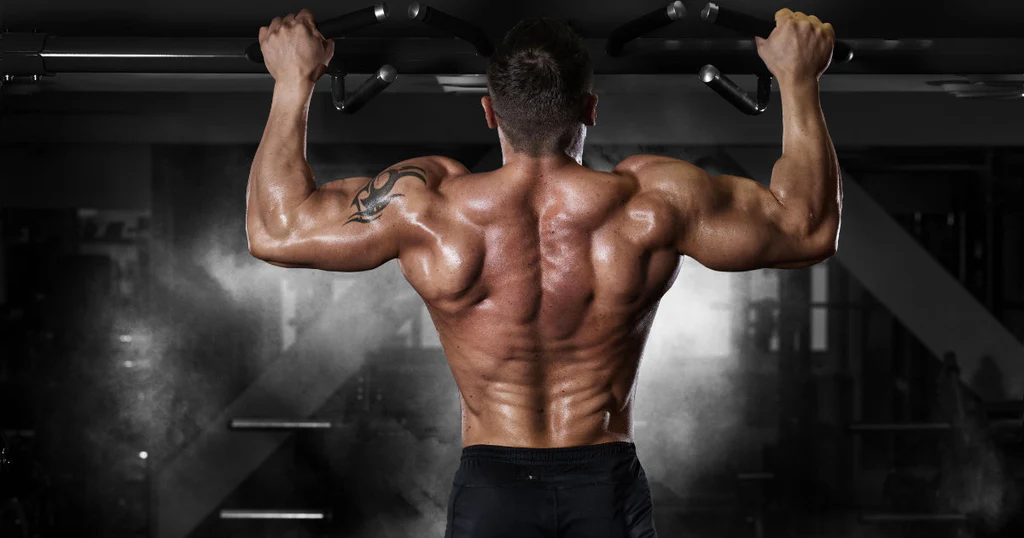
There is a noticeable difference between a back that is simply wide and one that is truly thick and defined. Width comes from the lats flaring out to the sides, creating that V-taper that looks impressive from the front. Thickness, however, is what people see when you turn around. It is the dense, rope-like muscle that runs from the bottom of your neck down to your lower back, creating shadows and separation that scream strength. Dumbbells are uniquely suited for building this kind of three-dimensional thickness because they allow you to squeeze, hold, and stretch through a full range of motion that machines often restrict. The following exercises are chosen specifically to add slabs of dense muscle across your entire posterior chain, giving you a back that looks carved rather than just wide.
The Hex Press Row for Constant Mid-Back Tension
Most rows lose tension at the bottom of the movement, allowing your muscles a brief rest before the next rep. The hex press row eliminates this entirely. Lie face down on an incline bench set to about thirty degrees, holding two dumbbells pressed tightly together with your palms facing each other. Keeping the dumbbells squeezed together throughout the entire movement, row them toward your chest, then lower them only halfway down before pulling again. That partial range of motion keeps your rhomboids and middle traps under relentless tension for the entire set. You will feel a deep burn within eight to ten reps that normally takes twice that many with standard rows. The constant squeeze also builds the mind-muscle connection that separates average backs from truly defined ones.

The Waiter’s Bow Hold for Spinal Erector Detail
Thickness is not just about the muscles you can see in the mirror. The spinal erectors run vertically along either side of your spine, and when they are well developed, they create two distinct columns of muscle that give your lower back a cobra-like appearance. Stand with your feet hip-width apart, holding a single heavy dumbbell vertically against your chest with both hands. Keeping your spine completely flat, hinge forward at your hips until your torso is parallel to the floor. Hold that position for ten to fifteen seconds while actively squeezing your lower back muscles, then slowly return to standing. This isometric hold builds dense, grainy muscle in the erectors without the spinal compression of heavy deadlifts. Add this as a finisher to any back workout, and watch your lower back develop detail you never knew was possible.
The Twist Row for Serratus and Intercostal Definition
If you want a back that looks defined even under less-than-perfect lighting, you need to develop the smaller muscles between and around your ribs. The twist row delivers exactly that. Set up in a bent-over position with a light dumbbell in your right hand. As you row the weight toward your hip, rotate your torso slightly to the right, allowing your left shoulder to come forward. At the top of the movement, you should feel a contraction in your right lat and also along your right ribcage where the serratus anterior lives. Lower and rotate back to center, then repeat. This rotational rowing pattern hits the intercostals and serratus in a way that straight rows miss entirely. Use light weight and focus on feeling the muscles along your side engage with every single rep.
The Wide Grip Floor Row for Lower Trap Thickness
Most people have upper traps that overpower their lower traps, creating a hunched appearance even when they are standing up straight. The wide grip floor row corrects this imbalance by specifically targeting the lower portion of the trapezius. Lie face down on the floor with your arms extended straight out to the sides in a T position, holding a very light dumbbell in each hand. Keeping your arms straight and your thumbs pointing toward the ceiling, lift the dumbbells just a few inches off the floor by pulling your shoulder blades down toward your rückenübungen kurzhantel. Lower with control and repeat. The range of motion is small, but the targeted fatigue in your lower traps is enormous. Strong lower traps pull your shoulders down and back, improving your posture and creating a thicker, more balanced upper back appearance.
The Dumbbell Pullover to Press for Transitional Thickness
Combining two movements into one fluid exercise forces your back muscles to work through changing angles, which builds thickness across multiple planes of motion. Lie across a bench with a single dumbbell held overhead in both hands. Lower the weight behind your head into a deep pullover stretch, feeling your lats and serratus engage. Instead of stopping there, press the dumbbell straight up toward the ceiling as if you were doing a pullover combined with a floor press. Lower the dumbbell back behind your head, then row it back to the starting position. This complex movement hits your lats, triceps, chest, and serratus in sequence, but the back benefit comes from the sustained tension across your entire ribcage. Your intercostal muscles and serratus will develop visible ridges when this exercise becomes a regular part of your rotation.
The Bat Wing Row for Extreme Isometric Contraction
Named for the way your back looks when you hold the position, the bat wing row is pure definition work. Lie face down on an incline bench with a dumbbell in each hand, palms facing each other. Row the dumbbells toward your chest and hold them there, squeezing your shoulder blades together as hard as you possibly can. Do not lower the weights. Simply hold this contracted position for fifteen to twenty seconds while breathing normally. Rest for ten seconds, then repeat for three to four holds. This is not a movement for heavy weight or high reps. It is a technique for teaching your back muscles how to contract fully and for building the neurological connection that turns average muscle into defined, striated muscle. After several weeks of bat wing rows, your back will look noticeably more carved during everyday activities, not just under a pump.
The Leaning Row for Oblique and Lat Integration
Stand next to a bench or a sturdy table and place your non-working hand on the surface for support. Hold a dumbbell in your opposite hand and lean your body away from the supporting arm, creating a side bend before you even start rowing. From this leaned position, row the dumbbell straight up toward your armpit while keeping your body perfectly still. The leaning angle places a constant stretch on your lat while forcing your obliques to work isometrically to keep you from collapsing. This integration between your side core and your back muscles builds the kind of dense, wrapped-around thickness that makes your torso look solid from every angle. Your lats will feel longer, your obliques will feel tighter, and your overall back definition will improve faster than you thought possible.
Creating Your Thickness-Focused Weekly Plan
Thickness responds best to moderate weight, higher reps, and extended time under tension. Aim for three to four sets of twelve to fifteen reps on most of these exercises, and do not be afraid to use lighter weight than you use for your width-focused movements. A sample thickness workout might include the twist row for serratus detail, the waiter’s bow hold for spinal erectors, the bat wing row for contraction quality, and the leaning row for lat-oblique integration. Perform this workout once every five to seven days, giving your back ample time to recover and rebuild. Within two months, you will notice your back looking denser, more separated, and undeniably thicker when you catch a glimpse of yourself in a mirror or a store window. That is the reward for training with intention rather than just moving weight from point A to point B.