

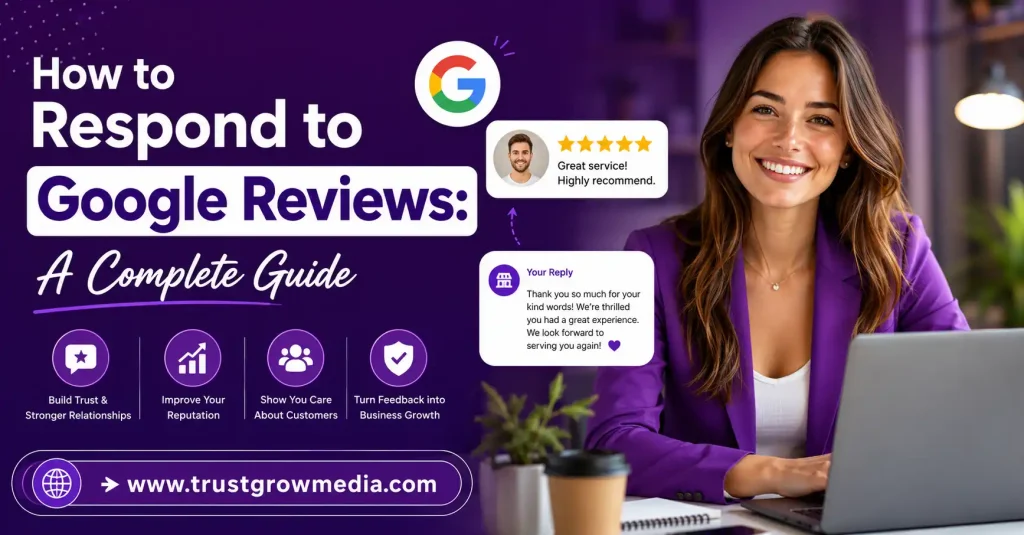
Master the art of customer engagement with our complete guide on how to respond to Google reviews. Enhance your reputation and connect with your audience!

Key Highlights
- Responding to Google reviews helps protect your business’s reputation and strengthen customer trust.
- Fast, thoughtful review replies show potential customers that your customer service is active and professional.
- Your Google Business Profile makes it easier to monitor feedback, manage notifications, and post a public reply.
- Positive reviews deserve personalized thanks that encourage customer engagement and repeat business.
- Negative reviews need calm, respectful responses focused on empathy, clarity, and service recovery.
- Fake reviews, spam, and ratings without comments still require clear action steps from business owners.
Introduction
Responding to Google reviews is more than good customer service—it’s an essential part of building trust and maintaining a strong online reputation. Whether the feedback is positive or negative, your response shows potential customers that you value their opinions. This complete guide will walk you through the best practices, common mistakes to avoid, and proven response examples. For additional reputation management tips and digital growth strategies, TrustGroowMedia offers valuable resources for businesses of all sizes.
Why Responding to Google Reviews Is Essential for Your Business
Google reviews influence how potential customers judge your business before they ever speak with you. For business owners, review replies are not just polite extras. They shape your business’s reputation, affect your brand’s image, and show whether your customer service is active or absent.
Just as important, online reviews often become a deciding factor for people comparing local businesses. When you respond well, you show accountability and care. That public response can ease doubts, support trust, and help future customers feel more confident choosing you.
Influence on Online Reputation and Customer Trust
Your business’s reputation is often built in public. When people scan online reviews, they are not only reading what customers say. They are also watching how you respond. A calm, thoughtful response tells potential customers that you listen, care, and take problems seriously.
That matters because customer trust is fragile. If someone leaves a complaint and hears nothing back, readers may assume the issue is common or ignored. If you reply with honesty and professionalism, you protect your brand’s image and show that your standards still matter, even when something went wrong.
In practical terms, responding to Google reviews can improve how your business is perceived and can support stronger visibility. More importantly, it shows future customers that you value feedback, act responsibly, and are willing to improve when concerns are raised.
Impact on Search Ranking and Local SEO
Google reviews do more than influence opinions. They also affect how your business appears in search results and on Google Maps. Your average star rating is displayed right under your business name, so it often shapes whether people click or keep scrolling.
That is why local SEO is tied closely to review activity. A strong rating can attract more attention, while even one bad review may create hesitation. Review replies help balance that effect by showing Google users that your business stays engaged and responsive.
When you respond, you are not guaranteeing a ranking jump, but you are strengthening signals that matter in local search. Active management, clear communication, and a healthy average star rating all support better visibility and a stronger first impression in Google search and map listings.
Building Stronger Customer Relationships
Every review is a chance to strengthen customer relationships. A short reply can show appreciation, clear up confusion, or begin service recovery. That kind of attention helps people feel heard, which can improve customer satisfaction even after a difficult experience.
On the positive side, online reviews let you thank satisfied customers in public. That creates goodwill and shows new customers what your business values. It also makes loyal buyers more likely to return because they can see their feedback matters to you.
There is another benefit too. When you handle criticism well, you may turn unhappy people into repeat customers. When you handle praise well, you reinforce trust. In both cases, thoughtful responses help you build stronger relationships that support retention, referrals, and long-term credibility.
Getting Started: Accessing and Managing Google Reviews
If you are new to managing Google reviews, start with your Google Business Profile. This is where business owners can view reviews, write replies to reviews, and track what each reviewer has said. It is also where you keep your contact information current, which matters when you want to move a sensitive issue offline.
Once you know where to look, the process becomes easier to manage. The next few sections cover how to monitor feedback, post replies, and set up a simple routine that keeps you from missing important reviews.
Using Your Google Business Profile to Monitor Reviews
Your Google Business Profile is the main place to monitor Google reviews consistently. It lets you see each review, identify the reviewer, and post review replies from one dashboard. For busy teams, this creates a simple process that reduces delays and helps you stay organized.
A useful routine is to check reviews daily, track patterns, and note issues that may point to a larger problem. Review metrics do not need to be complex. Even basic tracking can help you spot repeat complaints, service gaps, or changes in your average rating over time.
| What to Monitor | Why It Matters |
| New review | Helps you respond quickly and protect customer impression |
| Reviewer name | Makes each reply feel personal and specific |
| Star rating | Shows overall sentiment at a glance |
| Review content | Helps identify the issue or praise clearly |
| Review metrics | Reveals patterns, recurring complaints, and service trends |
Step-by-Step Guide to Replying to a Review
Replying through your Google Business Profile is simple once you have a repeatable process. Whether the review is positive or critical, your goal is the same: post a clear public reply that sounds human, respectful, and specific to the experience shared.
Before you answer, read the full message carefully. If needed, check with the staff member involved so your response is accurate. Keep your tone steady, avoid excuses, and make sure the reply reflects your customer service standards.
- Sign in to your Google Business Profile and open the reviews section.
- Select the review you want to answer.
- Read it closely before writing your public reply.
- Draft a short response that addresses the main point clearly.
- Post the reply and note if follow-up is needed offline.
Setting Up Notifications for New Reviews
Notifications help you respond faster, and speed matters. A delayed reply can make online reviews look ignored. A prompt one shows attention and professionalism. Since best practice is to answer negative feedback within 48 hours, alerts are a practical step for staying on top of new activity.
Through your Google Business Profile, make sure the right person is checking reviews regularly. This could be you or a team member assigned to review replies each day. The goal is consistency, not complexity.
- Turn on notifications for new Google reviews.
- Assign one person to monitor them daily.
- Keep your email and profile details updated.
- Log reviews in a shared system for follow-up and outcomes.
With that system in place, you can give every review a timely, considered response.
How to Respond to Positive Google Reviews
Positive reviews deserve more than a quick generic thank-you. They are proof that your customer service made an impact, and your public response shows others how you treat happy customers too. A strong reply reinforces trust and adds warmth to your business name.
At the same time, positive reviews are a chance to deepen loyalty. When you show real customer appreciation and acknowledge the reviewer with care, you encourage future engagement and help more people feel confident choosing your business.
Expressing Genuine Appreciation and Thanks
Start with sincere appreciation. When someone takes time to leave positive reviews, they are doing more than rating your service. They are publicly supporting your business. A warm, direct thank-you helps the customer feel valued and shows others that you do not take praise for granted.
Keep your response simple and genuine. You do not need a long statement. Thank them, mention what you appreciate, and reflect the experience they described. That makes the reply feel real instead of automatic.
This approach helps in two ways. First, it reinforces good feelings for satisfied customers. Second, it strengthens your business’s reputation because readers see that you are attentive, respectful, and engaged. If you want to show appreciation well, be personal, brief, and honest every time.
Personalizing Your Replies to Stand Out
Personalization is what separates a memorable reply from a basic template. When a reviewer sees details that match their experience, your public reply feels thoughtful. When future customers see that same care, they get a better sense of how your business communicates.
You do not need to include too much. In fact, avoid sharing sensitive details. Focus on safe, simple touches that prove you paid attention. That can be enough to make a response feel specific and warm.
- Use the customer name when it is visible and appropriate.
- Mention the service or experience they praised.
- Reference an order number only if it is safe and relevant.
- Match the tone of the reviewer while staying professional.
Small signs of personalization make your replies feel authentic without becoming overly detailed.
Encouraging Ongoing Customer Engagement
A positive reply can do more than say thanks. It can naturally invite ongoing customer engagement. When someone shares honest feedback, you can encourage them to stay connected and let them know their voice matters to your business.
Keep this gentle. There is no need for a hard sell. A simple note that you look forward to serving them again can be enough. If your business uses social media, you can also encourage them to stay in touch there, as long as the message feels appropriate.
This kind of response helps in public and private ways. It shows new customers that your relationships do not end after one transaction, and it gives happy customers another reason to return. Consistent engagement builds familiarity, trust, and stronger loyalty over time.
Effective Strategies for Responding to Negative Google Reviews
Negative reviews can feel personal, but they are best handled with a steady process. A bad review does not just reflect one moment. It also shows potential customers how your customer service responds under pressure. That is why every reply should be calm, respectful, and focused.
Handled well, negative feedback can support service recovery and reveal the root cause of recurring problems. The following sections cover the tone, apology, and solution-focused steps that help you respond clearly and professionally.
Remaining Calm and Professional in Your Response
The best way to answer negative reviews is to stay calm. Your first reaction may be to defend yourself, especially if the review feels unfair. Still, professionalism matters more than proving a point. Readers care less about who is right and more about how you respond.
Lead with empathy. You can acknowledge frustration without admitting something untrue. A line such as “We’re sorry to hear about your experience” keeps the tone respectful and measured. This protects your image and lowers the chance of making the situation worse.
- Keep your tone calm and professional.
- Avoid blame, arguments, and excuses.
- Show empathy for the customer’s frustration.
- Keep the message brief and factual.
That tone works best for both positive and negative feedback because it shows consistency, maturity, and care.
Apologizing Sincerely and Addressing Concerns
A sincere apology can go a long way after a negative experience. That does not always mean admitting fault in every detail. It means recognizing that the customer left dissatisfied and showing that you take their concern seriously.
Good apologies are direct and simple. You might say, “We’re sorry you had this experience,” or “We understand your frustration.” This kind of apology acknowledges the issue without sounding defensive. It also helps restore customer satisfaction by showing respect.
After the apology, address the concern itself. Mention the service issue, confusion, delay, or communication gap they described. That tells the reviewer you actually read the review. A sincere apology paired with a clear acknowledgment is often the first step toward rebuilding trust.
Offering Solutions and Taking Conversations Offline
After acknowledging the issue, offer a solution when possible. If the fix is simple, say that clearly. If the matter is more detailed, move it offline. Public review replies should stay respectful and transparent, but they should not become long back-and-forth disputes.
Be careful not to overpromise. Do not offer a full refund unless that is consistent with your policy. Instead, invite direct contact so you can review what happened properly and work toward customer satisfaction.
- Offer a realistic solution you can actually provide.
- Share a phone number or support email for follow-up.
- Ask the reviewer to contact you directly.
- Keep contact details clear and easy to use.
This shows accountability while protecting privacy and giving you a better chance to resolve the issue well.
Special Review Scenarios and Common Challenges
Not every review reflects a normal customer situation. Business owners sometimes face fake reviews, spam, unfair reviews, or ratings that do not explain at all. These cases can be frustrating because the next step is not always obvious.
Still, you need a plan. The right response depends on what the review contains, how it appears to readers, and whether it may violate Google’s terms of service. The next sections break down the action steps and clarification approach for these situations.
Responding to Fake, Unfair, or Spam Reviews
Some Google reviews may not come from real customers. Signs include spam content, abusive language, copied comments, or references to services you do not even offer. In those cases, your first step is to assess whether the review may violate Google’s terms of service.
If the post is clearly fake or offensive, flag it. If it might look real to readers, add a short public clarification while also reporting it. That helps protect your image while you wait for action. Keep the wording neutral and do not attack the reviewer.
- Check whether the review includes spam or false details.
- Flag the review if it appears to break terms of service.
- Post a brief clarification if readers may believe it.
- Invite direct contact if the reviewer is real.
Those action steps help you stay professional even in unfair situations.
What to Do About Ratings with No Comments
Yes, you should respond even when a reviewer leaves only a star rating. A score without comments may not tell you much, but your public reply still shows attentiveness. For future readers, that matters. It signals that you acknowledge all feedback, not just detailed posts.
Keep the response short. Since you do not know the reason behind the rating, avoid assumptions. A simple template works well here, as long as it still sounds polite and human. You might thank them for the feedback and invite them to share more if they are open to it.
This kind of reply helps in two ways. It gives the reviewer a chance to continue the conversation, and it shows others that you consistently manage review replies with care, even when the feedback is brief or unclear.
Conclusion
In conclusion, responding to Google reviews is not just a nicety—it’s a necessity for fostering a positive online reputation and building trust with your customers. By engaging with both positive and negative feedback, you demonstrate your commitment to customer satisfaction and show that you value their opinions. This not only enhances your credibility but also plays a crucial role in improving your search rankings. Remember, every interaction is an opportunity to strengthen relationships and showcase your brand’s personality. If you want to take your customer engagement to the next level, get in touch for a free consultation on how to optimize your review response strategy!