Ask any quality manager what they lose sleep over, and inconsistency often tops the list. A batch of fabric tests one way on Monday, a different way on Friday. The customer’s lab gets numbers that do not match yours. Suddenly everyone is arguing instead of shipping product. This is precisely why a reliable air permeability tester for fabric matters so much. Reliability is not just about the machine turning on every morning. It is about getting the same result on the same fabric today, tomorrow, and next month. It is about your data matching your customer’s data. For fabric breathability analysis, where a difference of five percent can determine whether a running shirt sells as premium or gets discounted, reliability separates professional laboratories from those that constantly fight disputes.
What Makes a Permeability Tester Truly Reliable
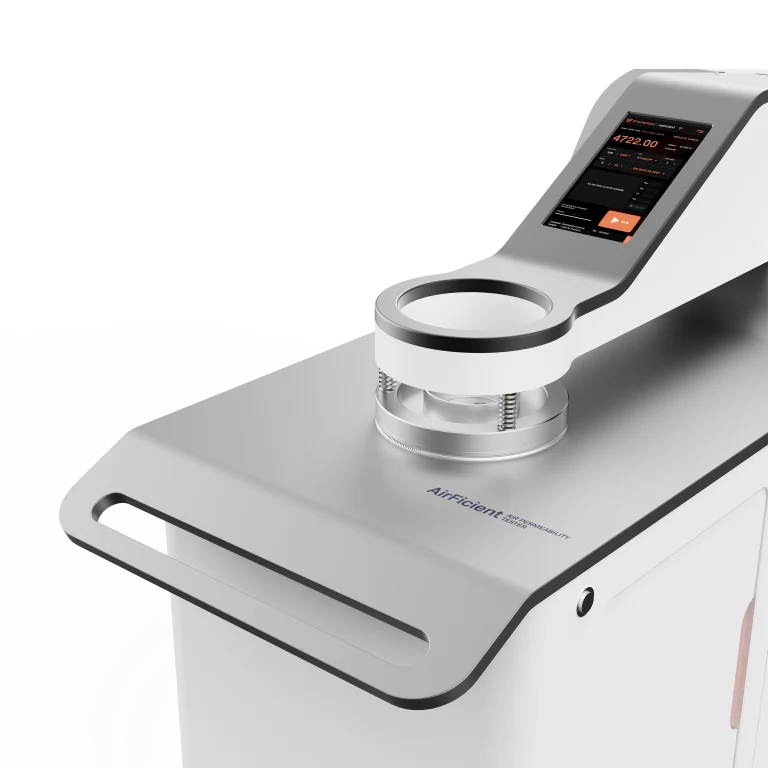
A glossy brochure might promise accuracy, but real reliability comes from specific design choices. The first factor is the pressure control system. Reliable testers use closed loop electronic pressure regulation, where a sensor reads the actual pressure fifty times per second and adjusts the vacuum instantly to maintain the set point. Cheaper machines use mechanical regulators that drift as the lab warms up or as filters clog. The second factor is the sealing mechanism. Air leaking around the fabric edges produces falsely high readings. Reliable testers use convex sealing rings or inflatable gaskets that press firmly into the fabric without crushing it. The third factor is build quality. A heavy cast aluminum frame resists vibration, while plastic housings flex and change geometry over time. When you see a tester that has been running daily for ten years without major service, you are looking at genuine reliability.
The Role of Calibration in Dependable Results
Even the finest instrument drifts without regular calibration, so reliability depends as much on lab practices as on the machine itself. A reliable permeability tester includes certified reference plates with known airflow values, usually made of laser cut stainless steel. The lab technician runs a test on these reference plates each week, comparing the machine’s reading to the certified value. If the difference exceeds one percent, the machine needs adjustment. Some testers include automatic calibration routines that guide the technician through the process and apply correction factors internally. But calibration is only half the story. The reference plates themselves need recertification every year by a national standards body. Without that chain of traceability, your machine might be precise meaning it gives the same number repeatedly but not accurate meaning that number matches the true value. Reliable labs invest in both calibration equipment and the training to use it properly.
Comparing Different Brands and Models for Stability
If you are shopping for a reliable air permeability tester, you will encounter several established brands, each with strengths and weaknesses. The Swiss made Textest FX 3300 has been the industry benchmark for decades, known for its robust construction and exceptional long term stability. Labs running the same FX 3300 for fifteen years with only annual calibration are common. SDL Atlas offers the M021 model, which provides excellent reliability at a slightly lower price point, though some users report the touchscreen interface lags after several years of use. Japan’s Kato Tech produces the KES F8 series, which integrates permeability measurement with other fabric hand tests, but the system is more complex and requires more maintenance. For labs on tighter budgets, China’s Qualitest and Haida instruments have improved dramatically in recent years, though their long term reliability remains unproven compared to Swiss or American brands. The safest approach is to ask for references from labs running the same model for at least five years.
Proper Sample Handling and Conditioning for Consistency
A reliable tester in unreliable hands still produces unreliable data. Proper sample handling is the hidden half of the reliability equation. Fabric absorbs and releases moisture from the air, and that moisture changes how air flows through the fibers. Testing a fabric straight from a humid warehouse might give readings twenty percent lower than the same fabric tested after drying. Reliable laboratories condition all samples for at least twenty four hours at sixty five percent relative humidity and twenty one degrees Celsius before testing. They also handle samples by the edges, never touching the test area, because skin oils and dirt can partially block pores. Multiple samples are cut from across the fabric width, avoiding the selvage edges where weaving tension differs. And each sample is tested only once, because clamping and unclamping changes the fabric structure. These discipline habits cost nothing but time, yet they dramatically improve result consistency.
Statistical Reliability and Repeatability Metrics
Engineers have precise ways to talk about reliability that go beyond vague promises. The two key metrics are repeatability and reproducibility. Repeatability means getting the same result when the same operator tests the same fabric on the same machine multiple times. A reliable tester should show a coefficient of variation below one percent for a homogeneous fabric. Reproducibility means getting the same result when different operators test the same fabric on different machines in different labs. This is harder to achieve, but good testers combined with careful training can stay within two to three percent variation. Look for testers that have passed interlaboratory studies, where multiple labs tested identical fabric samples and reported results within a narrow band. Manufacturers who participate in these studies publish their results, giving you real evidence of reliability instead of marketing claims.
Troubleshooting Common Sources of Unreliable Readings
Even with a good machine, unreliable readings creep in through surprising places. A dirty test head is the most common culprit. Lint and dust build up on the sealing rings and inside the airflow path, gradually reducing measured permeability. The fix is simple but often forgotten. Clean the test head with a soft brush and compressed air after every shift. Another source of trouble is damaged sealing rings. A tiny nick from a sharp fabric edge lets air leak around the sample, adding five to ten percent to every reading. Inspect seals weekly and replace them quarterly. The vacuum pump deserves attention too. As pump oil ages or filters clog, the machine struggles to maintain test pressure, producing erratic readings. Change pump oil according to the manufacturer’s schedule, and keep spare filters on hand. Finally, check your test head size. Using a head that is too small for an open fabric creates turbulence that skews results. Match the head size to the fabric’s expected permeability, and your reliability will improve immediately.