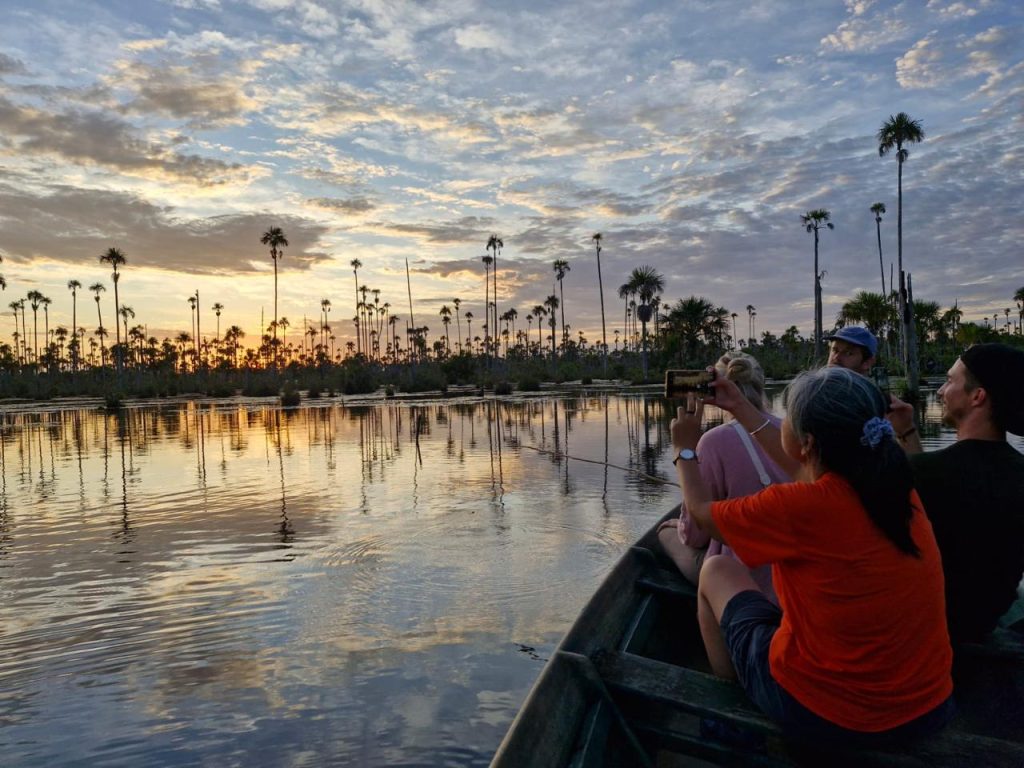
Planning a trip to Cusco? A Tambopata National Park tour is the perfect way to experience the Peruvian Amazon. Just a short flight away, you’ll discover incredible wildlife, lush rainforest, and unforgettable jungle adventures.
If you’re planning a trip to Cusco, adding a journey to Tambopata National Reserve is one of the best ways to experience Peru’s incredible diversity. In just a short flight from the Andes to Puerto Maldonado, you’ll swap ancient Inca landscapes for one of the world’s most biodiverse rainforests. A Tambopata National Park tour from Cusco offers an unforgettable combination of wildlife, nature, and authentic Amazon experiences.
How to Get from Cusco to Tambopata National Reserve
Although Tambopata feels like a remote wilderness, getting there is surprisingly straightforward. The gateway to the reserve is Puerto Maldonado, the capital of the Madre de Dios region. From there, you’ll continue by road and river to your jungle lodge, as there are no public roads leading into most areas of the reserve.
Option 1: Fly from Cusco to Puerto Maldonado (Recommended)
Flying is the fastest and most comfortable option. A direct flight takes about 1 hour, although availability varies by season and airline. If direct flights are unavailable on your travel dates, you can also connect through Lima.
Once you arrive at Puerto Maldonado Airport, your lodge or tour operator will meet you and arrange the rest of the journey. Depending on where your lodge is located, you’ll travel by vehicle for 20 to 90 minutes before boarding a motorized canoe for another 30 minutes to 3 hours along the Tambopata or Madre de Dios River.
This is the option chosen by most travelers because it maximizes your time in the rainforest and minimizes travel fatigue.
Option 2: Travel by Bus
For travelers on a tighter budget, overnight buses connect Cusco and Puerto Maldonado via the Interoceanic Highway. The journey usually takes 9 to 10 hours, depending on weather and road conditions.
The route crosses the Andes before descending through cloud forest into the Amazon lowlands, offering spectacular scenery along the way. Once you reach Puerto Maldonado, your lodge will arrange the transfer by road and boat.
While the bus is less expensive than flying, it is a much longer journey and may be affected by heavy rains or occasional landslides during the wet season.
Option 3: Self-Drive or Private Transfer
If you’re exploring southern Peru by car, you can drive from Cusco to Puerto Maldonado using the Interoceanic Highway. The drive typically takes 9 to 10 hours, depending on traffic and road conditions.
However, once you arrive in Puerto Maldonado, private vehicles cannot enter most protected areas of Tambopata. You’ll still need to continue with an authorized operator by boat to reach your lodge.
What can you expect to see on Tambopata National Park Tours?
One of the biggest reasons travelers choose Tambopata National Park Tours is the incredible opportunity to experience one of the most biodiverse regions on Earth. Located in the heart of the Peruvian Amazon, Tambopata National Reserve protects nearly 275,000 hectares (680,000 acres) of pristine rainforest and forms part of a vast conservation area alongside Bahuaja-Sonene National Park.
Unlike wildlife parks or zoos, every animal you encounter here is living freely in its natural habitat. No two tours are ever the same. One morning you may watch a troop of squirrel monkeys leaping through the canopy, while the next day you could quietly observe giant river otters swimming across an oxbow lake or colorful macaws flying overhead.
A Global Biodiversity Hotspot
Tambopata is internationally recognized as one of the world’s greatest biodiversity hotspots. Thanks to its tropical climate and diverse ecosystems, including rivers, oxbow lakes, bamboo forests, palm swamps, and untouched rainforest, the reserve supports an astonishing variety of wildlife.
Scientists have recorded more than:
- 600 species of birds
- 200 species of mammals
- 1,200 species of butterflies
- 100 species of reptiles and amphibians
Thousands of plant species, including giant Brazil nut trees, orchids, palms, and medicinal plants
Every hike, boat ride, or canoe excursion offers the possibility of discovering something new.
Mammals You May Encounter
For wildlife enthusiasts, Tambopata is one of the best places in Peru to observe Amazonian mammals in the wild.
Depending on the season and a bit of luck, you may encounter:
- Giant river otters
- Capybaras
- Brown-throated sloths
- Red howler monkeys
- Black-capped squirrel monkeys
- Brown capuchin monkeys
- Saddle-back tamarins
- White-lipped peccaries
- South American tapirs
Jaguars also inhabit the reserve, particularly along remote riverbanks. Although sightings are uncommon because these cats naturally avoid humans, simply knowing they share the forest adds to the excitement of every expedition.
Birdwatching Paradise
Tambopata is considered one of South America’s premier birdwatching destinations. More than 600 bird species have been recorded here, attracting birders and photographers from around the world.
Some of the most iconic species include:
- Scarlet Macaw
- Blue-and-yellow Macaw
- Red-and-green Macaw
- Hoatzin
- Toucans
- Harpy Eagle (occasionally)
- Kingfishers
- Herons
- Parrots and parakeets
- Hummingbirds
One of the highlights of many Tambopata National Park Tours is visiting a macaw clay lick at sunrise, where hundreds of brilliantly colored macaws and parrots gather in a breathtaking natural spectacle.
Reptiles, Amphibians, and Insects
When the sun sets, the rainforest becomes even more fascinating. Night walks and boat excursions reveal an entirely different world filled with nocturnal wildlife.
You may spot:
- Black caimans
- Spectacled caimans
- Tree frogs
- Poison dart frogs
- Tarantulas
- Walking stick insects
- Leaf-mimicking insects
- Colorful butterflies and giant moths
Experienced naturalist guides will help you discover these hidden creatures while explaining their important role in maintaining the delicate balance of the Amazon ecosystem.
Best places to visit in Tambopata
Every itinerary is different, but these are among the most popular attractions inside and around Tambopata National Reserve.
Lake Sandoval
Lake Sandoval is one of the Amazon’s most spectacular oxbow lakes. Reached after a short walk through the forest followed by a canoe ride, the lake offers excellent opportunities to observe giant river otters, black caimans, monkeys, turtles, and numerous bird species.
The calm waters also create perfect reflections for photography, making it one of the reserve’s most beautiful landscapes.
Chuncho Macaw Clay Lick
Often considered the largest macaw clay lick in the world, Chuncho Clay Lick hosts hundreds of macaws and parrots almost every morning.
Visitors can watch Scarlet, Blue-and-yellow, and Red-and-green Macaws gather to consume mineral-rich clay, an unforgettable wildlife spectacle found in very few places on Earth.
Tambopata River
The Tambopata River serves as the main gateway into the rainforest.
Boat rides offer opportunities to observe capybaras, caimans, turtles, kingfishers, herons, monkeys, and, occasionally, jaguars resting on the riverbanks.
The scenery changes constantly, from sandy beaches to towering rainforest trees.
Jungle Trails
One of the highlights of a Tambopata 4 Day Tour is exploring the rainforest on foot with an experienced naturalist guide. Walking through primary forest reveals a completely different side of the Amazon that you simply can’t experience from a boat.
Along the trails, you’ll discover towering Brazil nut trees, ancient strangler figs, medicinal plants, colorful fungi, and an incredible diversity of insects and birds. Your guide will also explain how local communities have traditionally used rainforest plants for food, medicine, and daily life, giving you a deeper understanding of the Amazon’s rich natural and cultural heritage.
Because a four-day itinerary allows more time in the forest, you’ll have better opportunities to observe wildlife, visit different habitats, and experience the rainforest at a slower, more rewarding pace.
Canopy and Observation Towers
Some lodges feature canopy towers that rise above the forest.
These platforms offer spectacular panoramic views and allow visitors to observe birds, monkeys, and other canopy wildlife that are difficult to see from the ground.
Top activities in Tambopata
Tambopata offers much more than simply observing wildlife.
Guided Jungle Walks
Explore primary rainforest while learning about medicinal plants, giant trees, insects, fungi, and animal tracks.
Wildlife Watching
Every boat ride and forest trail provides opportunities to observe mammals, reptiles, birds, and countless other rainforest species.
Canoe Excursions
Gliding silently across oxbow lakes allows visitors to approach wildlife without disturbing it.
Night Safaris
Once darkness falls, the rainforest transforms. Night excursions reveal caimans, frogs, insects, nocturnal birds, and other animals that remain hidden during the day.
Nature Photography
Whether you’re using a smartphone or professional camera equipment, Tambopata offers exceptional opportunities for wildlife and landscape photography.
Cultural and ecological interpretation
Local guides share fascinating stories about Amazonian ecology, conservation, medicinal plants, and the traditional knowledge of the region.
Travel tips for your visit
A little preparation goes a long way toward making your Amazon adventure comfortable and enjoyable.
What to pack
Bring lightweight, breathable clothing in neutral colors, long-sleeved shirts, long pants, hiking shoes, sandals, insect repellent, sunscreen, sunglasses, a hat, a reusable water bottle, binoculars, a camera, and a waterproof jacket.
Avoid bright-colored clothing when possible, as neutral colors are generally better for wildlife observation.
Do you need vaccinations?
Although Peru does not require most visitors to present proof of vaccination for Tambopata, the Yellow Fever vaccine is commonly recommended for travel to the Amazon. Travelers should ideally receive it at least 10 days before arrival.
It’s also wise to consult your physician regarding Hepatitis A, Tetanus, and routine vaccinations before your trip.
What Is not Allowed in Tambopata?
Tambopata National Reserve is a protected area managed to conserve its extraordinary biodiversity.
Visitors should never:
- Feed wildlife
- Remove plants, feathers, seeds, or animals
- Leave litter
- Make excessive noise
- Leave marked trails without permission
- Fly drones without official authorization
- Hunt, fish, or collect natural resources
- Use soaps or chemicals in rivers and lakes
How Many Days Should You Stay?
2–3 Days
Perfect for travelers with limited time who want to experience the Amazon and see its most iconic wildlife.
4 Days
The ideal balance for most visitors. You’ll have enough time to visit Lake Sandoval, explore multiple forest trails, enjoy a night safari, and greatly increase your chances of spotting a wide variety of animals.
5 Days or More
Recommended for wildlife enthusiasts, photographers, birdwatchers, and anyone who wants a deeper immersion into the rainforest. Longer stays allow guides to explore more remote areas where wildlife encounters are often even more rewarding.
Frequently Asked Questions
1. Is Tambopata worth visiting?
Absolutely. Tambopata is one of the world’s finest destinations for wildlife observation and ecotourism, offering an authentic Amazon experience without requiring extremely difficult expeditions.
2. What is the best time to visit Tambopata?
The dry season (May to October) usually offers easier hiking conditions and pleasant weather. The rainy season (November to April) brings lush vegetation, higher river levels, and excellent wildlife viewing, so both seasons have their advantages.
3. Is Tambopata safe?
Yes. Traveling with a licensed guide and an experienced tour operator makes Tambopata a safe destination. Guides are trained to navigate the rainforest safely while respecting wildlife and conservation rules.
4. Can I combine Cusco, Machu Picchu, and Tambopata?
Yes. This is one of Peru’s most popular travel itineraries. Many visitors explore Cusco and Machu Picchu before flying to Puerto Maldonado to experience the Amazon.
5. Will I see a jaguar?
Possibly, but not guaranteed. Jaguars are present throughout Tambopata, but they are highly elusive. Fortunately, the reserve offers countless other unforgettable wildlife encounters every day.
Conclusion
A journey to Tambopata National Reserve is much more than a jungle tour, it’s an opportunity to experience one of the richest ecosystems on Earth. From peaceful rivers and ancient rainforest trails to vibrant macaw clay licks and unforgettable wildlife encounters, every moment brings a deeper connection with nature.
At Amazon Garden Lodge, we’re passionate about sharing the beauty of the Peruvian Amazon through carefully designed eco-tours led by knowledgeable local guides. Whether you’re looking for a short rainforest escape or a multi-day wildlife expedition, we’ll help you discover the best of Tambopata while traveling responsibly and comfortably. We look forward to welcoming you to the heart of the Amazon.